Liu Heng's Perspective on Facial Features: The Notion of Unfilial Women with Large Faces
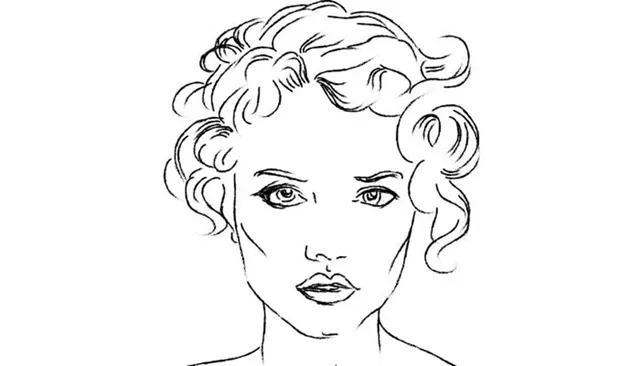
In life, there are three things that should never be laughed at: natural disasters, human misfortunes, and illnesses. Three things should never be mocked: the teacher who educates, the doctor who heals, and the army that guards the nation. Commentary by Liu Heng: This is the most basic moral etiquette of being a human. Laughing at natural disasters brings shame and disgrace; mocking human misfortunes leads to loneliness and despair; laughing at illnesses results in abandonment by loved ones. Ridiculing teachers brings ignorance and foolishness; scorning doctors invites poverty and evil; disrespecting the military leads to premature death and tragedy.
As we navigate life, our parents teach us principles of goodness, guiding our conduct; teachers impart skills for survival, helping us sustain our lives. We should be grateful and repay kindness, just as a crow feeds its parents or a lamb kneels to nurse. Therefore, honoring our parents brings us health and longevity, while respecting our teachers gifts us with wisdom from both humanity and the divine.
1. A pale complexion often hides a troubled heart
A pale complexion (Liu Heng's note: pale refers to white) does not inherently signify cruelty; it suggests the liver is not storing blood properly, leading to a sallow appearance. In traditional thought, the liver corresponds to the element wood, which signifies benevolence (Liu Heng's note: wood represents kindness, metal represents righteousness, water represents will, earth represents trust, and fire represents propriety). When the liver fails to nourish, it may result in unkindness or cruelty. If the liver does not store blood and there's a deficiency, the person may appear pale. Blood is associated with the fire element, which represents hatred (wood signifies anger, fire signifies hatred, earth signifies resentment, metal signifies annoyance, and water signifies worry). Essentially, someone with much hatred and little kindness, exemplified often in women, is one to approach with caution.
2. Women with broad faces often lack filial piety
A broad face refers to women with wide cheekbones. Such women are often resilient and harbor strong desires for revenge, exhibiting rebellious traits. They might repay kindness with hostility, harboring grudges, especially against in-laws, and often lack filial respect for the elderly. Moreover, the wider the facial bones, the more stubborn the individual, frequently seeking vengeance and resisting submission to men, always arguing their stance. Marriage inevitably includes friction; if both partners are strong-willed, reconciliation becomes challenging. Thus, whether it's cooperation or cohabitation, harmony is essential. This harmony is reflected in controlling one's temperament; women should embody gentleness and men strength, without reversing roles.
3. Eyebrows like charred coal suggest disaster or difficulty
Thick, dark eyebrows resembling charred coal indicate a person with excessive liver energy. The liver aligns with benevolence, yet too much energy can turn to cruelty, risking great destruction. Such individuals may act impulsively when provoked, leading to significant misfortune. Additionally, people with eyebrows like charred coal often have rigid personalities, resulting in lives filled with trouble. They may have clashed with their parents since childhood, showing a lack of filial piety, and those with excessive wood energy often encounter many hardships throughout life.
4. A flat head and wide forehead indicate potential for high status
A flat head refers to a broad, even forehead. A wide forehead is the first key to achieving success; in physiognomy, the forehead is a sign of intelligence. A narrow, pointed forehead with a low hairline suggests someone seeking quick gains, focusing solely on immediate benefits without long-term vision—a major setback for achieving great things. Conversely, those with wide and flat foreheads possess high intelligence and broad vision, conducting themselves with integrity. As Liu Heng said, wealth can be spent, but striving to maintain integrity until one's last breath is paramount.