Is a Woman with a Sunken Yintang Considered Unlucky?
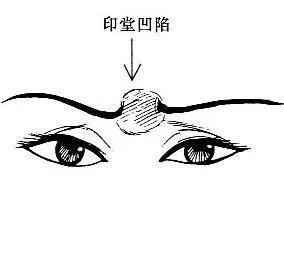
In physiognomy, there is a notable area known as the "Yintang," located between the eyebrows. Ideally, the Yintang should be broad and full, as opposed to narrow. This principle is well-known among those familiar with physiognomy.
However, the topic of a sunken Yintang seems to receive less attention. Let's examine the potential fortune for individuals with a non-full and sunken Yintang.
According to ancient beliefs, people with a sunken "Yintang" are thought to endure a life filled with hardships, misfortunes, and possibly a shorter lifespan. I am skeptical of this notion, as while the Yintang is indeed an important feature, it is just one part of the broader study of physiognomy. How can it define a person's whole life? It is observed that a slightly sunken Yintang suggests fewer opportunities for higher education. If the sunkenness is more pronounced, it likely indicates significant struggles before the age of thirty.
I once met a woman with a sunken Yintang. Her early life was filled with challenges, yet after she turned thirty, her situation improved remarkably. Despite her sunken Yintang, her facial features were delicate, and her eyes displayed a deep, hidden strength. After enduring tough times in her youth, she eventually experienced good fortune, supported by her strong facial features. This enabled her to marry a good husband and help manage a business, leading to a joyful life. This example demonstrates that one cannot solely rely on a single feature in physiognomy to predict a person's entire life.