What the Yintang Point Reveals About Fate and Fortune
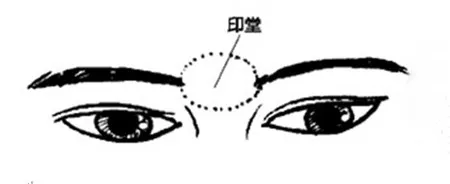
The term “Yintang” is familiar to many. In historical dramas, fortune-tellers often begin with, “Your Yintang looks dark, which suggests misfortune.” Assessing someone’s fate and fortune through the appearance and color of the Yintang is said to have a scientific basis. Let’s take a look at how to read the Yintang:
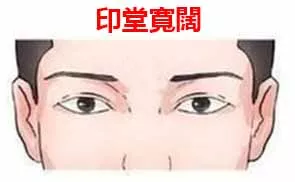
1. A bright Yintang indicates an extraordinary person. A broad Yintang signifies power.
The so-called life palace refers to the Yintang. As the name implies, the Yintang is considered a decisive element in face reading. People with a bright, broad Yintang tend to be open-minded, visionary, and ambitious, with a regal bearing and the capacity to accomplish great things. In physiognomy, a well-developed, luminous Yintang opens the door to success, making it easier for such individuals to thrive. If other facial features are also favorable, it points to exceptional fortune.
2. A clear Yintang signifies promotion and wealth.
A normal Yintang should be flesh-toned with a subtle sheen. Those with a slightly yellowish Yintang are generally in good spirits, and because yellow symbolizes wealth, it signals recent opportunities for career advancement or financial gain.
3. A rosy complexion indicates good fortune and joyful events.
Physiognomy assesses a person based on appearance, behavior, and complexion. A rosy glow often reflects good health, success in endeavors, and a cheerful disposition, which shows in the face. However, this redness should be occasional and tied to joyful events. A persistently red complexion may indicate high blood pressure or circulatory issues and warrants a visit to the doctor.
4. A dark Yintang indicates impending misfortune. A blackened Yintang suggests proximity to death.
From a medical perspective, when someone is troubled or overwhelmed by negativity, brain function can become abnormal, leading to unusual brain waves and pressure that manifest as a dark or blackened Yintang. Thus, a dull or dark Yintang may reflect poor health, difficulties, and a low mood, with frequent troubles and conflicts. If the eyes also lack vitality, it may point to potential disasters or accidents.
5. A drunken demeanor indicates indulgence. A bright Yintang suggests enjoyment with partners.
Individuals whose eyes and brows carry a sensual, indulgent air often overindulge in pleasures such as drinking and gambling. If they do not change course, they are likely to harm their health and jeopardize their careers, with serious consequences.
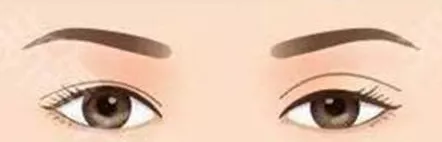
6. A wide Yintang in women indicates simplicity and susceptibility to deception.
For women, a Yintang about one and a half fingers wide is considered ideal. If it is too wide, it suggests openness and a lack of firm opinions, making one more easily deceived. Family members with such a Yintang should be taught self-protection from an early age.
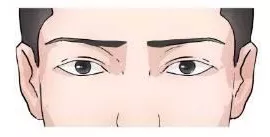
7. A narrow Yintang indicates a narrow mind, blocked fortune, and poverty.
A Yintang only about one finger wide suggests stubbornness, difficulty seeing things clearly, and a harder life. Such people may be hasty and competitive, often emotional and overly focused on gains and losses, which leads to a furrowed brow that further narrows the Yintang. They tend to find happiness elusive and are unlikely to achieve great accomplishments, often living in poverty. Those with joined eyebrows and an indistinct Yintang are said to be not only poor and lonely but also shorter-lived.
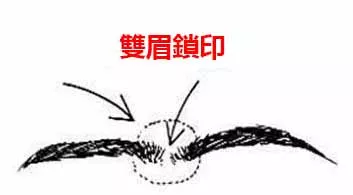
8. A locked brow indicates frequent career setbacks.
A locked brow refers to a space between the eyebrows of less than two fingers, often accompanied by a habitual frown. People with a locked brow tend to be troubled and less cheerful, which can cloud their thinking and lead to career setbacks due to an overly competitive nature.
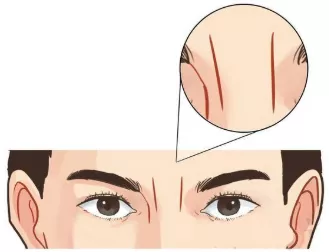
9. Vertical lines on the Yintang indicate worries and hardships.
Those with vertical lines on the Yintang often carry heavy burdens and have weaker health, facing many challenges. These lines usually stem from a serious disposition, frequent frowning, and excessive worry. Too many vertical lines suggest being overly anxious and high-strung, which can invite resentment from others. If a young person has such lines, they may struggle in school and face potential legal issues. If an adult has no lines at all, it can indicate a lack of deep thinking, making great achievements less likely.
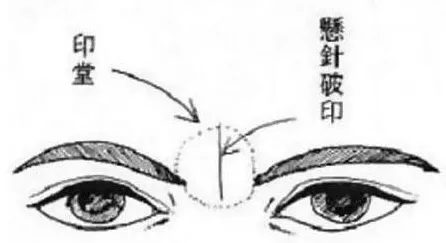
10. A Yintang with hanging needle-like lines invites disaster and misfortune.
Vertical lines on the Yintang that resemble hanging needles, known as “hanging needle lines,” are considered ominous. In physiognomy, such lines are said not only to invite disaster but also to harm spouses and children, with unforeseen calamities in middle age that require careful resolution.
11. Conditions for a good Yintang.
A good Yintang should be flat and wide, with no stray hairs between the eyebrows, and free of dark lines or blemishes. Ideally, it resembles a square seal and measures about two fingers wide.
12. Characteristics of a favorable Yintang.
For young people, a smooth, broad Yintang suggests early success and academic achievement. For those in middle age, a strong Yintang indicates smooth fortune and support from benefactors. In old age, a good Yintang signifies happiness, peace, and a leisurely life, enjoying the blessings of later years.
Conclusion: As noted, the Yintang plays a decisive role in physiognomy. If the Yintang is unfavorable, even good features elsewhere may not help much. Conversely, if the Yintang is good, even less-than-ideal features can improve over time. In short, the appearance of the life palace should not be underestimated.
Images in this article are sourced from the internet, with copyright belonging to the original authors.