Supernatural Miracle Brings a Peanut Back to Life
Professor Li Sichen, a scholar from Taiwan, has shared that his upbringing was heavily influenced by Western scientific education, leading him to only believe in phenomena that could be consistently replicated in laboratory settings. As a result, he initially regarded the various beliefs inherited from traditional Chinese culture as mere superstitions.
In 1990, Professor Li's skepticism began to change after witnessing a qigong demonstration by the renowned martial artist and qigong master, Li Fengshan.
Li Fengshan’s family has practiced Taoist qigong since his grandfather’s time, and by the time it reached him, he claimed to have achieved remarkable results. He asserted that he could emit either oxygen or dangerous energy from his palms. While it’s common knowledge that oxygen is essential for life, questions arose about the potency of this lethal energy.
To test this claim, scientists devised an experiment using human fibroblast cells. The research was led by Professor Jian Jingxiang from the Biochemistry Department at Yangming University. They placed fibroblast cells in a test tube and asked Li Fengshan to emit energy from a distance of 15 centimeters.
In the first trial, Fengshan emitted oxygen for 2 to 5 minutes. The results showed an increase in DNA synthesis in the exposed cells by 10% to 15%, suggesting that the cells became more active.
In the second trial, he emitted the lethal energy. The findings revealed a decrease in DNA synthesis by over 20%, indicating reduced cellular activity. Even more surprisingly, some of the DNA chromosomes experienced breaks, a phenomenon typically associated with exposure to nuclear radiation.
In 1993, Director Liu Wuzhe of the Virus Department at Taiwan’s Veterans General Hospital invited Li Fengshan and his five disciples to experiment on the H1N1 influenza virus. They projected lethal energy towards the virus from 20 centimeters away for 30 minutes. After this energy emission, Director Liu immediately inoculated the virus into human cells. The results showed a suppressed ability of the virus to reproduce and a reduced potential for transmission.
The Resurrection of a Peanut
Beginning in 1993, Professor Li started training young individuals in special abilities, most notably the skill of reading characters with their fingers. Among his many students, Takahashi Mai, of Japanese and Chinese descent, showed the most consistent performance. On a television program, she successfully demonstrated reading characters from a piece of paper using only her fingers, in front of several experts and scholars. Based on these experiments, Professor Li published numerous papers, providing scientific evidence for the existence of the finger-reading phenomenon. However, he still considered this ability as merely a latent potential of the human body.
From 1996 onwards, Professor Li collaborated with the Institute of Human Science at China University of Geosciences to research special abilities. According to him, one of the institute’s assistant researchers, Ms. Sun Chulin, possessed sixty different abilities that challenged existing physical and biological knowledge. Among these, the most astonishing ability was Ms. Sun's power of "resurrection."
In 1997, they conducted an experiment using peanuts. Professor Li first commissioned a professor from the Department of Agronomy at National Taiwan University to treat a batch of "Tainan No. 11" peanuts under high-temperature and high-humidity conditions, destroying every cell in the peanuts. As expected, none of the peanuts sprouted under normal cultivation processes. Li then had 30 peanuts vacuum-packed and brought to Beijing, where they were unsealed and monitored by witnesses who signed their names on the peanut skins.
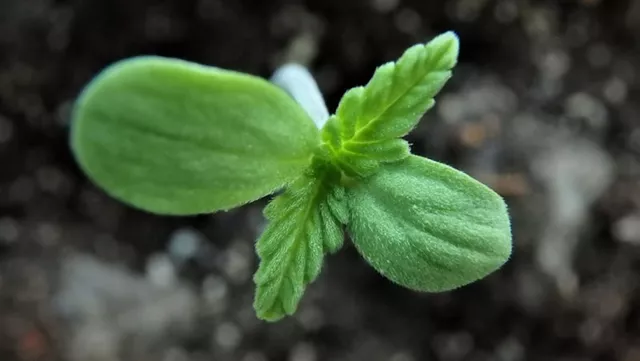
Ms. Sun Chulin held a peanut in her hands, clasped it together, and after 37 minutes, one peanut sprouted a 2.8 cm shoot, while the signatures on the peanut skin remained visible.
Professor Li later stated that meeting Sun Chulin completely dispelled any remaining doubts he had, leading him to entertain the idea that some ancient myths, such as those found in "Investiture of the Gods," might indeed hold truth.