Zeus' Scepter and Thunder: The Lasting Impact of Greek Mythology on Future Generations
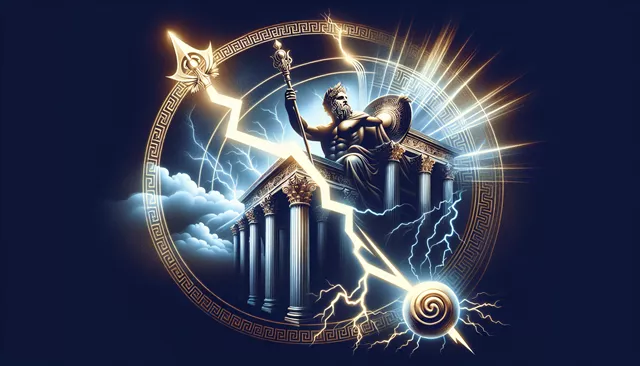
In ancient Greek mythology, Zeus, the king of the gods, holds a scepter and controls thunder and lightning, symbolizing ultimate power and divine authority. The story of Zeus is not only central to Greek mythology but also a cultural treasure, deeply influencing Western literature, art, and philosophy. This article will delve into the symbolic significance of Zeus's scepter and lightning, examine the impact of Greek mythology on subsequent cultures, and discuss its relevance in modern society.
Zeus and His Scepter
The Origins of Zeus
Zeus, the son of Cronus and Rhea, rose to power on Mount Olympus by overthrowing his father. As the leader of the gods, he oversees order in both the heavens and the human realm, representing strength and justice. Zeus's scepter symbolizes his authority and supreme power, serving as an emblem of the sacred and untouchable.
The Symbolism of the Scepter
In ancient times, the scepter was a symbol of kings and deities, representing rule and power. Zeus's scepter is not just a tool but an embodiment of authority and justice. It represents Zeus's will and maintains order in both the divine and mortal realms. Whenever Zeus raises his scepter, thunder and lightning follow, symbolizing divine punishment and protection.
The Power of Lightning
The Fusion of Nature and Divinity
Lightning, as a breathtaking natural phenomenon, creates a strong visual impact and inspires awe. In Greek mythology, Zeus's control over lightning not only highlights his power and majesty but also symbolizes his mastery over natural forces. The power of lightning serves both as a tool for punishing wrongdoers and as a symbol of protecting justice.
The Symbolism of Lightning
Lightning represents not only power and punishment but also revelation and inspiration. In ancient Greece, lightning was viewed as the language of the gods, a medium through which the divine communicated with mortals. Zeus used lightning to express his anger or grant blessings, making it a symbol of sacred power that is both fearsome and revered.
The Influence of Greek Mythology on Literature
Mythological Elements in Classical Literature
Greek mythology holds a significant place in classical literature. Homer's epics, "The Iliad" and "The Odyssey," are rich with tales of Zeus and other deities. These myths not only add a mystical dimension to the narratives but also profoundly influence the development of characters' fates. Zeus's scepter and lightning symbolize the unpredictability of fate and the inevitability of divine will.
Mythological Inspirations in Modern Literature
In modern literature, Greek mythology remains a vital source of inspiration. Works like James Joyce's "Ulysses" and T.S. Eliot's "The Waste Land" draw heavily on Greek mythological elements, using figures like Zeus to convey profound reflections on human destiny. In these works, Zeus's scepter and lightning symbolize power, fate, and revelation, enriching the narratives with deep philosophical meaning.
The Influence of Greek Mythology on Art
Mythological Representation in Classical Art
Greek mythology's influence on classical art is particularly significant. In ancient Greek sculpture and paintings, Zeus often appears in a majestic stance, holding a scepter with lightning all around him. Phidias's statue of Zeus not only displays his divine power but also conveys the sanctity and inviolability of the deity through exquisite sculptural techniques.
Mythological Reinterpretation in Modern Art
In modern art, Greek mythology continues to be an essential theme. Salvador Dalí's surrealist works often incorporate elements of Greek mythology, exploring the boundaries between the subconscious and reality through the figure of Zeus. In these pieces, Zeus's scepter and lightning symbolize creative inspiration and the power of art.
The Influence of Greek Mythology on Philosophy
Mythological Reflections in Ancient Greek Philosophy
Greek mythology is not merely a compilation of tales and artworks; it also forms a foundational element for philosophical thought. In "The Republic," Plato uses Zeus to discuss the relationship between justice and power. Zeus's scepter and lightning symbolize the ideal force of justice, guiding readers to ponder the essence of ethics and morality.
Mythological Interpretations in Modern Philosophy
In modern philosophy, Greek mythology remains a significant subject of study. In Jung's psychological theory, Zeus represents the archetype of patriarchy and authority, revealing the deep structures of human psychology through myth analysis. In this context, Zeus's scepter and lightning symbolize the manifestation of inner strength and the collective unconscious.
The Application of Greek Mythology in Modern Society
Mythological Elements in Film and Television
Greek mythology has found widespread application in modern film and television. For instance, in the "Clash of the Titans" and "Thor" film series, Zeus is reinterpreted, with the scepter and lightning serving as visual highlights. These works captivate large audiences through mythological elements, breathing new life into Greek mythology.
Mythological Characters in Games and Entertainment
In modern games and entertainment, Greek mythological characters also hold prominent roles. In the game "God of War," Zeus is a key character, with the scepter and lightning as goals for players to pursue. These mythological characters in virtual worlds not only enrich game content but also let players experience the allure of ancient myths through entertainment.
Conclusion
Zeus's scepter and lightning, as some of the most symbolic elements in Greek mythology, represent not only the power and majesty of the deity but also serve as an essential source for human culture, art, and philosophy. By deeply exploring Zeus and his lightning, we can better understand the profound implications of Greek mythology and appreciate its far-reaching impact on subsequent cultures. In modern society, the influence of Greek mythology remains omnipresent, and Zeus's scepter and lightning will continue to illuminate humanity's quest for understanding the unknown.
References
- "Greek Mythology and Legends" by Edith Hamilton, Publisher: Cultural Publishing House, Publication Date: 2016
- "Homer's Epics: The Iliad and The Odyssey" translated by Richard Lattimore, Publisher: Oxford University Press, Publication Date: 2008
- "Myth and Symbol: An Introduction to Jungian Psychology" by Carl Jung, Publisher: Psychology Publishing House, Publication Date: 2012