The Architectural Art of Ancient Greece: A Study of Greek Temple Design
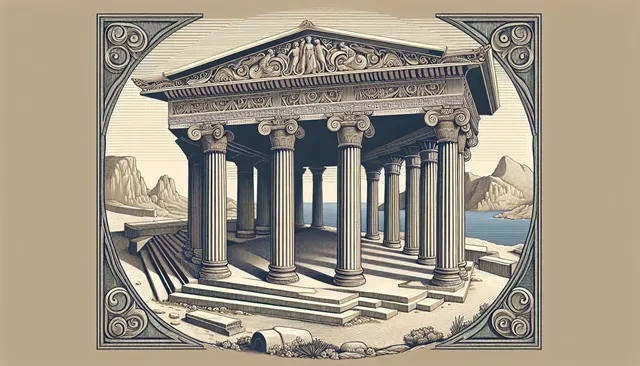
In the vast river of history, ancient Greece emerges like a brilliant pearl, piercing the darkness and radiating dazzling light. This light not only illuminates the history of human civilization but also brightens the path of architectural art. Particularly in the design of ancient Greek temples, the wisdom and pursuit of beauty by the Greek architects are vividly displayed.
Opening the door to ancient Greek architecture reveals an endless treasure of art that leaves one in awe. Domes, columns, stones, and sculptures—each element is a tribute to artistic achievement. Among these structures, ancient Greek temples stand out for their exquisite artistry and intricate carvings, like surging waves in the ocean, leaving their mark on history and influencing global architectural trends.
As you step into an ancient Greek temple, you can witness the tranquility and solemnity of white marble in the bright sunlight. Every detail seems to have formed naturally. The inspiration likely comes from trees in the forest; the columns evoke the sensation of being in a virtual jungle, surrounded by pillars that seem to grow organically, showcasing the harmonious blend of religion, art, and nature.
Take, for example, the Parthenon, one of the most well-preserved ancient Greek temples, often called the "pearl standing on the hillside." Climbing the stone steps and traversing the slope, visitors first encounter this extraordinary and solemn temple. In the sunlight, the white marble takes on a mysterious and dignified aura during the day, while at night it invites endless contemplation and imagination. Covering about 10,000 square meters, the Parthenon features intricately carved columns, lintels, and gables, with each part crafted to perfection. The temple measures 95 feet in length and 45 feet in width. On the 45-foot-long wall, there are only six columns with spaces wide enough for people to peer directly into the temple's interior. This highlights the beauty of ancient Greek architecture, which creates open spaces that interact with the environment, nature, and people, allowing individuals to experience the spiritual essence of religion and culture.
This design not only reflects the philosophical thoughts of the ancient Greeks but also signifies their pursuit of harmony. Contradiction and harmony are central themes in ancient Greek philosophy and the guiding principles of their temple design. Among seemingly ordinary columns, every height, thickness, and curvature is carefully calibrated to achieve harmonious beauty. The great secret of ancient Greek architecture might lie in the designers' deep understanding of aesthetics, knowing how to introduce softness into the rigidity of structures, embodying the ideal of harmonious coexistence between humanity and the divine.
Furthermore, within the temple, the craftsmanship of ancient Greek sculptures is exceptionally refined. From opulent altars and finely carved statues to elegantly decorated interior walls, one gets the sense of being in a hall of art. When visiting the Parthenon, located at the heart of the Acropolis in Athens, one can marvel at the rich sculptural decorations within, with the most striking being the statue of Athena made of gold and ivory. Sculptor Phidias used unique techniques to make the folds of the statue appear lifelike, with the gold and ivory shimmering enchantingly under the flickering light of the fireplace.
Through the design of ancient Greek temples, we can more intuitively appreciate the ancient Greeks' attention to nature and form. Their dedicated efforts to create perfect proportions and shapes provide us with endless artistic enjoyment.