Debunking the Myth: The Great Pyramid and the Sphinx Were Not Built by Ancient Egyptians?
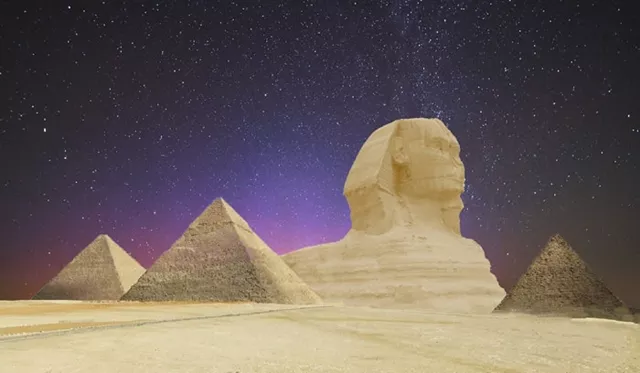
Image source: Pixabay
Egypt is renowned for its many famous pyramids. Scholars of ancient Egypt believe that the existing pyramids were constructed during six distinct dynastic periods. The Great Pyramid of Giza and the Sphinx, located on the Giza Plateau, are believed to have been built during the Fourth Dynasty, approximately 4,500 years ago.
However, later research revealed that the Great Pyramid of Giza is significantly different from other ancient Egyptian pyramids. In terms of size, design, craftsmanship, materials, and architectural standards, the Great Pyramid far exceeds those of the First, Second, and Third Dynasties, as well as the Fifth and Sixth Dynasties that followed. For example, the pyramids of the Third Dynasty used smaller, more manageable stones, with 5 to 6 people able to move a single block, and their internal chambers were relatively simple. The pyramids of the Fifth and Sixth Dynasties have largely deteriorated into ruins, while the Great Pyramid of Giza remains remarkably well-preserved, enduring the test of time.
The Great Pyramid of Giza features numerous extraordinary architectural feats: it stands 152 meters tall and is constructed from 2.3 million large stones, each weighing an average of 2.5 tons, with the largest stones weighing up to 250 tons. Its geometric dimensions show incredible precision and are linked to astronomical and geographical alignments, though those details will not be discussed here. Even with modern construction technology, recreating a pyramid with the same level of precision and intricate internal structure as the Great Pyramid would be extremely difficult.
Just half a kilometer southwest of the Great Pyramid is the renowned Sphinx, sculpted from a single block of natural rock. It stands 20 meters tall and 73 meters long, making it the largest and possibly most famous stone statue in the world. The statue faces east, giving it an aura of immense antiquity.
Scholar John West suggests that the Great Pyramid of Giza and the Sphinx are distinctly different from other Fourth Dynasty structures, proposing that they were constructed in an era even earlier than the Fourth Dynasty.
In his book "Serpent of the Sky," John West argues that Egyptian civilization might not have originated in the Nile Valley but rather inherited from a much older and more advanced civilization that predates ancient Egypt by thousands of years, a civilization we know little about. This theory is supported not only by the previously mentioned construction techniques but also by the significant water erosion marks found on the Sphinx.
It is technically improbable that the ancient Egyptians could have carved such a grand and complex structure from a single massive stone.
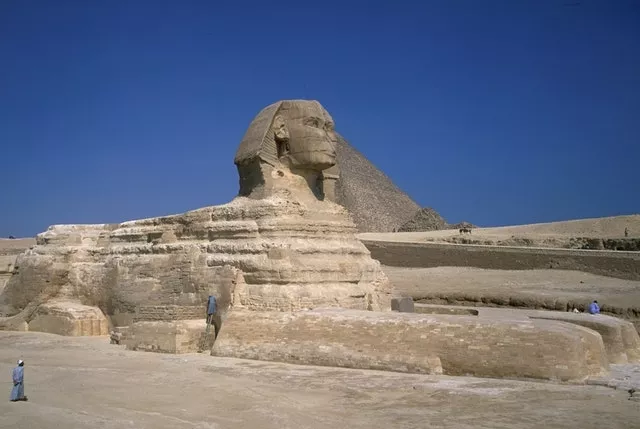
Image source: Pexels
Professor Robert Schoch, an expert in rock erosion from Boston University, supports West's view and notes that the ancient Egyptians were likely incapable of creating such a grand and complex artwork from a single massive stone.
Decades ago, Professor Halfi, a geologist from the University of Chicago, discovered that the grooves on the Sphinx's surface were caused by rainwater erosion. This conclusion faced criticism from scholars of ancient Egypt, who claimed that by the time the Sphinx was built, Egypt's climate was too dry for significant rainfall. In response to the criticism, Professor Halfi said, "I approach science with a scientific attitude; I ask you to do the same with my discovery."
Professor Halfi's findings suggest that the Sphinx may have been constructed during a time when North Africa was covered in dense tropical rainforests, roughly ten thousand years ago, long before Egypt had developed its civilization. It is understandable that scholars of ancient Egypt might find this unsettling; when the foundations of one's field are challenged, it can be difficult to maintain a purely scientific perspective. Since the introduction of Copernicus's "heliocentric theory," many scientific discoveries have been buried by prevailing authorities.