Unraveling the Ancient Curse of the Egyptian Pharaohs
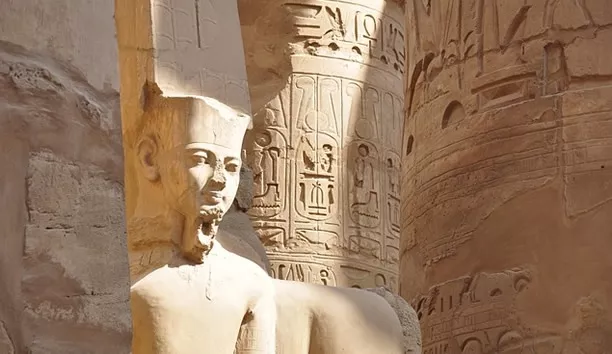
Image source: Pixabay
"Whoever disturbs the Pharaoh's rest, death will unfurl its wings and alight upon their head." This ominous inscription was found on the tomb of Pharaoh Tutankhamun. On the afternoon of November 26, 1922, when the door to Tutankhamun's tomb was opened, the legendary curse of the Pharaoh is believed to have been unleashed. In the years following, more than 20 individuals linked to the excavation of the tomb succumbed to illness or were driven to madness. But were these mysterious deaths truly a result of the Pharaoh's curse?
On that fateful afternoon, deep within an inclined underground passage at the base of an Egyptian pyramid in the "Valley of the Kings," archaeologist Howard Carter stood with Lord Carnarvon, his financial backer for the past eight years. Before them lay the sealed tomb of an ancient Egyptian Pharaoh, undisturbed for over three millennia.
Carter cautiously chiselled away a corner of the tomb's door, exclaiming, "A miracle—an extraordinary miracle!" This moment marked one of the most significant archaeological discoveries: the unearthing of the tomb of the young Pharaoh Tutankhamun. Tutankhamun ruled Egypt for nine years, mysteriously dying at 18 in 1350 BC. Little did he know that over 3,200 years after his burial, he would suddenly rise to global fame.
The tomb, nestled at the cliff's base in the "Valley of the Kings," comprises four chambers. Evidence suggests that grave robbers entered the antechamber shortly after the burial. The scattered jewels revealed their fright, and they fled, leaving the tomb resealed and largely untouched.
As explorers entered, they were greeted by an overwhelming treasure trove strewn across the floor. Their joy quickly turned to fear upon reading the inscription on a clay tablet: "Death shall swoop upon anyone who dares disturb the Pharaoh's tranquility!"
As doubts about the curse waned, ominous events escalated. Lord Carnarvon perished soon after an insect bite in the tomb. His secretary, Dick Bethell, and others also started to die under mysterious circumstances. The vengeance of King Tutankhamun seemed relentless, targeting all of Carnarvon's associates and anyone who disrupted his peace. In just six years, 23 inexplicable deaths occurred.
Ancient Egyptian kings (Pharaohs), now preserved mummies, could they truly curse those who discovered them thousands of years later? Several theories have emerged concerning this so-called "Pharaoh's curse":
One theory suggests a layer of pink and gray-green material on the tomb walls—possibly a "deadly light" layer—emitting substances potentially lethal to humans.
Another theory proposes that ancient Egyptian culture was advanced enough that Pharaohs might have used highly poisonous insects and toxins to protect tombs from future looters. In 1956, geographer Whittles faced an unexpected bat attack while exploring the Rocca Libri tomb.
A third perspective comes from Cairo's medical professor Zettin Pehau, who identified a virus within mummies surviving for 4,000 years. Exposure to this virus, according to Pehau, could cause severe respiratory issues and meningitis, leading to death by suffocation.
In 1983, after thorough research, French doctor Philippe concluded that the individuals' deaths were caused by allergic reactions to mold within the tomb, affecting both excavators and visitors. Her research revealed that those who died displayed similar symptoms, primarily lung infections leading to suffocation. Dr. Philippe explained that after ancient Egyptian Pharaohs died, fruits, vegetables, and large quantities of food were placed alongside treasures in the tomb. Over time, these offerings decayed and transformed into an invisible mold, adhering to the tomb walls. Inhaling this mold could trigger acute lung reactions, ultimately causing fatal suffocation. Thus, it appears this mold is indeed the root of the so-called Pharaoh's curse.