What the Eight Palaces in Palmistry Reveal About Your Health
25.1K views
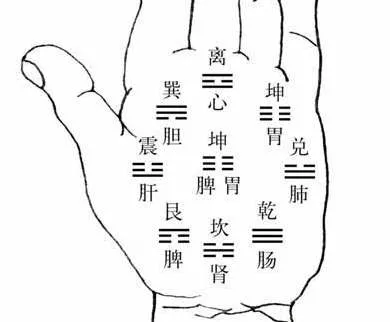
In palmistry, the palm is divided into eight palaces that correspond to the eight trigrams. Each trigram is associated with a specific organ or body system, so illnesses or imbalances are believed to show up in the matching areas on the palm. By observing the markings in these areas, one can judge whether any organs may be affected.
I. Qian Palace
- A well-developed, rosy Qian Palace indicates abundant vital energy in the five organs and strong overall vitality, signaling good health.
- If the Qian Palace shows tangled lines, dry skin, and a dull bluish or yellowish tone, it suggests emotional strain, endocrine imbalance, and fatigue.
- A sunken Qian Palace with visible tendons and bones and a pale tone points to weakened circulation, often seen in people with severe or chronic illness.
II. Kan Palace
- A raised, soft, and shiny Kan Palace indicates healthy cardiovascular, urinary, and reproductive function.
- Tangled lines in the Kan Palace and rough, dull skin suggest poor childhood nutrition and a tendency toward weakness and low vitality in adulthood, closely linked to fatigue and heart disease.
- Prominent blue veins in a Kan Palace that is sunken, thin, and lacking flesh often indicate difficulty recovering from severe illness.
- Disordered, broken, or weak lines on the wrist area below the Kan Palace that curve toward the palm or form triangles suggest kidney deficiency. Women may be prone to miscarriage, while men may experience sexual dysfunction.
III. Gen Palace
- Tangled lines in the Gen Palace, rough skin, and dark oval patches point to poor spleen and stomach function and suggest a current stomach ailment.
- Prominent blue veins in a noticeably sunken, thin Gen Palace also reflect weakness of the spleen and stomach.
- The Gen Palace should not be soft and sunken; if a fingertip indentation remains for a long time after pressing, it indicates poor microcirculation and weakened heart function.
IV. Zhen Palace
- Atrophy and softness in the lower part of the Zhen Palace, with many fine, messy lines, indicate reproductive and endocrine dysfunction.
- Leaf-shaped island marks in the upper part of the Zhen Palace often suggest chronic gastritis of long duration.
- Chaotic, hair-like lines in the Zhen Palace that cross or form star patterns reflect mental tension, a disordered lifestyle, and susceptibility to neurosis.
V. Xun Palace
- An overly raised Xun Palace suggests high cholesterol, elevated blood lipids, and high blood pressure.
- When the Xun Palace is significantly higher than the Zhen Palace, it is commonly associated with bile reflux gastritis.
- Individuals with tangled lines in the Xun Palace should undergo regular examinations of the biliary system to help prevent biliary disease.
VI. Li Palace
- If the Li Palace, located between the middle and ring fingers, has chaotic lines, it indicates impaired heart function, leading to palpitations and blood pressure fluctuations, commonly seen in people with angina, coronary artery disease, and hypertension.
- A cross-shaped mark in the Li Palace primarily indicates myocardial ischemia and angina.
- A raised area in the Li Palace between the middle and ring fingers indicates high blood lipids.
VII. Kun Palace
- A flat Kun Palace with visible tendons, pale and weak, covered with tangled lines, suggests weakened organ function in the lower abdomen. There may be chronic inflammation of the urinary and reproductive systems.
- If there are leaf-shaped lines below the Kun Palace, it indicates a susceptibility to breast-related conditions.
VIII. Dui Palace
- A soft, sunken Dui Palace with pale skin indicates lung conditions such as emphysema.
- If the Dui Palace has cross-shaped or rice-shaped lines, it suggests disorders related to bowel function.
- If island-shaped lines appear in the Dui Palace, it raises concern about tumors, which may not be limited to the intestines and could also involve other abdominal organs.