Unveiling Wisdom from the Surface: Lao Yi Guides You Through "The Divine Oddities of the Ma Yi Shen Xiang

In the previous issue, we delved into the saying: "a face full of flesh indicates a fierce nature." This suggests that individuals with fuller faces are often perceived as unfeeling and ungrateful. (You can click here to read that article.) In this issue, we explore the idea that "wisdom is reflected in skin and hair." What does this imply? The adage suggests that a person's intelligence and wisdom can be discerned from their skin and hair. Let's examine how these observations are made.
When evaluating a person’s skin and hair, ancient wisdom proposes that individuals with smooth, evenly toned skin often engage in literary or administrative professions. In contrast, rough, darker skin is associated with physical labor. Smooth skin with a fine texture is thought to hint at writing talent and the potential to create beautiful works of literature. On the other hand, those who do manual labor typically have rougher skin due to the nature of their work.

Individuals in literary fields generally have skin that appears smooth and radiant, whereas those with physically demanding jobs often have skin that is dull and coarse. This comparison is like silk versus a rag; silk is smooth and soft, lacking durability under stress, while a rag, being coarse, is designed for resilience and hard work.
People with delicate skin are less inclined toward physical activities and more toward intellectual pursuits. If a person has glowing skin and well-defined features, they are often drawn to artistic interests or careers. Conversely, those with thicker, darker skin may prefer physical hobbies, like sports and travel. Thus, individuals with delicate skin excel in indoor, intellectual, and artistic activities, whereas those with coarser skin are better suited to dynamic, innovative, and hands-on work.
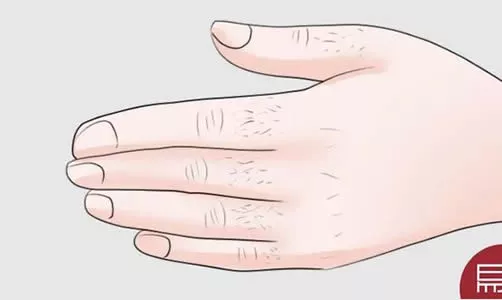
The saying also mentions "hair," which is equally significant. We typically refer to body hair here. Initially, observe the body hair on the fingers; if a woman has delicate skin but coarse, dark body hair, it may indicate a robust work ethic. Ideally, the skin should be fine and smooth, with body hair that is soft. However, if a woman has notably thick and dark body hair, it suggests a hardworking nature, often involving significant household responsibilities.
If the hair is fine and delicate, it’s likely the person engages less in physical labor. In contrast, coarse, dark hair suggests they may work in physically demanding roles. A combination of smooth skin and coarse, dark hair might indicate involvement in both literary and physical tasks, such as document review, which requires considerable physical and mental effort. Individuals with such traits may find even creative work to be strenuous. Nonetheless, they can excel in crafts requiring both manual dexterity and intellectual skill.

For those with delicate skin, it is crucial that it not be overly shiny, like being "as delicate as a blown bubble." Glossy skin is labeled in physiognomy as a "young man's face," implying a tendency towards impulsiveness in romantic and emotional matters, making one prone to mistakes, temptations, or deceit, indicating a lack of self-control.
The adage "wisdom is reflected in skin and hair" suggests that the natural glow of the skin is indicative of one’s vitality and health. Vitality is fundamental, indicating that glow should not be confused with superficial shine; healthy skin looks firm and substantial. This is a basic interpretation of the saying, highlighting that skin and hair conditions can be used to gauge a person’s mental state, physical health, activity preferences, and suitable professions. This technique has been a part of facial analysis for centuries.