How Facial Features Might Indicate Leadership Potential and Luck

Image source: Pixabay
Hello everyone, welcome to this installment of our facial features series. In this issue, we'll explore aspects of career luck and discuss the facial characteristics often associated with leadership potential and the ability to become a superior—a topic distinct from career success.
Important note before reading: To aid understanding for most readers, this article highlights broad, straightforward traits. However, comprehensive facial analysis requires an overall assessment; conclusions cannot be drawn from a single feature. It's important to avoid analyzing facial features in isolation. Please interpret this information with an open mind and avoid rigid interpretations.
Forehead and Ears
Leaders often take on guiding and managing roles, which are commonly linked to positive career development (many aspire to promotions and authority). These traits are closely associated with the forehead. Additionally, being in a leadership position demands courage and decisiveness, qualities tied to the ears.
A high, broad, and full forehead generally supports career achievement. A well-formed forehead often signifies intelligence or a knack for learning. While these individuals might not always be top scholars, they typically possess specialized skills or expertise.
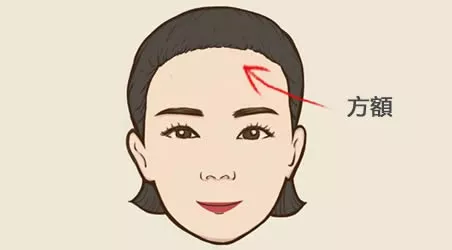
People with favorable forehead features are typically level-headed, optimistic, open-minded, and foresighted, allowing them to make informed, rational, and longstanding decisions—traits crucial for effective leadership and management.
Moreover, a broad and full forehead often brings good relationships with elders or mentors, paving the way for support and advancement during critical moments; some might even benefit from a strong family background.
A neatly shaped hairline that complements a good forehead suggests the capacity to implement ideas effectively. In contrast, a disordered hairline could indicate unclear and irrational goal planning, leading to confusion—a sign of weak leadership and management skills.
However, it's vital to remember that leadership skills are not synonymous with career success. Therefore, a less favorable forehead doesn't necessarily imply limited career luck or financial success. A well-defined forehead is particularly significant for family support, knowledge acquisition, critical thinking, vision, and finding mentors.
Regarding ear features, leadership qualities are mainly associated with ear height and size.
Higher and larger ears suggest strong energy and courage, making individuals more likely to lead, while those with smaller ears might display indecision. Such individuals, although observant and sensitive, often lack the courage to make firm decisions, sometimes due to overanalyzing situations.
Low-set ears might lead to a strong focus on immediate practical benefits, making a person prone to distractions by real temptations. An effective leader should ideally possess foresight, organizational skills, and long-term vision and plans.
Earlobes, while having some bearing on luck, are less crucial than ear height and size for leadership and management traits. Interestingly, many leaders do not have particularly large earlobes:
Large and thick earlobes are often associated with good fortune but might also indicate a more laid-back nature, which can conflict with the assertiveness expected of contemporary leaders. It's easy to see that individuals who are content and relaxed may lack the drive to pursue more. Consequently, many efficient team leaders who excel in mentoring subordinates tend to have small or no earlobes, signifying strong purpose and decisiveness.
That said, leaders or superiors with overall favorable appearances (like managing a large company) still rely significantly on luck and fortune; individuals like these benefit from thick earlobes to support smooth career advancement.
When discussing "leadership" in general, ear height and size are key focuses in ear features.
Eyes and Nose
The significance of eyebrows and eyes is unmistakable. Generally, strong eyebrows and sharp, steady eyes are hallmark traits of leaders and managers. Let's emphasize the importance of eye expression.
Typically, sharp eyes convey ambition, decisiveness, and a tenacious drive, while calm and steady eyes reflect strong mental resilience and a stable temperament, emanating a reliable and composed aura. As the saying goes, "the eyes reveal the soul," and dull, vacant eyes lacking "intelligence" naturally hint at a lack of leadership capability.
Even for those possessing a leadership gaze, variations exist; some may have bright, sharp, and friendly eyes, while others may express a colder, harder gaze. For subordinates, the former is certainly more aligned with the image of a "good leader," and the higher one's position, the more significant the impact.
If a superior's gaze suddenly "deteriorates," it can signal not only changes in personality but also shifts in personal fortune, potentially affecting leadership prowess, such as deteriorating decision-making skills. Eyes convey a wealth of information.
Regarding the nose, leadership evaluation primarily focuses on the root and the bridge, with higher and smoother features being preferable.
A noteworthy configuration is "the root of the nose connecting smoothly to the glabella," a very auspicious structure that indicates fame, status, and favorable mentorship, greatly benefiting career endeavors. Many renowned individuals across various fields possess this feature, naturally aligning with leadership roles.
(The root of the nose connecting smoothly to the glabella: This feature presents as a seamless continuity between the nose root and the glabella, with no dips or interruptions, and the root is not notably lower than the glabella, avoiding any visible indentation.)
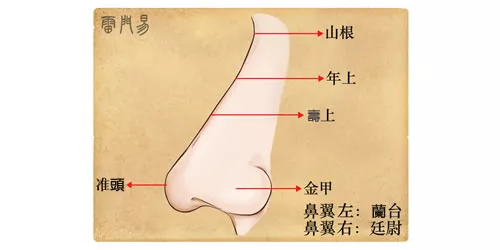
(The image above shows a dent at the nose root, which does not qualify as the root of the nose connecting smoothly to the glabella.)
Individuals with a flat or low nose root often lack self-confidence and assertiveness, tending toward laziness and relying on others. If fortunate enough to encounter mentors, this can be advantageous; after all, leading a stable life is also a form of happiness.
Thus, those with a low root but a fleshy nose tip, full nostrils, and well-balanced features may still enjoy wealth and fortune. However, with a low root, they may lack the ambition and leadership qualities necessary to lead others, often finding it more suitable to follow than to lead. If other features are not beneficial, a low nose root can lead to frustrations and a lack of accomplishments, signaling limited leadership potential.
Regarding the nose bridge, a high, straight, and upright bridge is generally favorable for management and leadership. A straight bridge suggests integrity, kindness, and strong interpersonal skills, whereas a crooked bridge might indicate cunning, which, though linked to creativity and action, can lead to interpersonal conflicts due to arrogance. Leaders must be recognized and supported by others, necessitating a straight nose bridge.
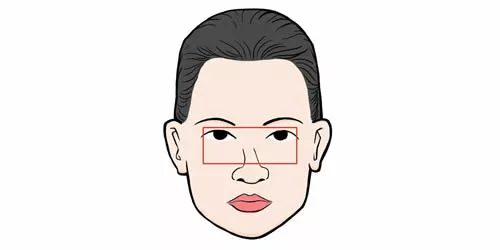
Note: In real life, not all leaders have high nose roots and bridges; interestingly, leaders with low roots and bridges may be more favored by subordinates, often exhibiting traits "uncharacteristic" of traditional leaders, like being more adaptable and open to discussion.
Individuals with low roots and bridges, if they possess high and large ears, can also be promoted to management positions thanks to the "leadership aura" conferred by favorable ear features. However, if they have small, low ears and average nose features, they may naturally lack some capacity to manage others.
Bones and Contours
As mentioned in earlier articles, prominent cheekbones and jawbones reflect ambition and a drive for achievement. While such individuals may not inherently possess leadership skills or be predestined for leadership, those with pronounced cheekbones and jawbones often have a rebellious nature.
Consequently, individuals with noticeable "bone structure" in their facial features often experience discomfort in subordinate roles and, compared to those with subtler features, are more prone to challenge norms, preferring a level of independence. Thus, the likelihood of these features appearing among leaders, entrepreneurs, or small business owners is higher, rooted in their inherent personality traits.
Elders have often cited, "square faces tend to be more leader-like." This adage conveys:
- Individuals with these features typically possess strong willpower, competitiveness, and a desire for control;
- If their features are advantageous, their personalities can propel them to genuinely acquire power and lead others. (In contrast, individuals with oval or round faces, even with favorable features, may not display the same level of assertiveness and may be more inclined to follow.)
Additionally, those with larger overall features—like a large square face, large ears, large forehead, and high nose—naturally project strength and confidence, demonstrating certainty and decision-making capacity. In a word, they are more "courageous," advantageous for leadership roles.
(Conversely, individuals with small heads, small faces, and delicate features often epitomize the traditional idea of a gentle and mild-mannered person. Conversely, many typical Western appearances tend to have larger features, which is why many perceive Westerners as more confident and forthright, while Easterners are viewed as more reserved and gentle; facial features do indeed have a basis in cultural perceptions.)
In conclusion, let me remind you again that this article only summarizes some "standard" facial features of leaders and managers, but it does not mean that those lacking these traits are devoid of leadership potential. Ultimately, facial analysis must consider the entire face and even body posture.
In summary, the concept that "facial features should not be assessed in isolation" remains a timeless truth; a single feature merely offers a point of reference and should not be interpreted too literally.