How Could Bian Que Diagnose Symptoms from a Distance?
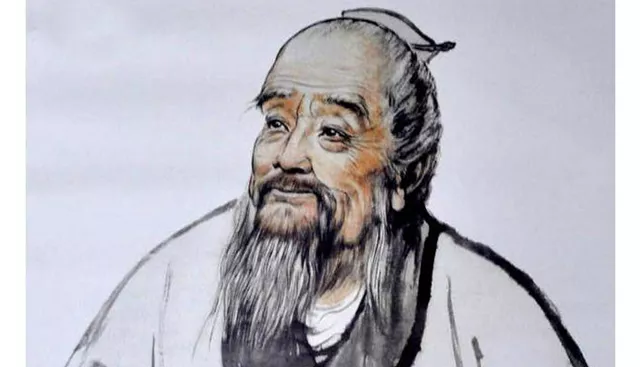
The concept of "remote diagnosis" dates back to ancient times. As the name implies, it refers to the ability to assess a person's health solely through "visual observation," similar to the legendary physician Bian Que (circa 407 BC, Cangzhou, China).
In his youth, Bian Que worked at an inn, where he encountered a remarkable guest named Chang Sangjun, who visited regularly for over a decade. Bian Que held Chang Sangjun in high regard. One day, Chang Sangjun invited Bian Que to sit with him and said, "I possess a secret method, but I am now old and wish to pass it on to you. You must not share it with others." After Bian Que pledged to keep the secret, Chang Sangjun gave him a prescription and instructed him to take the medicine with dew for thirty days, promising that it would grant him profound knowledge. He then entrusted Bian Que with his personal books and vanished without a trace.
Indeed, after thirty days, Bian Que was able to discern the source of illnesses at a glance, understanding the condition of a person's internal organs and the root causes of their ailments. One notable instance of this is his encounter with Duke Huan of Qi.
During their first meeting, Bian Que told Duke Huan, "You have an illness currently affecting the layers between your skin and muscles. If not treated, it will penetrate deeper." Duke Huan dismissed Bian Que, believing him to be a doctor seeking fame through empty words. Five days later, Bian Que observed Duke Huan again and found that the illness had progressed to his blood vessels, urging immediate treatment. Duke Huan was displeased and ignored him. Another five days later, Bian Que warned Duke Huan that the illness had reached his digestive system and should be treated soon, but Duke Huan still did not listen. After another five days, Bian Que saw that the illness had reached the marrow of his bones and deemed it pointless to speak further, leaving in silence. Shortly after, Duke Huan passed away.
Bian Que's extraordinary ability to perceive the origins of illnesses suggests that he might have been taught secret methods by a wise master, despite primarily relying on pulse diagnosis. But what about those of us without such extraordinary abilities? Can we also glean insights about health from a person's appearance?
Ancient beliefs held that the five elements—metal, wood, water, fire, and earth—form the foundation of all things, including five directions (east, south, west, north, center), five flavors (sweet, sour, bitter, spicy, salty), five colors (green, red, white, black, yellow), and five sounds (gong, shang, jiao, zheng, yu). Naturally, this corresponds to the five internal organs, which relate to the five senses. Thus, the shapes, colors, and luster of the senses can reveal not only fortune and misfortune but also the health of the internal organs. According to the "Huangdi Neijing," Qibo told the Yellow Emperor: "The east produces wind, wind produces wood, wood produces sourness, sourness affects the liver, the liver affects tendons, tendons affect the heart, and the liver governs the eyes. In the heavens, it is mysterious; in humans, it is the way; on earth, it is transformation. Transformation produces the five flavors, the way produces wisdom, the mysterious produces spirit, and the spirit manifests as wind in the heavens, wood on earth, tendons in the body, and the liver in the organs..."
How can we observe these correlations? The nose reflects the condition of the lungs; frequent sneezing may indicate poor lung function. The ears relate to the kidneys; large and weak ears suggest kidney deficiency. The mouth corresponds to the stomach; bluish lips may point to gastrointestinal issues. The eyes correlate with the liver, the tongue with the heart, and the condition of the teeth can indicate bone aging, among other things. The external features of the head, face, hands, feet, veins, and muscles can indeed reflect the unseen essence, spirit, and internal organs.
From the perspective of medical physiognomy, it's evident that humans, as the spirit of all things in heaven and earth, should adhere to the natural patterns of the four seasons: "Eat and drink in moderation, maintain regular habits, and avoid excessive labor." By cultivating kindness and good deeds, and focusing inwardly, one accumulates blessings. As the heart transforms, one's facial appearance and complexion improve, which also reflects the health of the internal organs. Thus, a virtuous person will naturally be spared from the calamities of illness.