Comprehensive Guide to Facial Features - Eyes
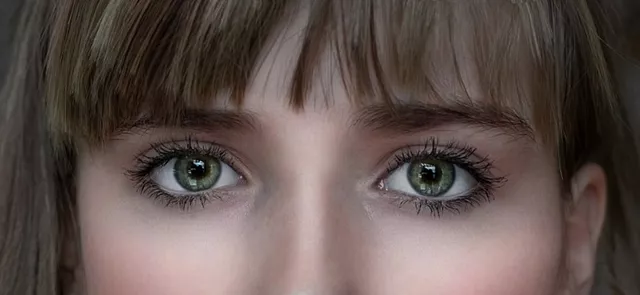
The eyes are considered the focal point of the face. In physiognomy, the fortunes for specific years are read from parts of the eyes: the inner corner (head) of the left eye, called the Sun, corresponds to age thirty-five; the inner corner of the right eye, the Moon, corresponds to thirty-six; the left pupil area corresponds to thirty-seven; the right pupil area to thirty-eight; the outer corner (tail) of the left eye to thirty-nine; and the outer corner of the right eye to forty.
If these eye zones look healthy and bright, it suggests smooth, favorable luck from thirty-five to forty, with especially strong luck at thirty-seven and thirty-eight. If they look dull or troubled, it points to setbacks and unfavorable investments during these years, with a higher chance of problems stemming from romantic entanglements.
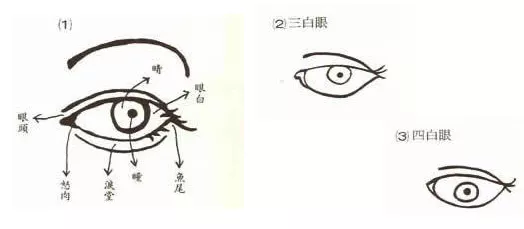
1. White Eyes
1. One White Eye
A “one white eye” appears when the dark center sits close to the inner corner of the eye, leaving more white visible on one side. Having just one white eye is considered preferable to having both.
It is said that people with one white eye often had grandfathers in positions of power who may have committed violent acts, resulting in this trait appearing in descendants. Conditions such as three white eyes, four white eyes, or a slight imbalance between the two eyes (where one dark center sits off-center) are viewed similarly to having one white eye.
One white eye suggests potential wealth and status. If both eyes show white in this way, it can hint at being cross-eyed and is taken to imply poor family luck and health, with illness or shorter longevity in later years.
2. Two White Eyes
“Two white eyes” refers to what’s considered a normal look: the dark center is in the middle and the white of the eye is visible only on the sides.
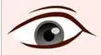

3. Three White Eyes
Three white eyes come in two types: upper three whites and lower three whites. Upper three whites appear when the dark center sits lower, exposing white on the sides and above. Lower three whites appear when the dark center sits higher, exposing white on the sides and below.
Both types suggest a strong, driven personality that will go to great lengths to achieve goals, often leading to notable accomplishments. However, people with three white eyes are said to face more danger, especially legal troubles, fights, or accidents, often around ages fourteen, seventeen, twenty-three, twenty-six, thirty-two, thirty-five, and forty-one, with thirty-five being especially risky.
Men with three white eyes may have a heroic mindset but can suffer losses due to romantic entanglements. Women with three white eyes tend to take the initiative in relationships and often control the dynamic. This trait is also linked to weaker family bonds: ancestors may have had wealth, but a lack of virtue in the family line is said to lead to three white eyes in descendants.
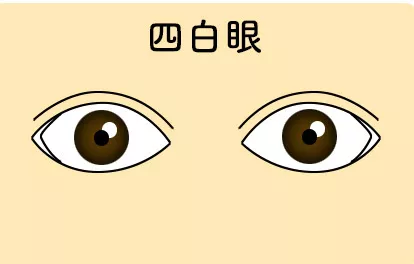
4. Four White Eyes
Four white eyes occur when the dark center is very small and is surrounded by white on all sides. People with four white eyes are seen as even more intense and potentially destructive in temperament. They may harbor strong desires for revenge and can be ruthless, with a “me first” mindset that makes them hard to get along with.
Both three white eyes and four white eyes are called multiple white eyes, indicating abundant energy, strong desires, and an extreme streak in character.
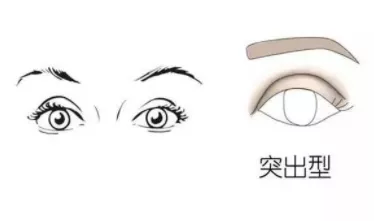
5. Protruding Eyes
Protruding eyes are those where the eyeballs look prominent. In Chinese physiognomy, pronounced prominence is said to foretell an untimely death and a life of conflict. More generally, protruding eyes on a thin face point to an impulsive nature and a tendency toward conflict, while protruding eyes on a round face suggest a sociable, smooth character unlikely to offend others (this excludes protrusion caused by nearsightedness or illness).
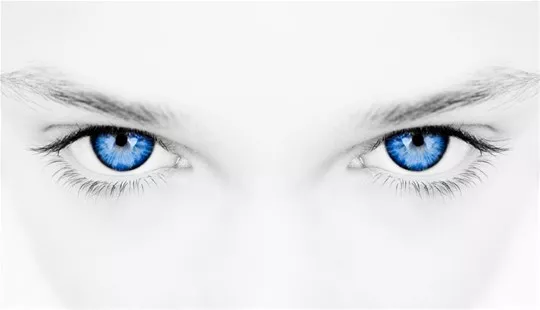
II. Eye Shape
1. Long Eyes
People with long eyes tend to be slower-paced, gentle, easy to get along with, and carry a touch of nobility, with a knack for keeping their true feelings hidden.
2. Short Eyes
People with short eyes are often quick-tempered, make decisions rapidly, and are less inclined to hide their feelings, showing emotions more openly.
3. Big Eyes
Big eyes should also have a large dark center; if the center is small, they become four white eyes. Large, dark centers are known as “childlike eyes,” suggesting a youthful, innocent nature—curious and inquisitive, but easily misled. Their curiosity can spark misunderstandings with the opposite sex, leading to frequent romantic complications, hence the term “false peach blossom eyes.” This look is common among performers, especially women.
4. Thin Eyes
People with thin (narrow) eyes are usually meticulous, private, and keep their thoughts to themselves. They can be calculating and not very generous. If thin eyes are bright and paired with well-groomed brows, the person is a skilled strategist who manages affairs well and is likely to hold social standing. If thin eyes lack brightness, it points to lower intelligence, a petty nature, grudges, and little ambition—often leading to a wasted life.
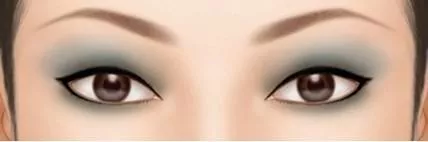
5. Thin and Long Eyes
Thin, long eyes are considered auspicious, signaling ambition and a drive to excel, which can bring social achievement. Men with this eye shape are said to have beautiful, charming wives.
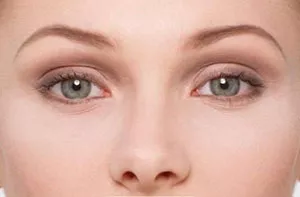
III. Eyelids
1. Double Eyelids/Single Eyelids
Whether the eyes have double or single lids, the most important factor is brightness and clear contrast between dark and white—signs of good eyes. That said, single eyelids can sometimes look puffier than double lids, which is taken to suggest stronger sexual desire and impulsiveness in any gender.
Some say double-lidded people are indecisive while single-lidded people are decisive, but that’s not always true. Strong, forceful eye expression indicates decisiveness; weak expression suggests the opposite. Double lids tend to reveal emotions more openly, while single lids may keep them concealed.
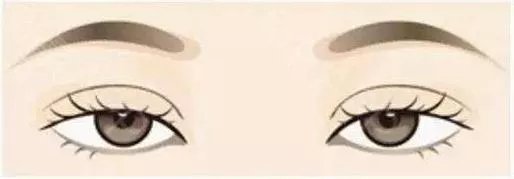
2. Sleepy Eyes
Some people naturally look drowsy or tipsy, with eyes that lack brightness—these are called sleepy eyes. Such individuals tend to be conservative, lack decisiveness, and may struggle to achieve major success. Men with sleepy eyes are prone to romantic troubles, while women may face moral lapses or scandal.
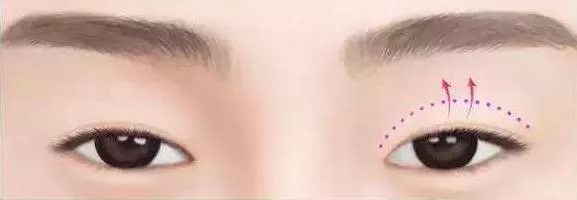
3. Half-Sleepy Eyes
Half-sleepy eyes occur when the upper lid droops, covering the upper half of the eye even when open. This is said to indicate a tendency to stumble while walking, leading to foot injuries.

IV. Peach Blossom Eyes
Peach blossom eyes include true peach blossom eyes, childlike peach blossom eyes, tearful peach blossom eyes, pinkish-white peach blossom eyes, and crow’s-feet peach blossom eyes.
1. True Peach Blossom Eyes
True peach blossom eyes are long, slightly curved at the inner corner, bright, and clearly defined. This type is said to appear only in women, who tend to attract romantic attention throughout life, even into their forties and fifties.
2. Childlike Peach Blossom Eyes
Similar to childlike eyes, people with this look ask many questions, which can be mistaken as romantic interest, leading to one-sided or false pursuits.
3. Tearful Peach Blossom Eyes
Tearful eyes look moist or watery. In physiognomy, women with this look are thought to face frequent romantic troubles. Their emotions are easily swayed, leading to unstable relationships and repeated emotional turmoil, with a tendency toward divorce. Marriages after thirty are said to be more stable; early marriages often don’t last.
Men with tearful eyes have what’s called “revealing eyes.” It is said, “revealing eyes mean either infidelity or trouble,” suggesting romance- or law-related issues. If a man has tearful eyes with a smiling face, it implies he is about to pursue a new romantic interest. If he has tearful eyes with flushed cheeks or a frown, it suggests looming conflict or legal problems.
4. Pinkish-White Peach Blossom Eyes
This type appears only in men. Such men are prone to romantic entanglements, especially during times of strong romantic luck, when they may meet particularly captivating women. Unmarried men may marry then without issue, but married men may be found out by their wives, leading to serious conflict or divorce. Even typically decisive men can be swayed by women during such periods.
5. Crow's Feet Peach Blossom Eyes
Crow’s-feet peach blossom eyes feature a line extending from below the eye to the outer corner. People with this look have a strong appetite for romance and actively seek partners of any gender, leading to a lifetime of romantic entanglements.
V. Other Characteristics
- Wide-set Eyes: Typically, one eye can fit between the two eyes. If there’s extra space, the eyes are wide-set. Such people have a strong memory for faces and remember things deeply after one look; many artists have this spacing.
- Narrow-set Eyes: If the space between the eyes is too small to fit one eye, they’re narrow-set. These individuals are highly observant, can see through others’ thoughts, and are harder to deceive.
- Uneven Eye Size: This suggests fluctuating fortunes between thirty-five and forty, with possible marital difficulties.
- Black Moles in the Eyes: Indicates potential romantic troubles.
- Wrinkles at the Outer Corners of the Eyes: Suggests possible spousal issues and weaker bonds with children.
- Split Sleepy Eyes: In men, this points to problems with the wife; in women, problems with the husband—hinting at an unhappy ending.
- Lighter-colored pupils suggest weaker family ties.
- Moles at the Inner Corners of the Eyes: In any gender, these indicate strong sexual desire and potential marital disputes, especially at ages thirty-two, thirty-five, and thirty-six.
- Moles at the Outer Corners of the Eyes: Suggests marital strife or divorce, especially at ages thirty-five and forty-one.
- Moles on the Upper Eyelid: Points to possible inheritance disputes within the family.
- Moles on the Lower Eyelid (Tear Hall): The tear hall corresponds to children. A mole on the left side signals potential issues with sons; on the right side, potential issues with daughters.
- Dark or Networked Patterns in the Tear Hall: Suggests possible childlessness or difficult childbirth.
- Adultery Lines: A thin black line crossing the space between the eyes is called an adultery line. In men, it implies possible infidelity by the wife; in women, possible infidelity by the husband. A thick black line in the same area indicates a headache line, not an adultery line.
- Red Lines in the Whites of the Eyes: Indicates a rough, impulsive personality, prone to lifelong conflicts.
- Sudden Red Lines from the Outer Corners into the Pupil: Suggests impending disaster. If the red line crosses the pupil and reaches the inner corner, it may indicate a life-threatening event.
- Triangular Eye Shape: Suggests poor character. In older individuals, if the lower lid droops into a triangle, it suggests susceptibility to deception.
- Darkness at the Outer Corners of the Eyes: Indicates potential arguments with a spouse. If this darkness appears along with a low nasal bridge, it points to marital problems and possible divorce, especially at ages thirty-five and forty-one.
- Moles at the Left Outer Corner of a Male's Eye: Indicates potential legal troubles and a tendency to chase romantic interests.
- Moles at the Right Outer Corner of a Male's Eye: Suggests potential health issues for the wife, particularly involving the lower body, such as gynecological or kidney problems. The outer corner represents the marital relationship; if this area is clear, the relationship is likely healthy; if blemished, it hints at marital discord or health issues.
Additionally, people who often gaze upward may be arrogant, while those who look downward may be scheming. Speaking with the head lowered can signal cunning. Frequent side glances can suggest insincerity. Rapid blinking with a tense expression may indicate anxiety; blinking while smiling may suggest lying.