Comprehensive Guide to Facial Features: Complexion
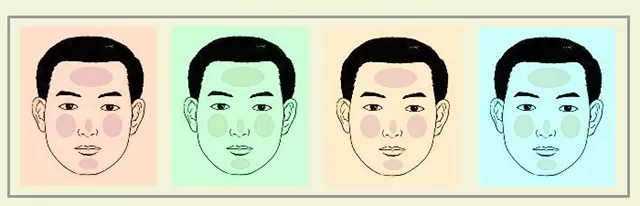
In physiognomy, a person's recent fortune is read by observing facial features and complexion. "Qi" is used to anticipate what lies ahead, while "color" reflects the present and the past. Qi is said to start as fine as silk and widen like a fly’s wing; its size helps indicate direction and beginnings and endings. Colors are grouped as blue, red, yellow, white, black, purple, and hazy. When assessing qi, practitioners look for qualities such as subtlety, clarity, vitality, and maturity.
The meanings of various colors are as follows:
- Blue: Signifies worry, fright, anger, fatigue, musculoskeletal issues, and spleen disorders.
- Red: Suggests financial loss, fire, legal disputes, blood-related troubles, calamities, and diseases of the heart and circulation.
- Yellow: Signals accumulating wealth, increased blessings, promotions, and liver conditions.
- White: Linked with mourning, penalties, loss, and lung ailments.
- Black: Points to theft, water-related misfortune, illness, ruin, and kidney disorders.
- Bright red: Associated with celebrations, accumulating wealth, entrepreneurship, and passion.
- Purple: Denotes rising status.
- Hazy: Indicates stagnation and depletion.
To gauge a person's current fortune, one mainly looks at the complexion at the "Yintang" (the space between the eyebrows). In folk sayings, someone down on their luck is said to have a "dark Yintang." To understand specific fortunes, one should also consider the complexion at the eight trigram positions on the face.
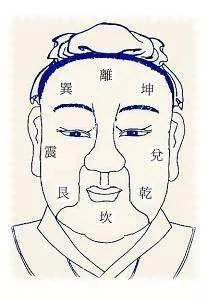
Reading the eight trigrams on the face is like vertically overlaying the Later Heaven Bagua on the face and examining color changes at each trigram position. Generally, if the color aligns with a trigram’s favorable element, it is auspicious; if it aligns with its unfavorable element, it is inauspicious.
Qian Trigram
The Qian trigram lies below the left cheek dimple in the northwest area of the face. A full Qian palace suggests success in official roles and strong resolve. A sunken Qian palace points to unpopularity with superiors, frequent disputes, and weak financial luck. If the Qian palace appears yellow, one should seek official posts and may gain wealth from external sources. White indicates safety and smooth progress. Dark tones suggest health concerns, especially involving the father. Red warns of legal trouble or financial loss. Light purple points to many favorable outcomes. Blue indicates poor luck in official matters; if the area is sunken or blemished, it is even more unfavorable for the father.
Kan Trigram
The Kan trigram corresponds to the chin area, at the north of the face. A full Kan palace indicates wealth and the ability to inherit the family fortune; if it is sunken, it is hard to continue the family business. The Kan palace also reflects kidney function: fullness indicates strong kidney qi, while thinness suggests weakness. If there are blemishes, moles, or warts around the Kan position and the philtrum, men should guard against kidney stones and prostate enlargement; women should guard against kidney stones and uterine fibroids. Light purple indicates wealth. Blue suggests kidney deficiency and anxiety. Yellow points to instability in housing and the need for timely repairs. White warns of potential injury or illness. Red suggests disputes or legal issues. Dark tones indicate potential imprisonment.
Gen Trigram
The Gen trigram is located below the right cheek dimple in the northeast area of the face. A full Gen palace indicates a peaceful life. A sunken Gen palace suggests poverty and difficulties with brothers or younger sons. Yellow is auspicious and indicates safety. White warns of theft or disputes. Light purple is very auspicious. Blue indicates worries and digestive issues. Red may lead to disputes stemming from alcohol. Dark tones suggest theft, imprisonment, or illness.
Zhen Trigram
The Zhen trigram is located on the right cheekbone in the east of the face. A full Zhen palace indicates strategic thinking; a deficiency suggests difficulty seizing power. White may bring disputes. Light blue is neutral, while dark blue indicates fear and the need to stay steady. Yellow indicates wealth. Dark tones suggest illness or loss.
Xun Trigram
The Xun trigram is located above the right eye, around the temple area, in the southeast of the face. A full Xun palace indicates many children. A sunken Xun palace suggests a life full of worries and difficulty enjoying life. If there are blemishes, moles, or warts at the Xun position, guard against gallstones. Red indicates gallbladder inflammation or liver stagnation. Blue suggests fear and anxiety. Dark tones indicate illness and trouble.
Li Trigram
The Li trigram is at the center of the Yintang and forehead, in the south of the face. A full Li palace indicates abundance in food and clothing; a sunken Li palace suggests many setbacks and difficulties. Light red or yellow indicates promotion for those in office and good fortune for others. Red warns of high blood pressure. Light purple or a rosy tone indicates good fortune. Blue warns of possible illness or imprisonment. Dark tones indicate unexpected misfortune and heart failure.
Kun Trigram
The Kun trigram is located above the left eye, around the temple area, in the southwest of the face. A full Kun palace indicates many fields or properties. A thin appearance suggests difficulties for the mother. Yellow indicates celebrations. Blue suggests digestive issues and worries. Dark tones indicate illness in the abdominal area.
Dui Trigram
The Dui trigram is located on the left cheekbone in the west of the face. A full Dui palace together with a full Zhen palace indicates the ability to wield power; a sunken Dui palace suggests difficulty gaining authority and winning support. Yellow indicates unexpected wealth. White suggests virtuous descendants. Red may bring respiratory issues or disputes. Dark tones indicate susceptibility to lung disease, and women may be prone to breast conditions. In this traditional reading, having daughters at home is considered inauspicious.
Central Palace
The Central Palace is located on the bridge of the nose, historically called the wealth palace. A full Central Palace indicates longevity and good fortune; a sunken Central Palace suggests poor health and limited wealth. Yellow indicates accumulating wealth. White is ominous, while dark tones suggest family discord. Light purple indicates good fortune. Red suggests financial loss; acne or sores on the wings of the nose point to recent monetary losses. Blue suggests worries and anxiety.
When assessing a person's health from the face, the same principle applies: use the eight trigrams to locate the corresponding organs, then judge the strength and condition of each organ based on lines, blemishes, moles, warts, and the complexion of each area.
Sourced from the internet for reference only
Images in this article are sourced from the internet; copyright belongs to the original authors