Classic Physiognomy: The Secret Golden Formulas of 'Xiangfa Xinjian' - Translation and Annotations by Liu Heng, Volume 5
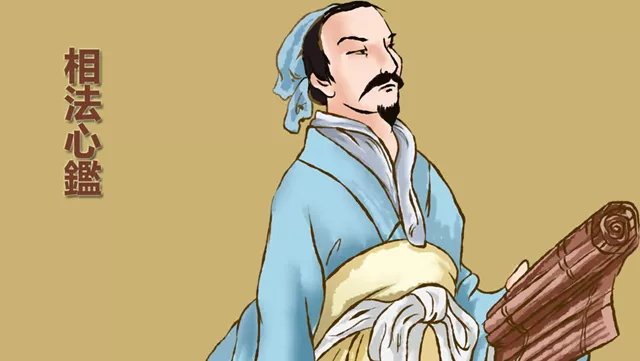
The renowned "Ma Yi Physiognomy" originates from the Ma Yi school, with the "Liu Zhuang Physiognomy" by Yuan Liuzhuang during the Ming Dynasty also emerging from this tradition. During the Five Dynasties and Ten Kingdoms period, a member of the Ma Yi school chose a favored disciple to whom they imparted the essence of Dao—this disciple was Chen Tuan, also known as Chen Xiyi. The Ma Yi Physiognomy embodies the core principles of physiognomy, setting a profound theoretical foundation for future generations in facial reading. Teacher Liu Heng has compiled and annotated the "Heart Mirror of Physiognomy," aiming to clarify its origins and ensure its transmission through the ages.
Red veins in the pupils suggest an evil nature leading to demise.
Annotation by Liu Heng: Red veins refer to bloodshot eyes. The whites of the eyes correspond to the lungs and are associated with the element of metal—considered the standard for all things. If metal is harmed by fire, the liver grows dominant and unrestrained, inevitably leading to disaster.
A soaring snake enters, leading to a broken neck and death in the street.
Annotation by Liu Heng: The "soaring snake" describes the nasolabial folds or smile lines formed by the cheekbones and jaw. If these folds are too close to the corners of the mouth, it suggests sagging cheekbones. This indicates that metal does not nourish the earth, with earth governing relationships. A face with such features often lacks principles, frequently changes course, and shows minimal tolerance or humility, resulting in poor social connections and ultimately leading to loneliness in old age.
Yin and Yang should not be reversed; harmony between the ruler and minister is essential.
Annotation by Liu Heng: In this context, the nose represents Yang, while the cheekbones represent Yin; the face is Yang, and the bones are Yin; the forehead is Yang, and the ears are Yin. The balance between Yin and Yang must not be reversed; high cheekbones with a low nose lead to failure as does a sunken forehead with hollow ears resulting in a wasted life. The "ruler and minister" refer to the eyes and eyebrows, respectively, with the eyes as the ruler and the eyebrows as the minister. Eyes should exude spirit, and eyebrows should have presence, which defines a noble minister. Conversely, if the eyebrows overshadow the eyes or if the eyebrows are thick and overwhelm them, one might achieve some success but ultimately face separation.
All three Yin and Yang areas are sunken, making childbearing difficult.
Annotation by Liu Heng: The three Yin and Yang (Jue Yin, Shao Yin, Tai Yin for the Yin; Shao Yang, Yang Ming, Tai Yang for the Yang) refer to the area under the eyes, also known as the eye bags. These areas, also regarded as the "male and female palaces," correspond to the stomach meridian, which is associated with nurturing offspring. If these areas are sunken or exhibit excess flesh or fine lines, it can indicate difficulties in having children.
With prominent crow's feet and an exposed gate of infidelity, finding a virtuous wife is challenging.
Annotation by Liu Heng: The crow's feet area is also called the gate of infidelity, corresponding to the palace of marriage. Deep and disordered crow's feet, alongside a sunken gate of infidelity, suggest difficulties in finding a virtuous wife, with a likelihood of marital disputes.