The Auspicious Five Stars in a Row: A Key Pattern in Zi Wei Dou Shu Astrology
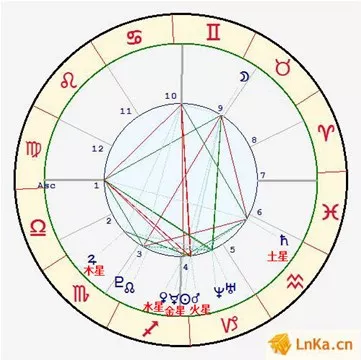
In the classic text Guo Lao Xing Zong, it states: "The five stars need not occupy the same palace; they must simply follow the sequence of the seven stars, succeeding one another without interruption. This forms a virtual gathering of one star, and those whose fate resides therein are truly blessed." This is Master Zhang Guo's definition of the Five Stars Linked Beads pattern. From this, we can see that the five stars—representing Metal, Wood, Water, Fire, and Earth—must align in sequential order without breaks, distributed consecutively across the chart without skipping one or more houses. They don't have to be in the same palace. However, while the text explicitly notes they need not share a palace, it doesn't exclude configurations where they do. Thus, five stars in the same palace qualify as long as they maintain that unbroken sequence along the seven-star path.
The same text further explains: "Each of the five stars follows its own orbital sequence, and their convergence is rare. When they link up like beads, it's especially marvelous. If their sequences differ but still form a linked alignment, it's equally auspicious. Those born under this configuration in their chart will enjoy balanced and harmonious fortunes, like a public servant in equilibrium." In essence, the Five Stars Linked Beads refers to the five major planets—Water (Mercury), Metal (Venus), Fire (Mars), Wood (Jupiter), and Earth (Saturn)—appearing in sequential, unbroken order on the destiny chart. For example, Mercury in Gemini, Venus in Taurus, Mars in Aries, Jupiter in Pisces, and Saturn in Capricorn. Because these planets are all in their temple positions (strong and exalted), and they connect in a chain, they create a powerful synergy. Even if there are minor clashes between them, the overall momentum links them harmoniously, turning potential negatives into positives. That's why people with this pattern in their chart are said to hold positions of great honor—it's no small matter.
That said, it's exceedingly rare for all five to enter temple positions. So, as long as the five major planets align sequentially without interruption—even if they're in detriment, fall, or the same palace—it still counts as this pattern, though the native's wealth and status might be somewhat more modest.
From a modern astrological perspective, if even one or two planets enter temple positions in a chart, the native is already exceptionally fortunate in certain areas of life. When all five—Mercury, Venus, Mars, Jupiter, and Saturn—fall into temples, the chart holder truly possesses an indescribable aura of nobility and prosperity. However, this view sometimes needs adjustment, as Uranus was discovered in 1781, Neptune in 1846, and Pluto in 1930. Traditional Zi Wei Dou Shu didn't include these three outer planets in its analyses, yet their influences are absolutely not to be underestimated.
For instance, on July 10, 2002, an extraordinary alignment occurred with Saturn, the Moon, Mercury, the Sun, Jupiter, Mars, and Venus strung out in a row across the sky. Though not all were in temple positions, their magnetic fields interacted strongly. Unfortunately, Uranus squared Venus, and Pluto squared Saturn, triggering a massive stock market plunge, frequent earthquakes, and unrest in the Middle East. If a child were born at that time, amid all the grand auspiciousness, they'd inevitably absorb some of that turbulent energy.
Nevertheless, planetary influences operate independently. People with the Five Stars Linked Beads pattern in their chart are still incredibly rare and fortunate. As for any additional clashes or oppositions that might appear, they actually serve as vital lessons for honing skills, elevating life wisdom, and refining character—they don't erase the foundational strength of the original pattern. It's much like how a Grand Cross chart isn't inherently inferior to a Grand Trine; those with Five Stars in a Row plus clashes often lead extremely wealthy yet challenging lives. Successfully navigating these trials can make one's wisdom more profound and fulfillment greater, potentially leading to even higher achievements in this lifetime.