Fundamentals of Astrology: Assessing Planetary Influences in a Birth Chart
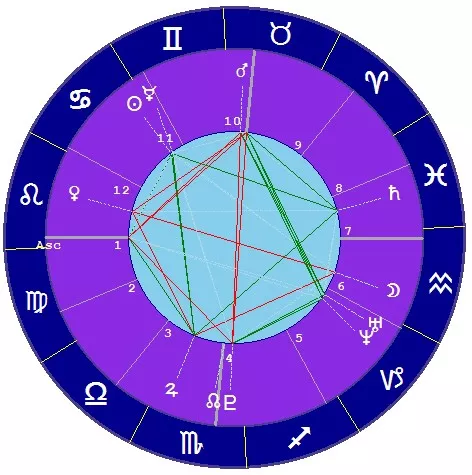
A planet’s influence refers to the areas of a natal chart where its impact is most pronounced. You can evaluate that influence step by step using the five guidelines below:
1. Is the planet retrograde?
This affects how smoothly the planet’s traits are expressed. So the first and most straightforward check is whether the planet is retrograde. In general, retrograde planets tend to operate less directly, often weakening their outward influence.
2. Is the planet in a cadent house?
If a planet falls in a cadent house, its visibility and effectiveness are reduced; as a result, its influence is generally weakened.
3. Assess the planet's dignity and debility
A planet’s influence is shown through its sign and house placements, and its strength varies accordingly. The key question is how well the planet’s nature matches the sign or house. For example, when the Sun is in Leo, it is in its domicile, which amplifies its power. Similarly, when the Sun is in Aries, Aries’ drive and vitality complement the Sun’s nature, also increasing its influence. In both Leo and Aries, the Sun tends to be stronger and more effective.
By house, when Mars is in the First House, its influence is fortified because the First relates to core personality and self-expression. In most cases, consider dignity and debility primarily by sign; assess house effects through the life areas those houses govern without overemphasizing “strength.” However, if a planet is in the First, Fourth, Seventh, or Tenth houses, pay special attention to how strong it is.
4. Examine the planet's aspects
Aspects describe how planets interact and how the houses they represent are activated. Depending on the geometry, aspects can amplify or diminish a planet’s influence.
For example, in a T-square, the focal planet at the apex often dominates the chart’s dynamics. A Grand Trine can likewise strengthen the participating planets and the themes they represent. In short, aspect patterns modulate planetary strength.
A planet involved in notable patterns or in many aspects tends to be more prominent—especially through challenging aspects, which create tension and drive. A planet conjunct the Sun can be overshadowed by the Sun’s brilliance, yet it still colors the Sun’s expression with its own qualities. Conversely, an excess of harmonious aspects may breed complacency; the potential is there but underused, softening the planet’s benefits.
5. Consider the planet's relationship with the four angles
Likewise, aspects to the angles—Ascendant, Descendant, Midheaven, and Imum Coeli—boost a planet’s impact. These links can significantly shape the chart’s overall trajectory and should be watched closely. Pay special attention to contacts with the Ascendant and Midheaven, especially conjunctions.