Astrology Basics: Finding Your Place in the Universe with Susan Miller
Susan Miller, the renowned American astrologer, tops the list of the top ten U.S. astrologers and is the most beloved astrologer worldwide. She's deeply adored by Chinese readers, who affectionately call her "Third Mom." Her approach to astrology focuses on event guidance.
Finding Your Place in the Universe
A Brief History
One key point to emphasize is that astrology doesn't imply a predetermined fate or inescapable destiny. Humans possess free will. Astrology isn't a religion or a substitute for religious beliefs. So, what exactly is astrology? It's a lens for viewing cycles and patterns. Astrologers identify areas of opportunity, luck, and potential growth in the birth chart, while also noting zones of pressure, challenges, and possible setbacks. How things ultimately unfold is up to you. Perhaps your stars are screaming for action, but if you don't take the initiative, success might slip away, or you could overlook a rare opportunity. Consider this analogy: You might feel lost in a fog, yet with determination to find solutions, you could overcome obstacles and tap into an inner strength you've always had but never recognized.
Astrology's origins date back nearly as far as humanity itself, with scholars believing various civilizations independently developed their own astrological studies. The Sumerians in Babylonia (modern-day Iraq) created one of the earliest prototypes around 3000 BCE. Some experts trace the oldest astrological records to as far back as 5800 BCE. The Maya in Central America and ancient Indians also practiced astrology, while the Chinese were applying it by 2000 BCE. Works by Hippocrates and Ptolemy indicate astrology emerged in Greece by 500 BCE. African Arab civilizations and the eastern Mediterranean had astrological applications by the 8th century CE. Ptolemy's (c. 100–170 CE) "Tetrabiblos" is credited with reviving astrology in the Middle Ages.
As we know, the twelve signs represent a cycle of life and symbolism, which differs slightly from early astrological records. However, by 180 CE, interpretations of astrology had evolved into their modern form—a development we owe to Greek mathematicians and astronomers like Ptolemy. In the 20th century, Carl Jung wrote extensively on astrology, applying it to his research on personality and human motivations.
The Planets
Each planet listed below plays a crucial role in every individual's birth chart. Every sign has its ruling planet, but all planets transit through every sign in the zodiac. Explore the descriptions of these planets to see how the movements of our solar system influence your life.

The Sun
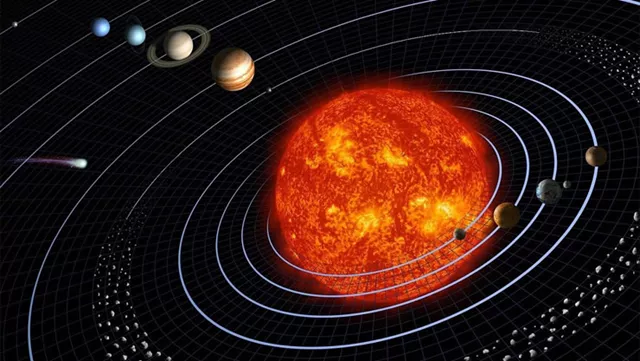
From Earth's perspective, the Sun is the brightest star in the universe. We live in the solar system with the Sun at its center, making it a vital presence in every birth chart. Without the Sun, life as we know it wouldn't exist. The Sun governs your sense of purpose, pride, and determination, protecting your heart, health, and vitality. Praise for your excellent work performance, a sense of accomplishment toward goals, and optimism about future aims all come from the Sun. It's your core self, shaping how you view yourself and your self-worth, and influencing how others perceive you. Essentially, the Sun is a yang energy, so it also impacts key masculine roles in your life—especially men in positions of authority. This includes your father, current boyfriend, husband, male friends, male boss, or male clients.
The Sun rules the day. Similarly, it governs public reception and self-image, achieved by shining a light on your true self. For any planet aspecting the Sun, it illuminates their qualities and reveals their truth. For example: If the Sun forms a special aspect with Jupiter, Jupiter's positive traits get highlighted and amplified by the Sun's rays. Under this nurturing sunlight, Jupiter's strengths are reinforced, bringing blessings and benefits to the world.
The Sun takes a year to circle the twelve signs. It rules the heart. It's the ruling planet of Leo.

The Moon
The Moon provides your deepest emotions, the subtle nuances of your personality, your instincts and intuition, feelings, and reactions. It also protects your private life, especially your home. As a fundamentally yin energy, the Moon governs your mother and how you view her. Other feminine roles in your life are also influenced by the Moon, including your sisters, girlfriend, female boss, or grandmother.
If the Sun represents where you're going, the Moon signifies where you've been. More specifically, the Moon protects your history, background, emotional journey, and roots. Your ability to connect with your own feelings depends on the aspects the Moon forms with other planets.
The Moon's energy can also indicate your health status, especially for women. It rules the large intestine, stomach, and breasts, as well as moonlight (clearly referring to moonbathing here). The Moon circles the twelve signs in about 28 days, spending two to three days in each sign monthly.
Every month brings a New Moon. The New Moon's position in the birth chart shows which area benefits from fresh starts. The Full Moon arrives two weeks after the New Moon; its position signals timing for gains or outcomes from prior actions.

Mercury
This little guy is the messenger in mythology who delivers news to everyone. Mercury represents emotionless, highly rational, and objective thinking. Its placement in a sign reflects the corresponding intellectual style. As a fast-moving planet, Mercury is lively, sensitive, and quick to adapt. One of its key jobs is conveying information; so Mercury rules knowledge, language, writing, editing, research, expression, and all forms of learning experiences, learning styles, and data analysis. Mercury also governs communication, computers, software, digital products, postal services, shipping, tour guides, couriers, and all kinds of transportation. Mercury's responsibilities are endless.
When Mercury is retrograde, it scrambles messages, triggers static interference, and confusion. The effects of Mercury retrograde are felt across the entire universe. Try to avoid signing contracts, completing major transactions, using precise information, or making big decisions during Mercury retrograde, as they're all unreliable.
Mercury's sign and house placement in the birth chart reveals a wealth of information about the chart owner's natural talents in gathering and sharing info. Mercury also rules sibling relationships, maps, correspondence, travel plans, appointments, roads, vehicles, advertising, publishing, sales, and public relations.
Mercury rules Gemini and Virgo. It stays in each sign for about two to three weeks, but during retrograde, it can linger up to ten weeks in one sign. Mercury retrogrades three to four times a year. It never strays far from the Sun, taking about a year to circle the twelve signs.

Venus
Venus protects feelings, the heart, love life, and all things pleasurable, including gifts. This yin energy planet also rules beauty, fashion, adornments, and art. This elegant star makes the world more attractive and fun. Some lesser-known facts about Venus: Its position in the birth chart can bring strong financial benefits and material gains.
Venus provides everything related to beauty. It brings us chances to enjoy fine music, gourmet food, scented baths and flowers, and fine wines. It even motivates us to view non-mainstream art exhibits. It can help you charm a loved one. Without Venus, how bland the world would be!
Venus is charming, magnetic, and skilled at connecting. This planet never nags. (Nagging is determined by Mars; it's the lover to Venus on the cosmic level, perfectly matched!) Venus achieves goals with charm rather than force. To some, this planet seems a bit hedonistic. Indeed, Venus isn't great at deep thinking, logic, or ethics. Leave considering consequences to images. Deciding specifics to Mars. Cold, sober analysis of facts and data to Mercury. (Info from Mercury is usually reliable, as its observations are completely unbiased by emotion.)
Like Mercury, Venus stays close to the Sun. It zips through each sign in two to three weeks, unless retrograde. Retrograde Venus can spend five months in one sign. Typically, Venus takes ten to twelve months to circle the twelve signs, longer if retrograde. Venus rules Taurus and Libra.

Mars
Among the twelve signs, Mars can energize other planets or house positions. It's a planet of initiative, steadfast confidence, strength and power, mental focus, courage, competitiveness, and boldness.
This red planet provides all yang elements, from sex to conflict. Mars is seen as the soldier's planet, known for courage, passion, pure energy, and endurance. Mars is also famed for its ability (under favorable aspects) to help you escape and surpass opponents.
Mars provides weapons, fire, and all combustibles. Mars only benefits endeavors requiring endurance and determination when well-placed. When Mars radiates positive energy, it provides survival instincts in any environment.
Even in dire straits, Mars keeps you advancing. If Mars energy is overly intense, it may lead to emotional explosions or risks of physical injury. If you seek courage and passion in anything you're striving for, Mars can provide that feeling.
Mars takes two years to circle the twelve signs, spending six to seven weeks in each. If it retrogrades in a sign, it can stay seven to eight months. Mars rules Aries and Scorpio.
Jupiter
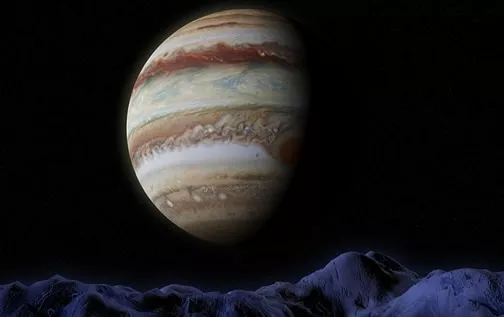
We all know Jupiter is the planet of good fortune. It expands and magnifies opportunities and benefits in corresponding house positions. This lucky star also protects wealth, substance, finances, and acquisitions. Plus, Jupiter brings hope, faith, optimism, loyalty, justice, confidence, and wisdom. Jupiter draws the big picture and makes you aspire to greatness.
Think about this: In the solar system, the Sun is the true star. If we combined all planets except the Sun, Jupiter's mass would exceed the total of all others. That's why we call it a gas giant. Jupiter is a tremendous benefactor.
In the houses Jupiter transits, it encourages rational thinking and finding higher meaning or goals. Jupiter promotes serious study and learning, as well as pursuing higher education. Since long journeys are an archetype of the education house, Jupiter in your sign may inspire travel abroad or more frequent trips.
Jupiter rules Sagittarius. This joyful planet takes about twelve years to circle the twelve signs, bringing a full year of blessings to each.

Saturn
Saturn concerns focus, persistence, tangible rewards, tenacity, responsibility, and productivity. This workhorse planet also relates to caution, delays, contraction, limits, duty, rules and regulations, pain, fear, authority, discipline, control, and denial.
Before you groan "Ugh!", consider this: Without Saturn, our progress would be minuscule, if it existed at all. We live in a physical world, and Saturn urges us to deal with real issues. Without Saturn, we'd lack initiative, standards, control, structure—only chaos.
Saturn nails down collars, forcing us to face reality. When Saturn in your chart hits a sensitive area, that zone experiences slowdown or freezing. Saturn is cool and icy. This planet is also seen as heavy and depressing.
Saturn, the great teacher planet, brings maturity and teaches the value of patience and sacrifice. Saturn rules Capricorn. It protects foundational structures of all things, from teeth and bones to corporate organizations. Saturn provides history, art, or ancient artifacts.
Saturn takes 29 years to circle the twelve signs, spending about two and a half years in each.

Uranus
Uranus protects the shocking and all unexpected things. It also safeguards the future and new technology, including all latest inventions and unimaginable future items. Uranus is the father of electricity.
Uranus rules innovation, sudden changes, genius ideas, rich imagination, eccentric and experimental things, as well as creativity and scientific talent. Uranus's task is to break rules and shatter existing patterns or structures, creating sudden—even radical—changes. Uranus acts abruptly, called the great awakener.
Uranus provides strong impetus for upheaval, independence, or even earthquakes. It awakens and releases, overturning traditions, norms, or habits deemed outdated.
This planet produces fast, liberating results, blending fact and intuition in the pursuit of cosmic truth. Uranus is seen as a higher-level Mercury: more objective and intellectual, without the emotional side. People heavily influenced by Uranus in their chart are pioneers and leaders in their fields.
Uranus also provides social change, ruling brotherhood among men globally and all humanitarian concerns, including environmental issues. Uranus rules Aquarius. Yes, astrology is protected by Uranus too.
This planet stays seven years in each sign, taking 84 years to circle the twelve.

Neptune
Neptune is the planet of spirituality. It's a higher octave of Venus, elevating beauty to a more refined, spiritual level. Neptune also provides dreams, subconscious awareness, fantasies, illusions, and all magical, enchanting things.
Neptune strengthens intuition and teaches us to be compassionate. Neptune often asks us to sacrifice for better things or for love.
Neptune has refining, purifying, and cleansing abilities. Any planet aspecting Neptune becomes more pure. This planet can't tolerate coarseness. The highly spiritual Neptune brings more subtle harmony, elevating the artistic side of personality. Neptune protects all visual expressions, whether through symbols or gestures—like photography, film, ballet, other dance forms, or music, painting, poetry.
Neptune also rules the sea and all bodies of water. It provides rain, ice, and various liquids including alcoholic drinks. Neptune protects medicines, whether healing or harmful.
Neptune is vaguely famous. It makes us want to escape the world, daily reality, into a more ideal, heavenly state. It urges us to transcend, surpass boundaries, reject all limitations.
However, since Neptune alters reality and makes our perception of it hazy, it can complicate problems and make facts hard to explain. Neptune can lead to self-deception (or deception by others), or simply misunderstandings. Neptune protects all illusory, sparkling things. Remember, Neptune's hopes aren't always real. (Saturn's job is to give us the cold, harsh reality.) We need a planet to inspire spirituality—that's Neptune's role.
Neptune rules Pisces, taking 146 years to circle the twelve signs, about fourteen years per sign.

Pluto
Pluto protects transformation. Pluto is the father of the phoenix, due to its fiery rebirth, symbolizing revival and regeneration. In the endless cycle of beginnings and endings, Pluto safeguards ultimate existence. As the catalyst for change and metamorphosis, this trait of Pluto can't be overemphasized.
If Pluto is in a positive energy state, it helps overcome difficulties. For any sign or planet it aspects, Pluto adds drama or intensification. Pluto also rules coercive behavior, taboos, compulsive power, even crises.
This planet provides many basic questions, including birth and death, and the ultimate power of transformation. Pluto protects all hidden, invisible, concealed things—including secrets, undercover work (like spying or espionage), strategic planning, even plant or vegetable roots. Pluto also provides digging up or revealing hidden things.
Pluto takes 246 years to circle the twelve signs, 11 to 32 years per sign! Pluto rules Scorpio.
Translator: CrawlCrawl