Zhuge Liang's Seven Techniques for Identifying Talent: Learn How to Recognize True Potential!
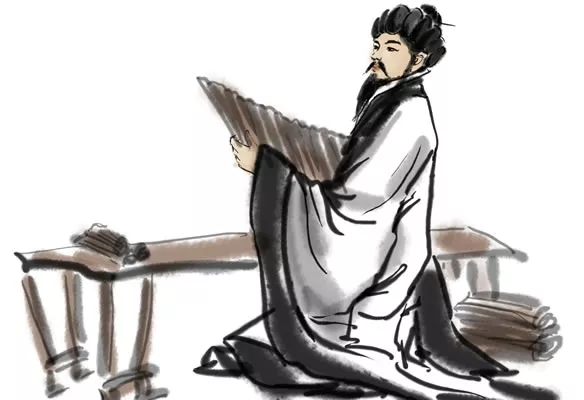
Image source: QianKu Network
True wisdom can transcend time and remain relevant. Zhuge Liang, the greatest strategist of ancient China during the Three Kingdoms period, was not only a master of strategy but also possessed unique insights into identifying and utilizing talent. He articulated the principles of understanding and employing people through seven key aspects: "will," "adaptability," "insight," "courage," "character," "integrity," and "trustworthiness." His approach is both comprehensive and profound, providing valuable lessons that are still applicable today.
In his essay "Knowing People," Zhuge Liang outlined his method of observing individuals: "First, ask them about right and wrong to gauge their will; second, challenge them with arguments to observe their adaptability; third, consult them on strategies to assess their insight; fourth, present them with difficulties to test their courage; fifth, intoxicate them with wine to reveal their character; sixth, present them with benefits to observe their integrity; seventh, set expectations for them to see if they are trustworthy."
Zhuge Liang's "Seven Methods of Observing People" evaluates individuals comprehensively across the seven aspects of "will, adaptability, insight, courage, character, integrity, and trustworthiness," ensuring a thorough assessment.
1. Ask about right and wrong to gauge their will
This involves posing significant moral questions to determine what underlying traits define their ambitions.
To evaluate a person's character, one can "ask about right and wrong" and observe their judgments on ethical issues and perspectives on various matters. Individuals who appear ambiguous or indecisive about major moral questions may be unreliable and potentially harm the public interest at critical moments. Such individuals should not be entrusted with significant responsibilities. Only those with lofty ambitions, firm stances, and broad-mindedness merit trust and responsibility.
2. Challenge them with arguments to observe their adaptability
Present challenging questions to evaluate their ability to analyze problems and manage situations.
"Adaptability" refers to one's capacity to respond to change. To fully understand someone, engage them in conversation and push them to the point of being at a loss for words to observe their reactions. Zhuge Liang believed that those who are articulate and persuasive are typically quick-witted and agile in thought.
This technique is also applicable in professional settings to assess an official's competence. It is not just corrupt officials who damage the country; incompetent ones can also cause mismanagement. They often lack problem-solving skills and are unable to make sound judgments or decisions.
3. Consult them on strategies to assess their insight
"Insight" refers to one's depth of understanding. How a person responds in various situations can reveal their level of insight.
This involves presenting individuals with various problems and asking them to develop corresponding strategies, thus assessing their capabilities. This method is universally applicable. For instance, some officials lack strategic thinking and feel helpless when confronted with challenges. Even if their intentions are to help the people, they may ultimately be powerless to influence larger situations. Therefore, those who wish to make a societal impact must be capable of devising strategies to improve circumstances.
4. Present them with difficulties to test their courage
As the ancients said, "Without the cold of winter, one cannot know the pines and cypresses; without difficulties, one cannot know a gentleman." Facing challenges is the true measure of a person's courage.
To understand someone, inform them of daunting tasks and risks to see their response. If a person lacks practical courage, they will struggle to uphold justice, let alone meet the expectations of their community.
5. Intoxicate them with wine to reveal their character
People often say, "A person's character is revealed through their behavior when drunk," and "In vino veritas" (in wine, there is truth). A person's true nature, often deeply hidden, can be revealed under the influence of alcohol. Therefore, one can observe an individual's character while they are intoxicated. This should not be dismissed as an ineffective method of understanding people; history is filled with examples of officials who suffered dire consequences for their actions under the influence of alcohol.
6. Present them with benefits to observe their integrity
Everyone appreciates benefits, so observing how a person reacts to profit can reveal their integrity. A person of high integrity will never indulge in ill-gotten gains. While human nature may include an element of greed, "a gentleman loves wealth, but acquires it through righteous means." History offers countless examples of individuals whose downfalls stemmed from greed. Officials who cannot resist the temptation of money cannot become honest leaders, and the people desire integrity, not corruption!
7. Set expectations for them to see if they are trustworthy
This involves observing if a person's words and actions align. Those who are untrustworthy will lose the confidence of others. Ultimately, integrity is the foundation of character and behavior; without trust, a person cannot maintain a firm standing in society. Whether one can establish a social foothold depends on their ability to keep promises.
Zhuge Liang was renowned for his strategic planning and remains a legendary symbol of wisdom. In both military campaigns and state affairs, he employed numerous talents, developing a systematic approach to recognizing people.
Do not assume that Zhuge Liang's principles, proposed over a thousand years ago, are irrelevant now. Not at all! This method of understanding people holds significant relevance for us even today. By learning Zhuge Liang's methods, we can form meaningful friendships and employ the right talents — bringing great benefits to our personal lives and work!