Essential Physiognomy Principles for Marriage and Relationships
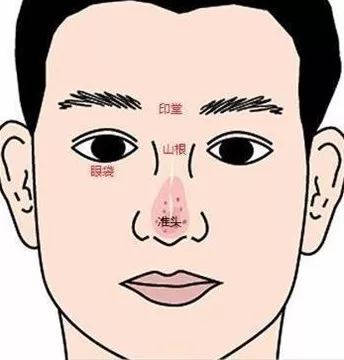
Physiognomy, or face reading, involves analyzing a person's facial features and their combinations to quickly interpret their fate and temperament and to understand their social behaviors and personality. It is closely related to physiognomics.
Beyond facial features, the best-known aspect of physiognomy is the Twelve Palaces of the Face. However, the interpretations of the Twelve Palaces that circulate in society are often distorted due to constraints in ancient art, leading to misplacements and interpretations that deviate from their original meanings. Liu Heng has taken it upon himself to provide new annotations and corrections for the Twelve Palaces of the Face. The following information represents common understandings of physiognomy; while it should not be solely relied upon, it's often true that a single feature can reveal significant aspects of a person's destiny.
1. Forked Eyebrows Suggest a Remarried Father
The left eyebrow represents the father (yang), while the right eyebrow represents the mother (yin). Anomalies in the left eyebrow indicate potential issues with the father's health or career. Conversely, anomalies in the right eyebrow suggest changes concerning the mother's health or finances.
Liu Heng notes that if the tail of either eyebrow forks, resembling a smaller eyebrow branching off, it negatively impacts the mother, indicating that the father may become widowed and remarry. Such eyebrow features may suggest the presence of two maternal figures.
2. A Low and Narrow Forehead Signifies Hardship
In physiognomy, the forehead is known as the "Heavenly Court," or "Palace of Official Wealth." Essentially, it represents a person's future and social status and should ideally be broad and flat.
Liu Heng notes that in ancient times, women were cautioned against having overly large or high foreheads, as such women were considered difficult for men to manage. In modern society, these women still pose challenges for men. Those with full and prominent foreheads tend to be thoughtful and possess independent opinions.
Conversely, a narrow, low, or receding forehead indicates a person's greed and a desire for fame. Such individuals seldom achieve prosperity and often struggle with poverty. Liu Heng observes that when one harbors greed, they are sowing the seeds of poverty.
3. Thick Eyebrows That Overhang the Eyes Indicate a Fearful Husband
In physiognomy, eyebrows represent the "Palace of Affection" or "Palace of Siblings." The Palace of Affection relates to romantic feelings, while the Palace of Siblings pertains to friendship. Individuals with thick eyebrows often place great importance on emotions, which can lead to emotional turmoil.
Eyebrows are considered subordinate, while the eyes are considered the ruler. For men, the eyes symbolize themselves, and for women, they symbolize their husbands. Thick eyebrows that overshadow the eyes with little distance from them indicate that men with these features may fear their wives, treating them with trepidation, while women may dominate their husbands.
4. Prominent Cheekbones Suggest a Life of Poverty and Struggle
The cheekbones, located just below the eyes, support the lower eye sockets. Liu Heng notes that the cheekbones are the essence of the bones. High, protruding, or sharply defined cheekbones suggest that women with these features may cause their husbands' demise, while men may struggle throughout their lives without accumulating wealth.
5. Protruding Teeth Indicate a Husband-Harming Nature and Kidney Deficiency
Liu Heng notes that in women, protruding and disordered teeth are associated with volatile temperaments and an inability to tolerate others, which may lead to harming their husbands. Teeth are seen as the sprouts of the kidneys, and irregular, weak teeth suggest congenital kidney energy deficiencies, leading to lower back pain in men and difficulties in childbirth for women.
6. Dark Ears Signal Severe Kidney Issues
The ears are associated with the kidneys, and the gallbladder meridian extends to the ears. Liu Heng notes that the kidneys are connected to the ears. Therefore, assessing a person's kidney health can be done by examining their ears. If the ears appear dark, it indicates kidney issues, and a dark overall complexion (excluding naturally dark-skinned individuals) suggests severe kidney disease. The kidneys influence reproduction, implying that young men and women with thin, small, and dark ears might face future marital and fertility challenges.
7. A Darkened Yintang Indicates Inescapable Lung Disease
The Yintang, located on the forehead between the eyebrows, is known as the "Hall of High Elders." It symbolizes justice and norms. The Yintang corresponds to the lung meridian; if it appears dark, it indicates the following potential issues:
- Inevitable financial losses;
- Potential legal troubles;
- Marital conflicts;
- Serious lung disease.