Facial Features: How Flexible Are You in Adapting?
Adaptability can also be understood as the ability to effectively manage situations. This capability depends not only on a person's natural traits but also on their personal learning and training. Today, Liu Heng will explore how to evaluate someone's adaptability by examining their facial features.
Everyone inherently possesses some degree of adaptability, a trait crucial in today's world. This ability significantly influences individual performance in critical situations such as promotions, speeches, and impromptu scenarios, impacting their social image.
1. Quick-wittedness in the Forehead, Flexibility in the Eyebrows
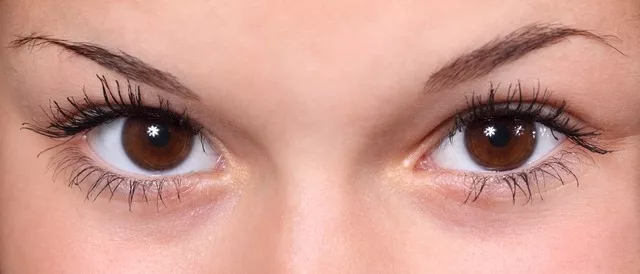
Eyebrows act as a gauge of emotions and are a distinctively human feature. The flexibility of the eyebrows is often linked to one's ability to control situations. Those with flexible eyebrows, where the brow furrows and the eyebrow tail rises, have a dynamic expressive feature. A broad and flat forehead, potentially marked by vertical lines but without dark moles, indicates strong adaptability.
In physiognomy, it is believed that quick-wittedness is chiefly observed in a person's eyebrows. If the eyebrows are straight and the forehead neither sunken nor tapering, the person is likely to have organized thoughts and clear expression. While the eyebrows need not be striking, they should be straight and well-defined. For instance, some celebrities may experience confusion in public arenas, leading to uncomfortable situations; a closer look at their eyebrows might reveal the causes.
2. Voice Modulation and Strength
Regardless of one's facial features, a weak voice can greatly diminish one's presence. A voice that is both modulated and strong signifies effective control over situations.
Adaptability is not always directly tied to intelligence but is closely connected to breath control. A strong, resonant voice reflects confidence in any situation and the capability to manage various circumstances smoothly.
In contrast, individuals with an asymmetrical jaw or uneven facial structure, or those who speak softly, may articulate well in private but struggle to communicate effectively in public. Especially if their voice lacks resonance and their breath is short, they may become disorganized after only a few sentences.
3. Distinctly Shaped Lips

Faces with indistinct lip lines and drooping corners suggest a person overly concerned with others' opinions, making it hard for them to handle a crowd, thereby signaling weak adaptability. Conversely, lips that are well-defined with slightly upturned corners indicate strong organizational skills in communication.
The shape of the mouth correlates with the eyes. The eyes should not appear droopy or weak, and the mouth shouldn't be pointy or slack. Eyes should be elongated but not overly exposed, and the expression should remain calm and collected. Individuals with this configuration can maintain composure even in large gatherings. A round or square mouth that speaks with elegance can capture attention, whereas a smaller, tightly held mouth tends to be less expressive and can seem awkward.
Generally, people with strong adaptability tend to succeed early. Regardless of challenging circumstances, they find paths to success. Building adaptability should start early, focusing on cultivating confidence in public environments and enhancing critical thinking and problem-solving skills.