Zhong Yi's Insight: A Low or Horizontal Root May Indicate a Busy Lifestyle with Frequent Illness
In ancient times, medicine was not advanced, and many diseases were untreatable. As a result, ancient people would determine life expectancy by observing what they called the "Disease Palace." Today, with modern medical technology, many health issues can be addressed, and the "Disease Palace" is now used to evaluate the body's resistance to diseases and to assess one's natural physical constitution. It's closely linked to both our physical and mental well-being. Today, we will explore the principles of the "Disease Palace."

The Location of the Disease Palace
In ancient times, the "Disease Palace" was defined as the area around the bridge of the nose, above the year marker, and above the longevity marker. The bridge of the nose is the area between the inner corners of the eyes and just below the glabella. The year marker is located where the nasal bone meets the cartilage, while the longevity marker is below the year marker and above the tip of the nose. The "Disease Palace" serves as a facial indicator of one's health and longevity, reflecting immunity and resilience against illnesses and misfortunes. It's essential to distinguish the "Disease Palace" from the "Life Palace," which is situated above the nose bridge within the glabella area.
Principles of the Disease Palace:
1. Low Bridge of the Nose

The bridge of the nose symbolizes a person's natural resistance to diseases. A sunken bridge indicates a weak inherent ability to combat illness and lower vitality from birth. Conversely, individuals with a normal or high bridge may age faster, and if they develop unhealthy habits later in life, it can significantly impact their well-being. Minor health issues can potentially escalate into major problems.
2. Well-Developed Bridge of the Nose

A well-defined and prominent bridge of the nose suggests good innate development, strong resistance, firm willpower, and overall excellent health with fewer illnesses. People with this trait often experience a smooth life journey and are better equipped to handle significant health challenges.
3. Horizontal Lines on the Bridge of the Nose
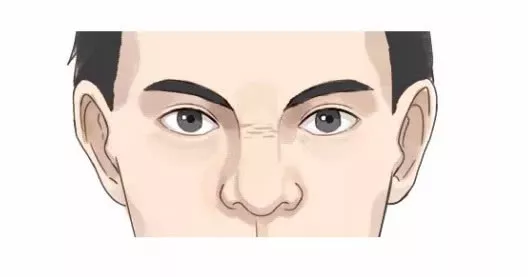
Horizontal lines on the bridge of the nose indicate a busy lifestyle with frequent minor health issues. These individuals might experience tension with their spouse and face career setbacks and financial losses during middle age. If the areas on both sides of the nose, particularly below the tear troughs, show a consistent bluish tint or fine lines, it points to chronic illness, with a potential major health crisis in later life.