Causes of a Tengshe Entrance in Physiognomy
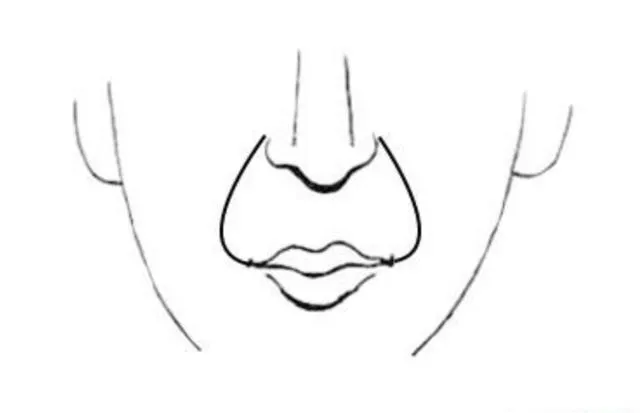
In physiognomy, when the lines beside the nose—known as nasolabial folds—curve inward into the corners of the mouth, they are likened to two snakes coiling in and biting at the mouth’s corners. This pattern is said to foretell poverty and an early death, with many examples recorded throughout history.
Some may dismiss this as mere superstition—either inexplicable or fatalistic. Proponents, however, argue that every aspect of physiognomy can be examined and theoretically explained through accumulated evidence; it simply requires long-term, multi-generational study.
The nasolabial folds run from the sides of the nose toward the corners of the mouth. They are not simply a function of age or looks; they also mark the boundary between the cheekbones and the jawline. In this view, the line reflects outward emotional expression: people who externalize their feelings tend to show more pronounced folds, while those who keep their emotions in check show lighter ones.
There are many interpretations of the nasolabial folds, but here we focus on the idea of the "snake entering the mouth." Outward emotions can take many forms and exert different effects. Because of their position, these folds reflect the interplay between the mouth (communication, sustenance) and the cheekbones (society, interaction, environment).
When a person’s outward manner follows steady principles, the nasolabial folds tend to run long and straight. Predictability in expression brings minimal variation, so the muscles between those bony structures move consistently, making the folds clear and direct.
By contrast, when someone’s style is unstable and heavily swayed by shifting moods—showing different faces to the world—the folds will appear curved. The hallmark of the "snake entering the mouth" is a pronounced bend that reaches right to the corners of the mouth, a length these folds rarely achieve. This suggests emotional inconsistency and instability, making it difficult for others to engage with them. People may find it hard to grasp their principles—one thing today, another tomorrow—so such individuals are often approached with caution.
Moreover, that inward curl points to speech and communication: such people are said to boast or speak negatively, often making promises they fail to keep, and using words to deceive for personal gain with little regard for ethics. While this may bring small, short-term advantages, the long-term social consequences are unfavorable. Put bluntly, they can become reviled wherever they go, unable to settle down and constantly searching for new environments to survive for a while. In ancient times, such individuals might even have starved on the streets. In modern times, they may still scrape by, but their lives tend to be unstable and marked by rejection.
Thus, from an external perspective, physiognomy likens these nasolabial folds to a snake, a creature often associated with venom. If a person’s behavior is not toxic, how could their facial features be called toxic? And if a person’s actions are improper, how could their facial features be considered proper?