Are Asymmetrical Nasolabial Folds a Sign of Lifelong Misfortune?
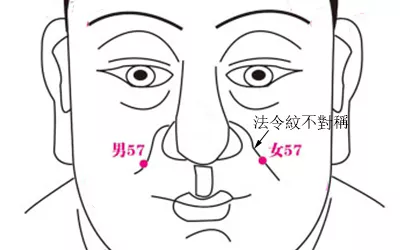
Nasolabial folds, which run from the sides of the nose downwards, are often associated with authority and dominance. While these folds are generally considered unattractive as they can make a person look older, it's common for them to appear in middle age, reflecting societal achievement and prestige. If a person doesn't have such folds by middle age, it might suggest their social status hasn't fully developed. However, having nasolabial folds appear too early, before thirty, could indicate a person has been working hard from a young age, often balancing work with education due to life's pressures.
In the field of physiognomy, the shape of nasolabial folds is studied to forecast a person's fortune. Longer and wider folds are seen as favorable, often correlating with strong career prospects; the broader the folds, the better the career outlook. Many people have asymmetrical nasolabial folds, with one side longer than the other. What does this asymmetry suggest in physiognomy? Some believe it indicates a life filled with challenges. Let's delve into this notion.
I. Asymmetrical Nasolabial Folds Suggest Career Difficulties
From a physiognomic standpoint, the left nasolabial fold represents early life fortune, and the right fold symbolizes later life fortune (left for men, right for women). Men with a well-defined left nasolabial fold might inherit family wealth and enjoy success in both primary and secondary careers, achieving significant milestones early in life. In contrast, a prominent right fold indicates substantial support from the mother and good fortune later in life.
People with asymmetrical nasolabial folds, where one is longer or deeper, might face career obstacles and instability. They could work tirelessly for their families, encountering job insecurity and external career crises. Engaging in successful side endeavors might serve as a pivotal point in their lives. Additionally, they should remain vigilant about traffic safety and be cautious of injuries involving their hands and feet.
II. Asymmetrical Nasolabial Folds Indicate an Unstable Personality
Those with short, shallow, or less noticeable nasolabial folds may lack persistence and often abandon tasks midway. Individuals with asymmetrical folds may have unstable personalities, making workplace relationships with superiors or colleagues challenging. In physiognomy, the left fold represents the primary leader and the right represents the secondary leader; any shorter side might point to potential discord with that leader.
III. Asymmetrical Nasolabial Folds Suggest Job Instability
Individuals with asymmetrical nasolabial folds often exhibit indecisiveness and fluctuating resolve. They may act inconsistently towards others, lack patience, and frequently clash with subordinates over management issues. This can result in frequent job changes and unstable living situations, particularly around the age of 57. Women without a left nasolabial fold might have husbands facing health issues and career challenges; if the right fold is missing, it may signify a confusing family environment and personal health problems. An individual with one single and one double fold in their nasolabial lines might adopt children and gain respect from their offspring later in life, leading to happiness and fulfillment. Conversely, those who don't develop nasolabial folds after middle age might lack ambition, be a bit lazy, and live without significant goals. Despite potentially enjoying good health in their later years, they might face financial challenges, with descendants of only average accomplishment.
IV. Other Types of Nasolabial Folds
- Deep, long, and wide nasolabial folds that resemble a bell indicate a commanding presence and leadership abilities. The longer the folds, the more enduring the career opportunities; the wider the folds, the broader the career possibilities.
- Nasolabial folds that are wider and nearer to the mouth, with distinct, deep lines, suggest an active, driven approach to life. The more pronounced the folds, the greater their influence. Such individuals are often trusted and tend to excel professionally, with a high potential for successful side ventures that increase their wealth.
- Nasolabial folds marked by scars or acne may indicate difficulties in academic pursuits, increased susceptibility to disputes, and poor academic performance, making one more prone to deceit in contracts.
- Individuals with very narrow nasolabial folds may experience poor fortune in old age, coupled with ungrateful descendants, leading to a life of poverty and hardship, with both financial and health issues. Those with nearly invisible nasolabial folds may undergo frequent career changes, making success elusive. It's crucial for nasolabial folds to be continuous; any interruption can result in major career setbacks.
- If nasolabial folds droop down to the corners of the mouth, this is called "the snake entering the mouth" in physiognomy, an unfavorable sign. Historically, it was linked to a fate of starvation, and in modern terms, it may suggest susceptibility to gastrointestinal issues.
- Nasolabial folds that are narrow and close to the mouth have traditionally been seen as an indication of poverty, lacking financial and social fortune. Such individuals might lack motivation and exhibit indifference towards life; without external inspiration, they risk stagnation.
- Nasolabial folds curving from the side of the nose towards the ears suggest a self-centered personality and a strong character, often leading to interpersonal conflicts at work. Even if they achieve a high social status, they may end up feeling isolated.
- Individuals with interrupted or broken nasolabial folds exhibit weak willpower; the more breaks there are, the stronger this tendency becomes. Such people are easily swayed by their surroundings or the opinions of others, lacking clear direction, and even frequent job changes may not lead to success.