Women with Deep Nasolabial Folds: Myth or Misfortune?
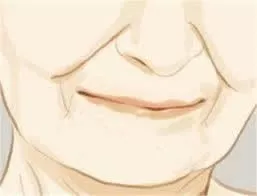
"Facial lines," commonly known as nasolabial folds, are the lines that extend downward from the sides of the nose. These lines are seen as symbols of authority and regulation, representing a serious disposition. Ideally, they should be deep and elongated, which is associated with "having good energy," and are often found in individuals who wield significant influence.
People with prominent nasolabial folds tend to have strong, upright personalities marked by decisiveness and determination. These lines are also referred to as "longevity lines," suggesting that those with deep and long nasolabial folds are likely to enjoy a long life.
However, for women, overly deep nasolabial folds aren't seen as favorable. If these lines become prominent before the age of thirty-five or are noticeable during childhood, it could suggest a future marked by loneliness and hardship. Ancient wisdom describes these early signs as "sorrow lines," hinting at a life of struggle. The ancient perspective, while insightful, notes that a young girl with noticeable nasolabial folds might appear prematurely aged or unnatural.
Scientifically, nasolabial folds become more pronounced when a person experiences crying, worry, or anger. Frequent emotional distress during youth can lead to these lines becoming more defined. This observation aligns with the understanding of physiological and psychological connections, implying that deep nasolabial folds at a young age could be an indicator of a challenging life.
Conflict and Struggle
Among women, there are those who are notably stubborn and inflexible, making it difficult for them to shift their opinions. Such individuals often find themselves in conflict with others and resist yielding to different viewpoints. In physiognomy, this tendency is described as having a "conflicted fate," which can lead to challenging life experiences.
Living effectively requires maintaining a calm and stable mindset. Being constantly in conflict and unhappy wastes life's precious opportunities.
In palmistry, several features indicate this personality type: 1. A broken palm line; 2. A "river" shaped palm; 3. Stiff finger joints that can't bend backward, among others. However, whether these traits lead to negative outcomes depends on facial analysis to make a comprehensive assessment.
In facial analysis, conflict indicators include: 1. A pronounced nasal bridge; 2. Downturned mouth corners; 3. Protruding eyes; 4. Sharp cheekbones extending horizontally. To evaluate the extent of a woman's conflicts, one should first examine her palm for signs of inherent conflict, then assess facial features for additional signs to evaluate learned behaviors. This approach helps distinguish between innate and acquired traits. If a woman's palm shows conflict but her face does not, she might be somewhat stubborn yet does not negatively affect others because she can manage herself. However, if both palm and facial features indicate conflict, problems may arise.
Unpleasant Speech
When asked whether palmistry or facial analysis is superior, the answer isn't straightforward. Each has its strengths. Facial analysis can give a broad overview of a person's life, while palmistry delves deeper into a person's inner nature through lines and finger shapes. Combining both methods and analyzing carefully can achieve accuracy rates exceeding eighty percent.
Fingers do indeed reflect one's inner world. From observing friends' palms, I've noticed that women with short little fingers, not extending beyond the first segment of the ring finger, often have a common trait: they easily offend others and lack social grace due to their directness. This can be a drawback in social settings.
Conversely, women with long little fingers that extend past the first segment of the ring finger are often more articulate, managing to speak appropriately and persuasively. They tend to be diligent in studying matters, which gives them a significant advantage in interactions.
We shouldn't hastily conclude that someone with a short little finger has "poor speech." It's important to consider facial features for a complete assessment. Look for a pointed mouth shape, downturned corners of the mouth, or excessively thin lips. If these features accompany a short little finger, it can be concluded that the person may struggle with "poor speech."