General Discussion on Facial Features, Five Elements Colors, and Symbols: "Ma Yi Shen Xiang" Series (Part Seven)
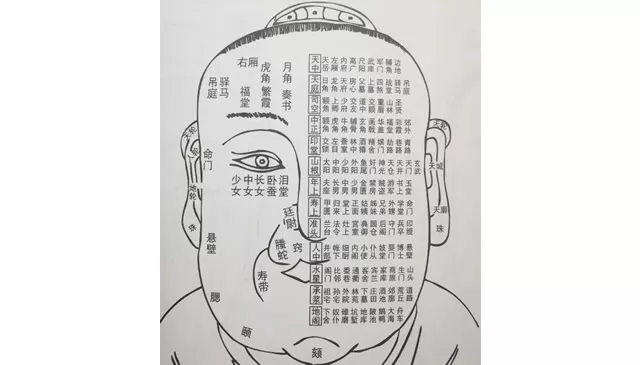
Diagram of Thirteen Facial Regions
Overview of Human Facial Features
The forehead should be prominent and smooth, with a clear and broad center. The nose bridge should be continuous and wide, and the tip of the nose should be rounded and upright. The mouth should have a square appearance, the chin should be well-defined, and the cheeks should be full and rounded. The eyes should be bright and expressive, with cheekbones that have a divine glow. A well-defined jawline and skin with a healthy glow are ideal. The three yin and three yang features should not appear withered or dry, but rather harmonious and balanced. Individuals with these facial characteristics are considered to have great value in the world.
Translation: The forehead should be prominent, the center smooth and clear, with a wide, continuous bridge of the nose. The nose tip should be round and upright, the mouth should resemble a square shape, the chin should be well-defined, and the cheeks should be full and rounded. Bright, expressive eyes and cheekbones with a divine glow are desirable, and the jawline should be well-defined with smooth, healthy skin. The three yin and three yang features should not appear dry or withered, but harmonious and balanced. A person with these characteristics is considered to be of great value in the world.
The Five Elements and Their Shapes
The wood element is slender, the metal element is square, and the water element is plump. The earth element is thick and sturdy, resembling a turtle's back, while the fire element is pointed at the top and wide at the bottom. These shapes correspond to the five elements: Wood signifies kindness, Metal signifies righteousness, Earth signifies trust, Water signifies wisdom, and Fire signifies propriety.
Translation: The five elements—metal, wood, water, fire, and earth—each correspond to specific human facial shapes. Wood-shaped people are slender, metal-shaped are square, water-shaped are plump, earth-shaped are thick and sturdy like a turtle's back, and fire-shaped are pointed at the top and wide at the bottom. Wood-shaped individuals are kind-hearted, metal-shaped emphasize righteousness over wealth, earth-shaped are sincere and trustworthy, water-shaped display intelligence and wisdom, and fire-shaped are polite and understanding.
The Five Element Colors
The color associated with wood is green, fire is red, earth is yellow, water is black, and metal is white. Each element has its unique color.
Translation: Wood is represented by green, fire by red, earth by yellow, water by black, and metal by white. Each element has its distinct color, which should be clearly identified.
The Five Element Characteristics
Humans are conceived from water, inheriting fire's essence to become human. This essence gives rise to the spirit, which in turn forms the complete being. Hence, external characteristics align with the five elements and the forms of birds and beasts. Metal isn't afraid to be square, wood isn't afraid to be slender, water isn't afraid to be plump, fire isn't afraid to be pointed, and earth isn't afraid to be muddy. Those who resemble metal are strong and determined, wood-like people are wealthy, water-like people are cultured, fire-like people are perceptive, and earth-like people are stable and prosperous. Those with substantive and rigorous qualities are either wealthy or noble, while those shallow and impulsive are either poor or have short lives. A woman who desires to be harmonious and charming should maintain a neat and proper appearance, as such individuals are usually wealthy or noble.
Translation: Humans, conceived from water, inherit fire's essence to become human. This process generates the spirit, which then creates the complete form. Thus, external features correspond to the five elements and the appearance of birds and beasts. Metal accepts being square, wood being slender, water being plump, fire being pointed, and earth being muddy. A person resembling metal is strong and resolute, wood suggests wealth, water indicates culture, fire means perceptiveness, and earth implies stability and prosperity. Rich and rigorous people are often wealthy or noble, while those who are shallow and impulsive tend to be poor or have short lives. For a woman to be harmonious and charming, a neat, proper appearance is essential; such individuals are likely to be wealthy or noble.
Discussion on Form
Humans embody yin and yang energies, reflecting heaven and earth forms and comprising the five elements, sharing their traits with all living things. The head symbolizes heaven, the feet symbolize earth, the eyes symbolize the sun and moon, the voice symbolizes thunder, the blood vessels symbolize rivers, bones symbolize metals, the nose and forehead symbolize mountains, and hair symbolizes plants. Heaven aspires to be high, earth to be broad, the sun and moon to be bright, thunder to be loud, rivers to flow, metals to be strong, mountains to be steep, and plants to be beautiful. This natural order, founded by Guo Lin's "Eight Methods of Observing People," aligns human body parts with these principles.
Translation: The universe contains yin and yang, and the five elements—metal, wood, water, fire, and earth—give rise to all things, humans included. Humans inherit these foundational energies, becoming the most intelligent beings among all creations. The head symbolizes heaven, feet earth, eyes the sun and moon, voice thunder, blood vessels rivers, bones metals, the nose and forehead mountains, and hair plants. Heaven aspires to be elevated, earth to be broad, the sun and moon bright, thunder loud, rivers flowing, metals strong, mountains steep, and plants beautiful. This natural order, based on human body correspondence to these principles, was observed by Guo Lin when creating the "Eight Methods of Observing People."
Discussion on Spirit
The form nourishes the blood, which nourishes the qi, and qi nourishes the spirit. Therefore, if the form is complete, the blood is complete; if the blood is complete, the qi is complete; if the qi is complete, the spirit is complete. Thus, the form can nourish the spirit and stabilize the qi. If qi is unstable, the spirit becomes restless; only a cultivated person can maintain a calm spirit. When awake, the spirit roams the eyes; when asleep, it resides in the heart. The form expresses the spirit, just as the light of the sun and moon illuminates everything, hiding the spirit within. Bright eyes indicate a clear spirit; dull eyes reflect a murky spirit. Clarity is valuable, while murkiness is not. Clarity brings wakefulness and less sleep; murkiness brings more sleep and less wakefulness. By gauging wakefulness, one can determine their value. Dreams arise from the spirit roaming the heart, observing distant realms, but they do not surpass the boundaries of the five organs and six bowels, nor do they extend beyond sight and hearing. Dream realms and experiences can resonate or emerge from personal experiences. What is seen in dreams resides within, not outside oneself. Zen master Bai Yan said: Dreams have five realms: spiritual, treasure, past, present, and future. Restless spirits cause dreams; tranquil spirits end them. Observing form reveals brightness and clarity, luminance, or density and heaviness. The spirit, emanating from within and manifesting outward, enriches life. A clear and harmonious spirit indicates wealth and nobility; a murky and weak spirit indicates poverty and hardship. A solid, steady spirit ensures stability; an agitated spirit is desolate. The poem states: The spirit resides within the unseeable; nourishing it through qi sustains life. With strong qi and harmonious blood, the spirit stabilizes; if blood depletes and qi scatters, the spirit dims. A refined spirit fills the heart with joy; harmonious qi and blood preserve clarity. Spirit's clarity and murkiness reveal one's worth. Spirit should remain concealed; exposed, it wanders and brings misfortune. A hidden spirit commands respect; when hidden, it inspires awe. It's better to have an abundant spirit and lack form than the reverse. Abundant spirit signifies nobility, abundant form indicates wealth. A spirit shouldn't be startled, to avoid shortening life, nor hasty, to prevent mistakes. Recognizing others' capacity and insight enhances understanding and virtue, avoiding pettiness even in wealth.
Translation: The human body sustains blood, blood sustains qi, and qi sustains the spirit. Thus, a healthy form ensures plentiful blood, which ensures strong qi, leading to a stable spirit. If qi is unstable, the spirit becomes restless. Only a cultivated individual can maintain a calm spirit. Awake, the spirit resides in the eyes; asleep, it dwells in the heart. The body reflects the spirit, just as sunlight illuminates yet conceals the spirit within.
Bright eyes mean a clear spirit; dull eyes suggest a murky spirit. Clarity indicates wealth and nobility; murkiness suggests poverty. A clear spirit brings wakefulness; a murky spirit brings sleep. Wakefulness determines self-worth.
Dreams arise from the spirit roaming the heart, confined to the five organs and six bowels. Experiences in dreams may relate to the senses or personal encounters. Dreams reflect internal states, not external influences. Zen master Bai Yan notes five dream types: spiritual, treasured, past, present, and future realms. An unsettled spirit dreams; a calm spirit doesn’t.
Observing spirit forms reveals clarity, luminance, or density. The spirit rises from within and manifests outwardly. A clear spirit indicates wealth and nobility; a murky spirit suggests poverty. A stable person sustains spirit; an anxious person disrupts it.
Poetically: The spirit resides internally, sustaining life through qi nourishment. Strong qi with harmonious blood keeps the spirit stable. Depleted blood and scattered qi dim the spirit’s light. A refined spirit fills the heart with joy; harmonious qi and blood ensure clarity. Spirit's clarity and murkiness manifest in the body, reflecting value.
The spirit should not be exposed; if it is, misfortune follows. A concealed spirit inspires awe and commands respect. Better an abundant spirit with lacking form than vice versa. Spirit abundance signifies nobility; form abundance suggests wealth. Spirit should remain calm, avoiding haste and error. Recognizing others’ capacities enhances virtue and perception, avoiding mediocrity despite wealth.
Discussion on Excess in Form
Individuals with excess in form have a round, thick crown, a full abdomen and back, a broad forehead, red lips, white teeth, round ears, a straight nose, distinct eyes, long elegant eyebrows, broad shoulders, a thick waist, a flat, wide chest, a hanging, rounded abdomen, and maintain a dignified posture when sitting or standing. Their five features are harmonious, their skin smooth and delicate, bones well-defined, hands long, and feet square, emanating majesty and grace. Such features define "excess in form." Those with these features often enjoy long, healthy lives filled with wealth and honor.
Translation: A person with excess in form has a round, thick crown; full abdomen and back; broad forehead; red lips and white teeth; round ears; straight nose; distinct eyes with long, elegant eyebrows; broad shoulders; thick waist; flat, wide chest; hanging, rounded abdomen; and maintains a dignified posture while sitting or standing. Their harmonious features, smooth skin, well-defined bones, long hands, and square feet exude majesty and grace. "Excess in form" describes these traits. Such individuals typically enjoy long, prosperous lives filled with wealth and honor.
Discussion on Excess in Spirit
Those with excess in spirit have bright, clear eyes, a steady gaze, long, elegant eyebrows, a vibrant spirit, a clear complexion, and graceful movements. Dignified at a distance like the autumn sun on a frosty day and gentle up close like a warm breeze amidst spring flowers, they handle matters decisively like a fierce beast in the mountains, maintaining integrity among crowds like a phoenix soaring in clouds. Sitting, they're as still as rocks; lying, as calm as resting birds. Walking, they flow like rivers; standing, they rise like solitary peaks. They neither speak carelessly nor act impulsively; their emotions, unaffected, align with principles despite honor or disgrace. Amidst chaos, their hearts stand firm. This "excess in spirit" defines noble individuals free from misfortune, ensuring long, prosperous lives.
Translation: A person with excess in spirit possesses bright and clear eyes, a steady gaze, long, elegant eyebrows, a vibrant spirit, a clear complexion, and graceful movements. Distantly dignified as an autumn day on frost, up close, they embody gentleness like springtime warmth. Resolute in actions like a fierce beast through mountains, they uphold integrity like a phoenix in clouds. Still as rocks when sitting, calm as resting birds lying down, flowing like rivers when walking, and rising like peaks standing, they neither speak rashly nor act hastily. Their emotions remain steady amid chaos. "Excess in spirit," synonymous with nobility, shields them from misfortune and grants prolonged prosperity.
Discussion on Insufficient Form
Those with insufficient form have a pointed, thin crown; narrow, slanted shoulders; thin, frail waist; short, stubby joints; thin palms with wide-spaced fingers; incomplete lips with a flat forehead; upturned nose with backward ears; low waist with a sunken chest; uneven eyebrows; mismatched eyes and cheekbones; one hand with lines while the other is bare; eyes open while sleeping; a man’s voice sounding feminine; yellowed, exposed teeth; thin, pointed lips; a bald head; deep-set eyes; awkward gait; pale, weak complexion; large head with a small body; short upper body with a long lower body. Known as "insufficient form," such features often signify poor health, short lifespans, and a lack of prosperity.
Translation: A person with insufficient form has a pointed, thin crown; narrow, slanted shoulders; thin, frail waist; short, stubby joints; thin palms with wide-spaced fingers; incomplete lips and a flat forehead; an upturned nose with backward ears; low waist with a sunken chest; uneven eyebrows; mismatched eyes and cheekbones; one hand with lines, the other without; eyes open while sleeping; a man’s voice sounding feminine; yellowed, exposed teeth; thin, pointed lips; a bald head; deep-set eyes; a crooked gait; a pale, weak complexion; a large head with a small body; a short upper body with a long lower body. "Insufficient form" often correlates with poor health, short lifespans, and a lack of prosperity.
Discussion on Insufficient Spirit
Individuals with insufficient spirit seem drunk when sober, sick when healthy, asleep when awake, and crying when not. Their passive demeanor suggests anger, joy, surprise, confusion, or fear, muddled by chaotic energy and a murky complexion, appearing troubled by madness. Their sad expressions and anxious states reflect imagined loss and fear. Their hesitant speech implies shyness, impeding response to encouragement. Complexion fades quickly from freshness, and speech slows from initial pace. "Insufficient spirit" often brings legal troubles and misfortunes, leading to loss of status in positions of authority.
Translation: A person with insufficient spirit may seem drunk when sober, sick when healthy, asleep when awake, and crying when not. Their demeanor exudes unexpressed anger, joy, surprise, confusion, or fear, coupled with chaotic expressions and a murky complexion, suggesting madness. Their sorrowful appearance indicates imagined loss; anxious, they seem afraid. Hesitant speech conveys shyness, making them unresponsive to encouragement. Fresh complexions darken quickly, and speech slows from its initial pace. "Insufficient spirit" often results in legal troubles and misfortunes, leading to loss of status for those in authority.