Analyzing Your Recent and Future Fortune through Facial Features and the Bagua: A Guide
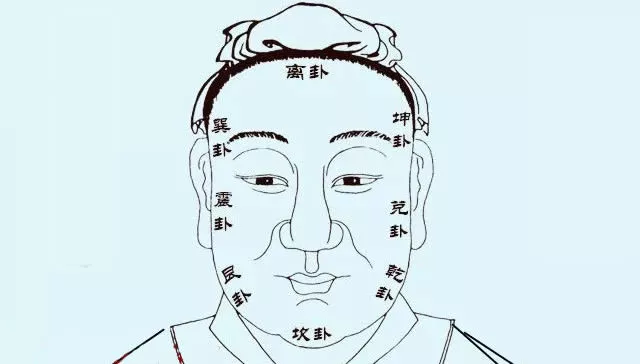
In physiognomy, by observing a person's facial complexion, one can discern their recent fortunes. The "qi" predicts future events, while the "color" reflects current and past occurrences. Colors are classified as green, red, yellow, white, black, crimson, purple, and hazy. The key principles of observing "qi" include qualities such as being light, bright, vibrant, and mature.
The meanings associated with various colors are as follows:
- Green: Signifies worry, shock, anger, fatigue, muscle and bone issues, and spleen ailments.
- Red: Indicates financial loss, fire hazards, legal troubles, heart issues, and blood circulation problems.
- Yellow: Represents wealth accumulation, increased blessings, promotions, and liver ailments.
- White: Suggests misfortune, conflicts, losses, and lung issues.
- Black: Represents theft, water-related disasters, diseases, ruin, and kidney problems.
- Crimson: Indicates celebrations, wealth acquisition, entrepreneurship, and passion.
- Purple: Signifies the arrival of nobility.
- Hazy: Represents stagnation and depletion.
To evaluate a person's current fortune, one primarily examines the complexion of the "Yintang" (the area between the eyebrows). In common sayings, when someone is thought to have bad luck, it is often described as having a "dark Yintang." To gain a precise understanding of a person’s fortune, one should also consider the complexion of the facial "Bagua" positions.
Observing the facial Bagua involves placing the postnatal Bagua chart vertically on the person's face and examining each position's color changes according to the chart. Generally, colors matching the favorable element of that position are considered auspicious; those matching unfavorable elements are inauspicious.
Qian (Heaven) Trigram
The Qian trigram is located below the left cheek dimple (the smile line) in the northwest corner of the face. A full Qian palace indicates success in officialdom and determination in one's ambitions. A sunken Qian palace suggests unpopularity with superiors, frequent disputes, and poor financial luck. A yellow appearance in the Qian palace indicates that seeking official positions could lead to wealth from external sources. A white appearance signifies safety and smoothness. A dark color suggests health concerns, particularly relating to the father. A red hue may result in legal troubles or financial losses. A faint purple is a sign of favorable outcomes, while a green appearance suggests poor prospects in official matters.
K'an (Water) Trigram
The K'an trigram corresponds to the chin area, located in the north of the face. A full K'an palace indicates wealth and the ability to inherit a family fortune; if it is sunken, maintaining the family business may be difficult. The K'an palace can also reveal the condition of a person's kidney function. A full appearance indicates strong kidney energy, while a thin appearance suggests weakness. If blemishes, moles, or warts are present around the K'an area, men should be aware of kidney stones and prostate issues; women should be cautious of kidney stones and uterine fibroids. A light purple hue indicates potential wealth. A green appearance suggests kidney deficiency or anxiety, while a yellow hue points to possible instability in housing, requiring timely repairs. A white hue warns of potential injuries or illnesses, and a red hue suggests disputes or legal troubles.
Gèn (Mountain) Trigram
The Gèn trigram is located below the right cheek dimple in the northeast corner of the face. A full Gèn palace indicates a peaceful life, while a sunken one suggests poverty and challenges with siblings or children. A prominent yellow appearance indicates safety. A white appearance warns of theft or disputes. A light purple hue is highly auspicious; a green hue indicates worries and digestive issues. A red hue could lead to disputes, especially due to indulgence in alcohol.
Zhèn (Thunder) Trigram
The Zhèn trigram is located on the right cheekbone, east of the face. A full Zhèn palace indicates a person with strategic thinking; a deficiency may hinder their grasp on power. A white appearance suggests potential disputes. A faint green hue is neutral, whereas a dark green hue suggests fear and anxiety, requiring caution. A yellow hue indicates wealth, while a red hue indicates excessive liver heat and emotional strain.
Xùn (Wind) Trigram
The Xùn trigram is located above the right eye, around the temples, in the southeast of the face. A full Xùn palace often results in having many children. A sunken Xùn palace suggests a life filled with worries and overthinking, making it hard to enjoy life. If blemishes, moles, or warts are present, one should be cautious of gallstones. A red hue indicates gallbladder inflammation and liver stagnation, a green hue suggests fear and anxiety, and a dark color indicates illness and troubles.
Li (Fire) Trigram
The Li trigram is located at the center of the Yintang and forehead, in the south of the face. A full Li palace indicates abundance in food and clothing, while a sunken one suggests numerous setbacks and difficulties. A faint red or yellow hue implies that a noble person may assist in promotions, while a red hue warns of high blood pressure. A light purple or rosy hue around the sun and moon angles suggests good fortune.
Kūn (Earth) Trigram
The Kūn trigram is located above the left eye, around the temples, in the southwest of the face. A full Kūn palace signifies that a person has many fields or properties. A thin appearance may be unfavorable for the mother. A yellow hue indicates joyful events, while a green hue suggests digestive issues and confusion. A dark color points to abdominal illness.
Duì (Lake) Trigram
The Duì trigram is located on the left cheekbone in the west of the face. A full Duì palace combined with a full Zhèn palace indicates the ability to grasp power; a sunken palace suggests difficulty in gaining authority and winning support. A yellow hue suggests unexpected wealth, a white hue suggests virtuous descendants, while a red hue may lead to respiratory diseases or disputes. A dark hue indicates a risk of lung diseases, and women may be prone to breast issues.
Central Palace
The Central Palace is located on the bridge of the nose and has historically been referred to as the wealth palace. A full appearance forecasts longevity and good fortune, while a sunken appearance suggests poor health and limited wealth. A yellow hue indicates wealth accumulation, a white hue is ominous, while a dark hue hints at family discord. A light purple hue predicts good fortune. A red hue suggests financial loss, especially if sores or acne appear on the nostrils, indicating recent financial troubles. A green hue indicates anxiety and fear.
When assessing a person's health through their face, the facial Bagua is used to determine the positions of the organs, and then evaluate the strength and condition of each organ based on lines, blemishes, moles, warts, and the complexion of each area.
Appendix: Six Gods Theory in Physiognomy
The complexion emanates from the five organs: green from the liver, yellow from the spleen, red from the heart, white from the lungs, and black from the kidneys. Between the five organs and six bowels, emotions cause the qi to gather or disperse. Thus, a person's complexion reflects the changes of the six qi over the five mountains and four rivers, named after the six gods: Qinglong (Azure Dragon), Baihu (White Tiger), Zhuque (Vermilion Bird), Xuanwu (Black Tortoise), Goucheng, and Tianshe. The six gods originate from ancient star worship where Qinglong, Baihu, Zhuque, and Xuanwu are the deities overseeing the east, west, south, and north; Goucheng is an ancient star name, residing at the Yellow Dragon's position; Tianshe is a flying snake, one of the eight gods of the mysterious gates.
Yuan Tiangang discussed the six gods' qi, identifying six facial regions after them to determine fortune and misfortune based on their complexion. Qinglong resides in the east (right cheek), Baihu in the west (left cheek), Zhuque on the forehead, Xuanwu on the chin, Goucheng in the central position (nose tip), and Tianshe emerges from the four stores. Qinglong's qi is like auspicious clouds against the moon; Zhuque's qi resembles the morning glow reflecting on water; Goucheng's qi is like a black wind blowing clouds; Tianshe's qi is like grass and wood turning to ash; Baihu's qi is like creamy fat smeared with oil; Xuanwu's qi is like thick smoke and fog. Among the six qi, only Qinglong is considered most auspicious, while the others may suggest dispersion, worry, weeping, or hidden dangers.
The qi is concealed within the six bowels, appearing on the face in the morning and returning to the six bowels by evening. Thus, observing the complexion is most effective when daylight is bright but not fully lit, as this is when the person's complexion remains steady, and they have not eaten or drunk water. Under candlelight, one can carefully examine the complexion. The complexion exhibits characteristics of initial appearance, depth, emergence, floating, sinking, brightness, and decline. The spirit separates from the body, the form separates from the qi, and the qi separates from the color. The form emerges from the bones, the spirit emanates from the eyes, the qi resembles smoke and mist, and the color resembles fine hair.
If the six qi appear in their respective palaces, returning to their origins, it is considered righteous qi, which is auspicious. If the six qi interfere with each other and do not occupy their intended positions, it foretells misfortune. For example, if green appears in another palace, it indicates fear and anxiety; if red appears in another palace, it could indicate potential disputes or bloodshed; if white appears in another palace, it warns of harm or mourning; if black is misplaced on the face, it suggests potential imprisonment. Only when yellow appears in various palaces is it auspicious, as yellow represents qi cultivated in the womb, bringing joy and blessings.
In spring, Qinglong occupies its position; in summer, Zhuque takes its palace; in autumn, Baihu emerges in Shen and You; in winter, Xuanwu thrives in its palace. If Goucheng resides in Wu and Ji, wealth and prosperity abound, and all goes smoothly; if Tianshe emerges from the four stores, the sun and moon gain honor. So when Qinglong resides in the east, spring arrives, and if the right cheek shows green, it indicates the rise of Jupiter. When Zhuque resides in the south, summer arrives, and if there's a red glow on the forehead, it signals Zhuque in its palace with Mars in its fire position. When Baihu resides in the west, autumn arrives, and if the left cheek shows white, it indicates Venus illuminating the golden palace. When Xuanwu resides in the north, winter just begins, and if a black hue appears on the chin, it shows Xuanwu thriving in its palace, with Mercury returning to its water position. If Goucheng resides in the center (nose tip) and a yellow glow appears, it signifies Goucheng in its rightful place, leading to smooth affairs and prosperous ranks. If Tianshe appears in the four stores (around the mouth and jawline) with a bright red hue, it foretells glory.