Step-by-Step Guide to Reading Tarot Cards
Step 1: Preparation and Taboos
Before using the Tarot cards for divination, make sure your body and mind are calm and centered. Interpreting Tarot requires focus to understand the messages the cards present. Then prepare as follows:
- Choose a time when you feel clear-headed and calm.
- Find a quiet place where you won’t be interrupted, such as at home.
- Have a deck of Tarot cards ready.
- Use a table with enough space to lay out the cards, and place a clean cloth on the table to keep the cards clean. Many practitioners prefer a black cloth, as black is thought to contain light and energy.
Taboos in Divination
- Do not ask the same question twice in one day.
Tarot offers a glimpse into your path and can be treated as a trusted companion. Approach it with respect. If you don’t like an outcome, remain courteous—don’t keep asking the same question until you get an answer you prefer. Fate isn’t a trial-and-error game; if you push it, the cards may stop giving you clear guidance.
- Do not lose any cards.
A complete deck is like a family—losing even one card compromises the whole. Handle it with care.
- Avoid mishaps while shuffling.
While shuffling, avoid mishaps such as a card flipping face up, dropping cards, or mixing up the order when cutting. These slips suggest a loss of focus and can affect your reading. Stay attentive.
Step 2: Confirm Your Question and Method of Divination
Once you’re prepared, clearly define the question you want to ask before you begin shuffling. After you start shuffling, you cannot change the question.
Step 3: Shuffling the Cards
There are two parts to shuffling, and both should be done for each reading. First, hold the twenty-two Major Arcana face down and center your mind. Intuitively lift a portion from the middle of the deck and place it on top. Repeat several times, as feels right.
Next, set the cards on the table for the second shuffle (see the image below). Keep your focus as you spread them in a circle and mix them clockwise, silently repeating your question and considering the spread you’ll use. Trust your intuition—you’ll know when to stop. Then slowly gather the cards (still moving clockwise) and stack them back into a single, horizontal deck.
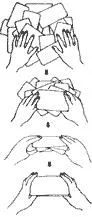
Additionally, some divination methods require the querent to concentrate and silently repeat their question. In that case, you only need to keep your mind clear; the querent determines when to stop shuffling.
Step 4: Cutting the Cards
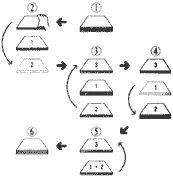
The querent cuts the cards. After shuffling and stacking the deck face down, ask the querent to cut. If you are the querent, you will cut the deck yourself.
- First, have the querent focus and take a portion from the top of the deck (they must take some cards), placing that portion beneath the remaining stack (closer to them) to form two piles (see the image above).
- Next, take another portion from the top of the second pile and place it on top of the first pile, creating three piles in front of you.
- Now stack the cards back together. Place the first pile on top of the second, then place the combined first-and-second piles on top of the third pile to restore a single deck.
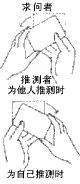
Throughout this process, keep the cards face down. The final step is to rotate the entire face-down deck 90 degrees (see the image below). If you are reading for someone else, rotate counterclockwise—tilt the deck so the left edge moves downward 90 degrees. If you are reading for yourself, rotate clockwise 90 degrees. Doing this incorrectly will reverse the orientation and can completely change the cards’ meanings, so be careful!
Step 5: Laying Out the Cards
Shuffling and cutting are the most critical steps. Laying out is simpler: arrange the cards according to the spread you chose. Keep all cards face down during the layout. Usually, only part of the deck is used; keep the remaining cards stacked face down beside you.
Step 6: Revealing and Interpreting the Cards
Once the layout is complete, turn over each card in order, flipping from left to right. After all cards are revealed, begin your interpretation.