Palmistry: Understanding Palm Lines
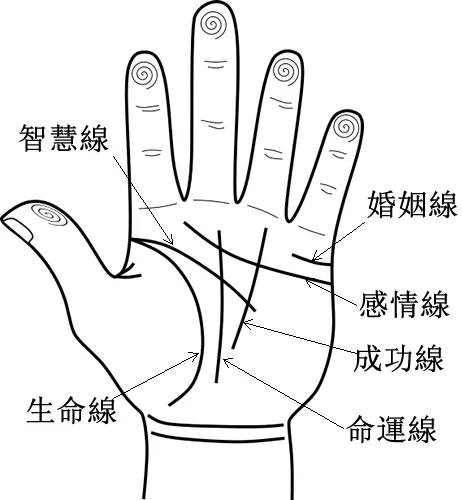
(1) Life Line:
- The life line begins at the edge of the palm between the thumb and index finger and arcs toward the base of the palm. It doesn’t predict lifespan; it reflects vitality, so it’s better described as the vitality line.
- A long, deeply etched, reddish life line suggests strong vitality and good resistance to illness; a shallow, faint line points to a more delicate constitution.
- A thick line indicates an aptitude for physical work or sports, while a thin line suggests a preference for intellectual pursuits. A broader area enclosed by the life line indicates a spirited nature and strong desires; a smaller area suggests lower stamina and quicker fatigue.
- Chain-like markings at the start of the life line (near the palm’s edge) point to poor health in childhood.
- A frayed or tassel-like ending suggests susceptibility to age-related ailments.
- Island markings on the life line indicate periods of illness or hospitalization; the larger the island, the more serious or prolonged the issue.
(2) Wisdom Line:
The wisdom line, also called the head line, is one of the most significant lines in palmistry. In Chinese palmistry, it represents the self and is also known as the human line. It typically starts where the life line begins and extends toward the little finger, ideally ending between the ring and little fingers. A very short line can indicate limited mental focus, while an overly long one can suggest excessive shrewdness or overthinking.
- A clear, finely drawn wisdom line is ideal, indicating focused thought and intelligence.
- Island markings here point to poor concentration, weak memory, or possible head injuries.
- A chained start suggests environmental factors affecting learning. If it merges with the life line at the beginning and separates shortly after, it indicates an introverted, cautious, and thoughtful nature. If they run together for too long, it suggests worry and indecisiveness.
- If the life and wisdom lines begin together and then separate quickly, it indicates decisiveness and adaptability.
- A visible gap between the two lines suggests a bold, extroverted personality that embraces challenges.
- If the starting points are separated by more than half a centimeter, it indicates a tendency toward reckless, impulsive action.
(3) Heart Line:
The heart line, also called the emotional or affection line, starts at the edge of the palm below the little finger and runs toward the index finger. Ideally, it ends between the index and middle fingers. If it reaches the base of the index finger, it points to idealistic, spiritual love; if it runs below the middle finger, it emphasizes physical love with less focus on commitment. If the heart line dips downward under the middle finger, it suggests impulsive love. A long heart line that forks and curves downward indicates a willingness to sacrifice deeply for love.
- A deep, fine heart line indicates refined feelings; a shallow, thick line suggests coarser emotions.
- Feathery diagonal strokes at the starting edge of the line indicate strong passion. If these feathery marks sit only on the line itself (and not below), they suggest quick thinking and adaptability.
- A chain-like heart line points to a sentimental nature.
- Island markings on the heart line—especially beneath the ring finger—can suggest vision issues such as nearsightedness or astigmatism.
- Islands in other areas indicate emotional troubles. A broken heart line signals significant emotional setbacks.
(4) Marriage Line:
The marriage line sits on the edge of the palm below the little finger, between the little finger and the heart line. Some people have one, others several; the count matters less than having at least one clear, prominent line. Two lines of equal depth can point to love-triangle entanglements. More than six lines with no dominant one suggests a turbulent love or marital life.
- A long marriage line indicates high standards in choosing a partner and may create pressure in the relationship. If it extends beneath the ring finger and links with the sun line, it can indicate a strong match that brings status and prosperity. If it crosses the sun line, it may negatively affect reputation and wealth.
- A forked ending suggests a tendency toward separation or breakup.
- Island markings may indicate periods of separation.
- If the end curves upward, it suggests reluctance to marry.
(5) Fate Line:
The fate line rises from the base of the palm and can run straight to the base of the middle finger. In some hands it appears as several segments rather than one continuous line, indicating job instability or frequent changes in the work environment.
- If the fate line reaches the wisdom (head) line and stops, it suggests that one’s work is guided or limited by intellect and judgment.
- If it ends at an island, it points to work disruptions due to emotional issues.
- Two fate lines may indicate part-time work or the development of a side business.
(6) Success Line (Sun Line):
The success line is a vertical line beneath the ring finger, running roughly parallel to the career line. A double success line is sometimes called the “fame line,” indicating good public reputation. Too many success lines can point to wide-ranging interests but scattered focus. Islands or crosses on the success line weaken it, suggesting setbacks to reputation or finances.