Master Xuanjing Unveils the Secrets of Destiny Through Palmistry
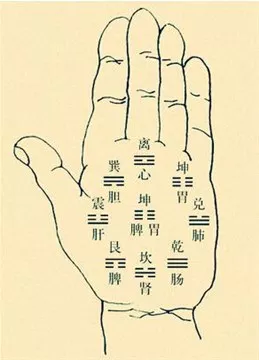
When it comes to palmistry, many people find it more fascinating than fate analysis or Bazi. Why is this the case? Because palmistry is direct, observable, and seemingly straightforward. Yet, mastering the art of reading palms deeply, thoroughly, and accurately is quite challenging. This is due to the numerous, intricate, and complex lines involved. Nonetheless, it is undeniable that palmistry can unveil various aspects of one's life.
(1) Understanding Wealth, Status, or Fame through Palmistry
Palmistry is often thought to revolve around three major lines: the life line, the wisdom line, and the heart line. However, this view is not entirely complete. The initial focus in palmistry should not be on these lines but on the overall shape of the hand, which corresponds to one of the five elements: metal, wood, water, fire, or earth elements. For instance, a hand shaped like wood often indicates skill and a propensity for fame; an earth-shaped hand suggests a practical nature yet often carries opportunities for wealth; a metal-shaped hand frequently denotes nobility. The shapes associated with the elements are: round (metal), straight (fire), curved (water), pointed (wood), and square (earth). Therefore, the primary observation in palmistry should be the hand shape, as it determines one's potential for wealth and status.
(2) Evaluating Specific Areas of the Palm for Insight
Another critical step in palmistry is examining various regions of the palm to assess fortune and potential. For example, the area at the base of the thumb pertains to property and inheritance, the area below the index finger relates to wealth, the area below the middle finger signifies career, the area beneath the little finger represents children, and the outer edge of the palm concerns benefactors and social connections. The wrist area reflects birth circumstances and family background, varying from person to person. For instance, someone who achieves wealth will have a particularly full wealth area beneath the index finger, while a person with authority and strong capabilities will display a prominent career area. These features are clearly observable through palmistry.
(3) The Role of the Life Line, Wisdom Line, and Heart Line
Many interpret the life line, wisdom line, and heart line as primary indicators of longevity, career success, and marital happiness. However, these are not their principal roles. Rather, these lines chart the course of one's life. While the hand shape and specific areas might indicate potential wealth or nobility, they don't specify when such wealth or status will materialize. These timings are outlined by the interactions among the life line, wisdom line, and heart line. For example, the crossing of the life line and wisdom line denotes fortune before age 15, while a vertical line from the gap between the index and middle fingers that intersects the life line refers to youth. Similarly, a line extending from between the middle and ring fingers intersecting with both the life and wisdom lines marks middle-aged fortune. These systems help track the development of one's fortune across their life, such as predicting career success, financial opportunities, marriage, and health needs. The heart line specifically tracks the course of love and marriage, with each centimeter typically equating to a decade of life. Thus, these three lines primarily map out a person's life journey.
(4) Never Ignore Certain Symbols on the Palm
Palmistry, much like the study of facial features, is ever-evolving. For example, lines that were previously unbranched may suddenly develop branches, or short lines may unexpectedly lengthen. New symbols that appear over time can signal certain events or serve as cautionary indicators. For instance, symbols resembling fields, wells, or rice can indicate breakthroughs in wealth or property. Conversely, lines with crossbars or coffin-like marks may forewarn of negative changes. Accordingly, such symbols in palmistry can also point to recent or forthcoming transitions.
(5) Determining Luck through the Success Line and Career Line
In simple terms, any line directing towards the middle finger is termed the career line, while those leading to the ring finger are known as success lines. When these lines reach the lower end of the heart line, it suggests that good fortune has not yet arrived and patience is required. However, if the career and success lines break beyond the heart line and extend upward, it indicates good luck has arrived, bringing many opportunities naturally. These insights are distinctly visible in palmistry.
(6) Integrating Palmistry with Facial Features and Body Shape
It's essential to analyze features in concert rather than in isolation. The quality of one feature should be considered alongside overall facial traits and body shape for a holistic and accurate examination. For example, the implications of a large nose can vary depending on the entire facial structure. Similarly, in palmistry, elongated hand shapes often pair best with water or wood types for optimal results, while square or compact hand shapes align with earth or metal types. This is known as compatibility or resonance, also referred to as aligning with a pattern.