Palmistry: How Many Times Will You Marry in Your Lifetime?
Many people dream of growing old together in marriage. However, achieving true harmony and unity over decades is something few couples experience. As time passes, certain dislikes may surface, leading to conflicts ranging from minor squabbles to a significant cooling of feelings, making the relationship feel uncertain. Some believe marriage should be managed with the care of a business. While this isn’t entirely accurate, it does hold some truth. Love might be immeasurable, yet it still requires intentional nurturing. Before marrying, many worry about the potential for divorce and question if they might separate in the future. If such fears arise even before tying the knot, it’s a troubling sign. Nonetheless, given the complexities of modern relationships, considering the future of the marriage is quite practical. Initially, love bonds partners as family, but divorce can turn family members into strangers or even adversaries.
From a fate perspective, one might glimpse the number of marriages a person may have, although understanding this fully is beyond most people’s reach. In physiognomy, though, some patterns are more intuitively visible. By examining certain features or shapes, quick and accurate assessments can often be made. Whether out of caution or a desire for understanding, gaining insight can reduce fears and uncertainties. Generally, these scenarios can hint at potential marital issues or the possibility of multiple marriages.
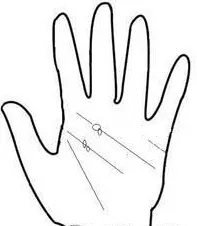
1) This method includes checking for signs of infidelity. Look for several short lines located just below the little finger. Focus on the clearest line in that area and check for breaks. If breaks are present, be cautious as this may indicate a higher chance of divorce. Multiple breaks in the clearest line often suggest multiple marriages. Several lines can usually be found there, but the longest and clearest one should be prioritized.
2) Another indicator is the appearance of an "8" shape on the heart line and the head line, seen as two small circles on these lines. If you discover this symbol, take note: it suggests the marriage may encounter turbulence and increased risk of divorce. In physiognomy, this is known as an island line. Essentially, it represents a knot in a rope; if this knot appears on the heart line or head line, it signifies potential conflicts and difficulties in marriage, increasing the likelihood of divorce.
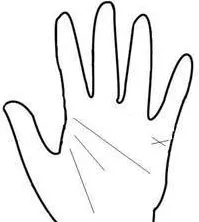
3) A clear sign of potential marital strife is the presence of chaotic and irregular patterns. This occurs when an "X" shape appears horizontally, rather than vertically, in the same area below the little finger. This indicates not only the likelihood of divorce but also potential complexities and chaotic conditions. This sideways "X" forms when two lines intersect in that area.
Aside from these three indicators, you can also examine the ring finger. If the ring finger is positioned away from the middle finger and leans toward the little finger, it suggests the couple may not get along well and could face marital crises, possibly leading to multiple marriages. Conversely, if the ring finger is closely aligned with the middle finger, it generally indicates a strong marriage, with supportive partners. Additionally, if the joints of the ring finger are not prominent and connect well, it suggests a healthy marriage. Conversely, if the joints of the ring finger are thick, it typically signals that the marriage will likely face multiple crises, or even end in divorce. For those questioning the accuracy of these observations, experience provides the answer. In life, everything has its symbols or names. The areas of the palm also have their names and representations, and through the interactions of the five elements, one can naturally discern fortunes and misfortunes. This is the essence of physiognomy or fate analysis in life.