Are You Surrounded by More People Who Help You or Hurt You?
What is a benefactor? What is a petty person? Those who help us are benefactors, while those who undermine us are petty people. Some people are so capable that they can turn petty people into benefactors, while others are so misguided that they turn benefactors into petty people. There are even those exceptional few who, in their eyes, see both benefactors and petty people as benefactors. Let’s see whether you have more benefactors or petty people around you.
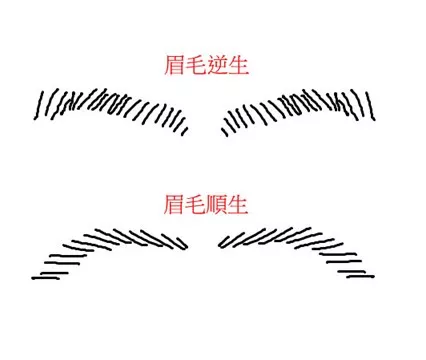
1. Eyebrows
From the perspective of physiognomy, long, well-shaped eyebrows are said to indicate healthy liver and cerebellar function, suggesting you adapt well to your environment and are tolerant in your dealings with others. You’re dependable in word and deed. You likely have many friends who can help you; if the area above your eyebrows looks especially bright and full, it can bring good fortune and wealth through friends.
If your eyebrows are sparse and short, you may be timid, have a small social circle, and form weaker emotional connections, resulting in fewer friends. If the hairs grow against their natural direction, you may lack compassion and be self-centered, often turning benefactors into petty people. Additionally, if the area above your eyebrows appears particularly dull—or even purulent—compared with other parts of your face, be cautious of potential schemes and betrayals from friends or coworkers.
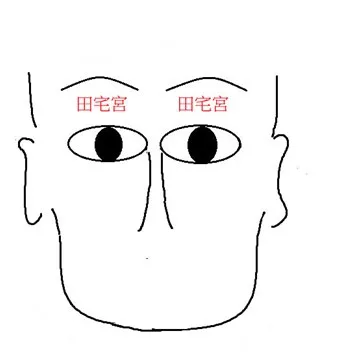
2. The Field and Residence Palace
Is your Field and Residence Palace broad and well-developed? If so, you’re kindhearted, tend to attract benefactors, and have more opportunities for advancement than others. However, if your Field and Residence Palace is wide but lacks fullness, it may indicate financial strain; you might be prone to overspending and rely on family support later in life, so it’s wise to adopt healthy money habits.
If your Field and Residence Palace is narrow and sunken—less than a finger’s width—you may be impulsive yet proactive. While you possess strong practical skills, impatience can make it harder to gain support from others, leading to strained relationships. You may need to rely largely on your own efforts to succeed. If your eyes are also sunken, you might be well-suited to independent research work, often achieving strong results.
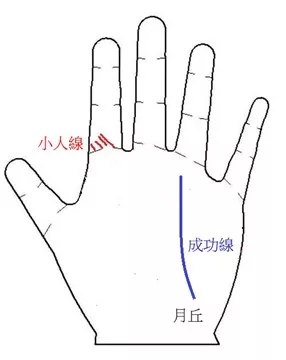
3. The Petty Person Line
In palmistry, the diagonal lines at the base of the index finger are known as petty person lines. If you have three of these lines, you tend to be high-profile in your actions; though capable, you may come across as arrogant and lacking humility, which makes you susceptible to petty people. If you have four or five lines, the likelihood of betrayal is much higher, and you may even face legal troubles. If both hands have many petty person lines, be especially cautious. Being willing to yield to others is a virtue; when circumstances allow, give people some leeway and let them save face. Also, in your interactions, communicate and coordinate effectively to resolve misunderstandings before conflicts escalate.
Since petty person lines can appear on your hands, there are also benefactor lines. If you have a success line starting from the Mount of Luna, you’re likely to receive help from benefactors. Your likable personality and strong communication skills contribute to your popularity, making you well-suited for careers that require public appeal, such as entertainment or politics. You’re the type who attracts many benefactors.
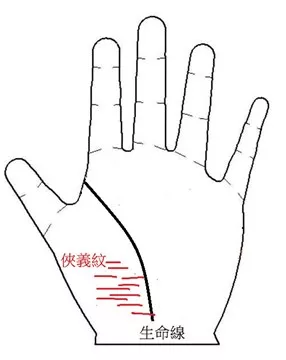
4. The Chivalrous Line
The horizontal lines within the life line are known as chivalrous lines. If these lines cut through your life line, it signifies sincerity and loyalty to friends. However, your efforts may go unappreciated, and others might take advantage of you—such as using your name for deceit—leading to damage to your reputation and finances. Although you’re enthusiastic and devoted to friends, you may encounter many petty people, so be cautious when choosing friends.
If the chivalrous lines do not cut through your life line, you tend to gauge your ability to help friends, and your interactions are reciprocal, with mutual support. In this world, no one relies solely on themselves; you embody the principle of “helping others while helping yourself” in friendships, skillfully balancing give-and-take, and you have a knack for turning friends into benefactors.