Face Reading: What Your Facial Moles Might Say About Your Luck

Facial birthmarks are generally viewed as unfavorable, as they are thought to reflect issues with internal organs. Favorable ones do exist—typically red, glossy black, or with hair—but they are rare, hence the saying “there are no good marks on the face.” Another often-noted pattern is that facial marks can correspond to areas on the body: a mark on the eyebrow may coincide with marks on the shoulders or hands; one on the cheekbone may mirror a mark on the chest. Most marks on the body are considered auspicious. Below are common interpretations—both favorable and unfavorable—of facial marks:
A mark at the center of the forehead suggests leaving home at a young age, limited inheritance, and strong religious faith.
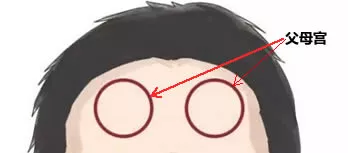
A mark in the Parental Palace suggests a weaker bond with one’s parents.
A mark on the ear signifies respect for elders and intelligence.
A mark in front of the ear suggests a tendency to make poor judgments.
A mark behind the ear indicates hidden wealth.
A mark on the eyebrow may signal vulnerability to hand injuries.
A mark at the head of the left eyebrow indicates a likelihood of achieving prominence.
A mark at the tail of the eyebrow suggests potential financial disputes.
A mark in the middle of the eyebrow indicates strong academic and artistic talent but may bring family troubles and water-related dangers.
A mark in front of the eyebrow suggests a tendency to fall in with bad company.
A mark on the forehead indicates little or no inheritance.

A pearl-like mark in the Official Palace on the forehead suggests intelligence and an inclination toward work related to fate or destiny.
A mark above the Yintang (the space between the eyebrows) suggests support from elders (the opposite if the color is dull) and strong religious beliefs.
A mark on the Yintang indicates weaker respiratory health and the possibility of a love triangle (two men and one woman).
A mark on the Yintang indicates intelligence, a strong personality in women, and a dislike of constraints.
A mark on the Yintang suggests that family property may be encroached upon.
A mark between the eyes indicates weaker esophageal and lung health and the possibility of a love triangle (two women and one man).
A mark on the bridge of the nose indicates poor marital luck for women, a tendency toward remarriage, and susceptibility to gastrointestinal issues and hemorrhoids.
A mark on the bridge of the nose indicates weaker lung function in women and a likelihood of liver disease in their husbands.
A mark on the side of the bridge of the nose, if one is not in the legal profession, may bring legal troubles. Extra caution is advised around ages 37 and 38 to avoid accidents.
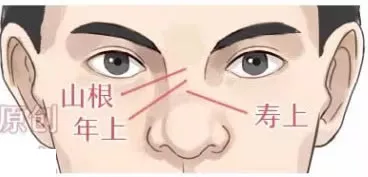
A mark in the Year or Longevity area indicates susceptibility to stubborn illnesses; men may have strong romantic prospects, while women may have sickly husbands.
A mark on both the bridge of the nose and the corner of the mouth indicates poor romantic luck, calling for extra care when choosing a partner.
A mark on the upper eyelid indicates a lack of fixed assets (men on the left, women on the right) and a tendency to attract the affection of older individuals. There may be support from elders but fewer friends and difficulty socializing with the powerful; women may marry late.
A mark on the lower eyelid indicates hard work on behalf of one’s children (men on the left, women on the right), a sentimental nature, and potential emotional disputes.
A mark on the side of the nose suggests a higher likelihood of legal issues, making a legal career a suitable path.
A mark at the tail of the eye suggests difficulties in romantic relationships and a weak marital bond.
A mark at the eye area indicates weaker kidney health, poor marital luck, and a need to be cautious about fire and accidents.
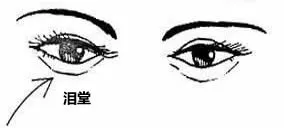
A mark in the Tear Hall indicates a sentimental nature, susceptibility to romantic disputes, and potential issues with the kidneys and lower back.
A mark on the cheekbone indicates weaker social skills, susceptibility to troubles, and a need to be cautious about accidents and falls from heights.
A mark on the cheekbone also suggests poorer lung health and the risk of losing a partner to a rival.
A mark on the cheekbone suggests that business partnerships may be unfavorable.
A mark next to the cheekbone indicates the possibility of being schemed against by others.
A mark on the bridge of the nose suggests guarding against stomach and spinal ailments.
A mark on the tip of the nose suggests difficulty retaining wealth and strong sexual desire. Women may have poor marital luck and be prone to illness. Around age 43, there may be partner-related difficulties; around age 45, interpersonal conflicts may arise.
A mark on the wings of the nose indicates difficulty accumulating wealth; use caution when going out around ages 31 and 34, and beware of financial losses around ages 44 and 45.
A mark on the wings of the nose indicates that women may be less attractive to the opposite sex.
A mark next to the wings of the nose suggests a need to be cautious about lower back pain and gallstones.
A mark inside the nostrils indicates irregular menstrual cycles in women.
A mark on the nasolabial folds indicates susceptibility to leg and foot injuries and weaker leadership ability.
A favorable mark on the nasolabial folds suggests wealth and career advancement in middle age.
A mark on the nasolabial folds indicates a risk of gallstones and being unable to be present for one’s parents at the end of their lives.
A mark on the inner part of the nasolabial folds indicates good social connections.
A mark next to the nasolabial folds suggests a tendency toward gambling habits.
A mark below the nasolabial folds indicates a childhood spent in the countryside.
A mark in the philtrum indicates weaker kidney function and urinary issues, potential difficulty having children, and the need for caution during childbirth.
A mark on the upper lip indicates good fortune related to food and dining.
A mark on the lips indicates strong desires and weaker heart health.
A mark at the corner of the lower lip indicates a tendency to talk excessively.
A mark about one centimeter from the corner of the mouth indicates eloquence and likability.
A mark on the jaw indicates a stubborn personality.
A mark on the chin indicates poorer gastrointestinal health, frequent relocations, potential for leadership roles, and susceptibility to water-related dangers.
A mark on the chin indicates a risk of rheumatism and kidney disease.
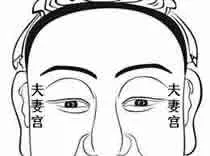
A mark in the Marriage Palace indicates potential for romantic disputes and unfavorable outcomes from early marriages.
A mark in the middle of a woman’s face indicates risks during childbirth and gynecological issues.
A mark on the lips indicates ongoing romantic attention for women, which may lead to harassment and various gynecological problems.
A mark on the upper lip indicates culinary skill.
A mark at the corners of the mouth indicates potential for verbal disputes.
A mark below the mouth indicates potential for leadership roles.
A mark on the neck indicates talent that goes unrecognized.
A mark in the Marriage Palace indicates that a woman’s husband may be prone to illness, calling for caution regarding marital changes.
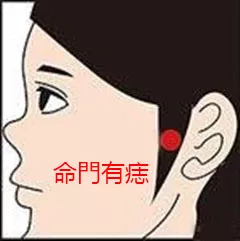
A mark on the Life Gate indicates frequent misjudgments due to chaotic information and a need to guard against gastrointestinal and gallbladder diseases.
A mark at the Tiger’s Mouth indicates throat issues.
A face full of marks may indicate a tendency toward violent incidents.
Verse on Birthmarks
"Marks on the forehead, knees, and chest; on the ears, shoulders, and elbows; behind the eyes—look to the waist and knees; on the outer cheeks and cheekbones too. Marks on the eyebrows and neck correspond; on the abdomen, feet, hands, knees, and inner knees; on Yintang, on the forehead, and on the back; in the philtrum—below or within; on the nose—these signs are said to be true."