Why Did Su Qin, the Ambitious Diplomat of the Six States, Meet a Tragic Fate?
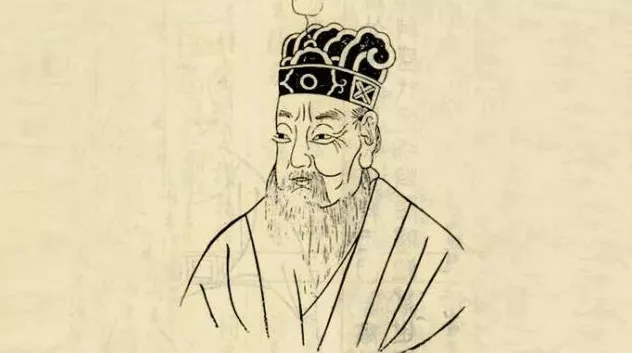
In "Lunheng: Bone Features," Wang Chong of the Eastern Han Dynasty describes Su Qin's distinctive "bony nose," which meant he had a high nose bridge with little flesh on the sides, exposing the bone, much like a sword's spine. The "Shenxiang Quanjian" notes, "A nose bridge like a sword's spine suggests a cold relationship with family and diminishing wealth in later years."
Su Qin, hailing from Luoyang during the Eastern Zhou period, was a disciple of Guiguzi. After years of wandering, he returned home, disheartened. His relatives, including his brothers, sisters-in-law, and wives, mocked him for not pursuing business for profit but instead relying on his eloquence, which they saw as the reason for his poverty. Embarrassed, Su Qin secluded himself with his books, immersing himself in the "Yin Fu" from the Book of Zhou. Through this study, he developed the military and diplomatic strategy of the "vertical alliance"—uniting weaker states to challenge stronger ones.
With this strategy, Su Qin persuaded the kings of six states (Yan, Zhao, Qi, Wei, Han, and Chu) to oppose the powerful Qin. By analyzing geography, military strength, supplies, and national power, he tailored his arguments to each king's perspective, effectively uniting them. As a result, Su Qin was appointed as their envoy, and the Qin state refrained from attacking Hangu Pass for fifteen years.
Su Qin's prominent, bony nose symbolized his high ambitions and bold talents, yet it also foretold a life riddled with misfortune. Indeed, Su Qin tarnished his virtue by having an affair with the mother of King Yan, fearing retribution, he fled to the state of Qi, where he ultimately met his end at the hands of an assassin, dying without a peaceful resolution.
Long-Necked Bird Beak: Bitter and Ungrateful
The "long-necked bird beak" facial characteristic describes a long neck and a sharp, bird-like mouth, indicative of a bitter and ungrateful demeanor. The "Rénlún Dàtǒng Fù" states, "If the mouth resembles a bird's beak, forming friendships is difficult, and traveling with such a person is unwise; the upper lip is sharp." A historical figure with this trait was Gou Jian, the King of Yue during the Spring and Autumn period.
In 495 BC, King Gou Jian of Yue ignored Fan Li's counsel and attacked the state of Wu, suffering defeat at the Battle of Fujiao. Retreating to Kuaiji with five thousand remaining troops, he was besieged by the King of Wu. In desperation, he asked for guidance, and Fan Li advised him to submit to the Wu state.
Gou Jian had two loyal ministers: Fan Li, skilled in military strategy, and Wen Zhong, adept in governance and gaining the people's loyalty. After over two decades of combined efforts, Gou Jian finally overcame Wu and avenged the defeat at Kuaiji. The Yue army then moved north to the Huai River, threatening Qi and Jin, commanding states in the Central Plains to honor the Zhou dynasty, and establishing Gou Jian's dominance.
During this victorious moment, Fan Li, a key contributor, quietly left Yue, aware of the perils of remaining in the limelight and wary of Gou Jian. After leaving, he never returned. From Qi, Fan Li advised Wen Zhong, "When the birds are gone, the good bow is stored away; when the cunning rabbit is caught, the hunting dog is cooked. The King of Yue, with his long-necked bird beak, can share hardships but not joys. Why not leave?"
Upon receiving the letter, Wen Zhong feigned illness and withdrew from court. Malicious rumors accused him of plotting rebellion, prompting Gou Jian to present him with a sword, stating, "You proposed seven strategies for defeating Wu, of which I used only three. Take the other four and present them before the late king." Thus, Wen Zhong took his own life.