Finding the Best Career Partners: Understanding the Five Elements

How can physiognomy be applied in the workplace to help identify a good boss and reliable subordinates? Professional physiognomist and feng shui master Jian Shaonian discusses in his book, "Jian Shaonian's Modern Life Fortune-Telling," published by the Times, that everyone is suited to different types of bosses and colleagues, making simple categorization challenging. First, it's important to understand the traditional "Five Elements Physiognomy." This ancient and somewhat abstract method classifies individuals into five categories: Metal, Wood, Water, Fire, and Earth. By examining these elements, it assesses personalities and analyzes interpersonal relationships.
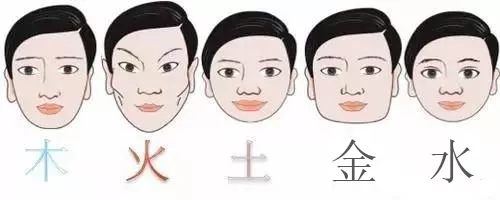
Metal People: Square Faces, Strong Rules
"Metal people" are often as radiant as gold and more likely to gain fame. Due to their association with metal, they tend to have rigid personalities and strict adherence to rules, along with a temperamental nature. Their most distinctive feature is a square face—the more angular, the more they embody metal traits. This alignment with the tough characteristics of metal defines a typical "metal" face.
Wood People: Long Faces, Passion for Learning
"Wood people" are generally noted for their long faces and lean body types, with extended limbs. Much like trees, they show slow growth but high adaptability. Once they reach maturity, they offer substantial support to others around them, embodying benevolence. Their love for learning stems from their adaptability, driving them to ponder deeply about life's meanings and their educational progress. However, wood people often mature late in life, as their growth requires time.
Water People: Round Faces, Versatile and Plump
In physiognomy, "water people" are identified by rounder faces. Water is adaptable and can take many shapes, much like these individuals who are flexible and sociable, often presenting a range of personas. Warm and romantic, they're considered affectionate partners. In practical terms, water people are characterized by flexibility and a fuller build.
I often hear, "Teacher, does my face count as round?" It's not always clear-cut. Simply stated, water people are flexible and full, often with a "short neck." If you have a long neck, you typically don't fit the water profile. However, a round face without a distinct neck is a classic sign. Water people tend to amass wealth rapidly, growing prosperous seemingly overnight, akin to a sudden flood.
Fire People: Pointed Faces, Restless Temperaments
"Fire people" have facial features akin to flames, usually pointed and sharp. Their foreheads, often associated with fire, are typically larger or more arched, ending in pointed chins like an ice cream cone's tip. These individuals are often impatient, lacking endurance, yet their quick thinking and acting can lead to unexpected creativity. Despite this, their stamina isn't high, posing challenges in later life. Their success often comes early, but it's marked by volatility rather than stability.
Earth People: Thick Faces, Steady Progress
As for "earth people," their solid and heavy facial features, without being round, showcase their stable and patient nature. They excel at endurance, able to strategize and execute long-term plans. While their success is typically delayed, their careers expand significantly as they age, particularly in later life. Their facial traits include a fuller chin and a trapezoidal shape with narrower foreheads.
People often ask, "Teacher, how can I tell water people from earth people?" Both can appear plump and lack a neck. However, while one is flexible, the other is methodical. So, when meeting someone with a short neck, assess whether they're adaptable like water or steady like earth.
The Five Elements: Enhancing Cooperation
How can the Five Elements enhance workplace dynamics?
A practical approach involves seeking subordinates who complement your elemental strengths. Physiognomy underscores beneficial and harmonious interactions. For example, a "wood person" paired with a "water person" benefits from the nourishment water provides. The more reserved "wood person" can learn and leverage social strategies from a socially adept "water person," resulting in synergy. You'll often observe that bosses with slender faces have partners with rounder ones; the rounder-faced partner often manages relationships while the narrower-faced boss focuses on planning and operations.
Conflicting Elements Can Impede Progress
Similarly, choosing the right boss impacts work satisfaction and effectiveness. If your element aligns favorably with your boss's, your job becomes more enjoyable. Conversely, conflicting elements can lead to friction. For instance, wood overpowers earth, where both are slow in action. If both rely on sluggish approaches, accomplishing goals becomes challenging.
Introducing a "Third Element" to Mitigate Conflicts
Is there a solution for conflicting elements? Introducing a complementary third element can resolve such issues. For instance, if metal dominates wood, introducing water to the equation can help, as metal nourishes water, which in turn feeds wood. A "water person" can smooth the rigid "metal person's" approach, allowing the "wood person" to advance strategies for seamless teamwork.
This principle also applies to customer and supplier relations. If a customer's physiognomy suggests compatibility with your supportive element, it boosts the odds of successful engagement. For instance, if a couple appears, and the wife shows a willingness to spend, focus on her. If the husband is more open to investing, that's where engagement should lie.
Diverse Personalities in Most People
Perhaps you're inclined toward learning, suggesting a strong wood element, or maybe you lean towards rules, indicating metal's influence. The truth is, most people possess a blend, like wood with earth or metal with wood. Pure elemental types are rare. Understanding your blend is vital: wood signifies learning, fire quickness, water sociability, metal order, and earth patience. By analyzing these, you can determine your elemental balance.
Harmonious elements result in well-aligned personalities, but conflicts can create challenges. For improvement, if you're sociable but impatient—exhibiting a water-over-fire dynamic—incorporate wood traits. As water feeds wood and wood fuels fire, embracing steady learning and compassion can enhance your life.
This overview of the Five Elements hopes to guide you toward a balanced and smooth path in life!