The Impact of Low and Flat Sun-Moon Angles on Self-Esteem and Courage
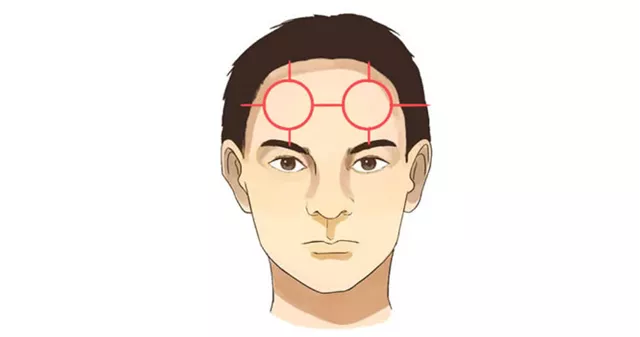
In physiognomy, the area known as the "Parents' Palace" is often called the "Yin-Yang Angle." Before we explore this concept further, here's how to locate this area: Start by extending a line upward from the midpoint of your eyebrows. Then, draw a parallel line at the midpoint of your forehead's height on both sides. The intersection of this line with the midline of your eyebrows marks the center of the Yin-Yang Angle. Next, draw a circle around this intersection with a radius of half a finger's width; this circle generally represents the location of the Parents' Palace.
By examining the Parents' Palace, we can gain insights into a person's character, early life experiences, and the level of support they receive from their parents in their career.
Individuals with a slightly raised Yin-Yang Angle usually possess a balanced character, exhibiting moderation in their interactions and decision-making. These people often benefit from the support of their parents and other benefactors throughout their lives. They often come from relatively affluent families and enjoy a high level of parental affection, making them well-supported within their households.
Conversely, those with an excessively protruding Yin-Yang Angle tend to have more dominant personalities. They are often assertive and prefer to act independently, rarely considering the feelings of others. As a result, they may face challenges in building interpersonal relationships and might receive limited assistance from others throughout their lives.
Individuals with a flat or sunken Yin-Yang Angle often show signs of low self-esteem, appearing timid and lacking in parental affection during their upbringing. If the Yin-Yang Angle is notably recessed, these individuals might outwardly appear insecure and weak, but internally, they may be cunning and adept at manipulating situations to their advantage.