Understanding Palmistry: The Mountain Root (Spousal Seat) and Its Importance in Middle Age
The root of the nose, also known as the "mountain root" or "moon star," refers to the area between the eyes at the base of the nose. It is situated at the upper portion of the Palace of Sickness and Misfortune (Year and Longevity area) and is as wide as the eyes, corresponding to the heart region.
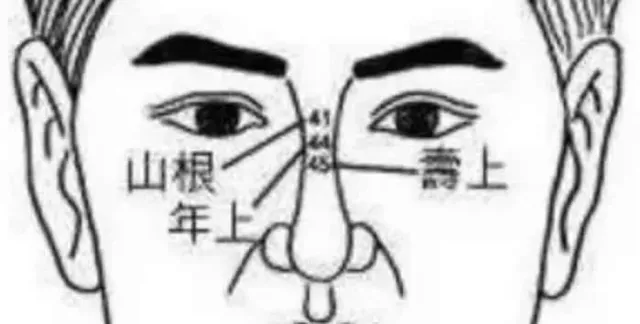
1. The Fortune Represented by the Mountain Root
1. The Starting Point of Midlife Fortune
The "mountain root," along with the "Year and Longevity," is collectively called the Palace of Sickness and Misfortune. It connects with the Yintang (Hall of Impression) and the Palace of Official Wealth above, and the Palace of Wealth below, primarily influencing health and illness. It signifies the beginning of a person's fortune at age 41.
There is a saying: "The mountain is distant and the road is long at forty-one." Ancient texts suggest that if the mountain root appears sunken, with horizontal lines or needle-like patterns, it might indicate potential disasters or changes in marital status at age 41.
2. The Mountain Root and Marriage
The mountain root, also called the "spouse seat," is one of the main indicators of marital quality. Women with a prominent mountain root are likely to have happy marriages and marry wealthy partners. Men with a high mountain root often marry talented and beautiful women, leading to a happy marital life. Conversely, a sunken mountain root suggests an unfavorable marriage. Men with a low mountain root may marry strong-willed and domineering women, while those with a high mountain root often possess high social and family status.
3. Health Status
In traditional Chinese medicine, the mountain root is connected to the heart and can reflect heart-related health. Individuals with a full mountain root are typically strong and have robust resistance to illness. For most people, a broad and smooth mountain root is favorable, even if not particularly prominent. A healthy mountain root should have a yellowish and moist complexion, suggesting a smooth life. If it appears dark or bluish, it may indicate underlying health issues.
4. The Mountain Root and Personality
In facial analysis, the mountain root represents a person's willpower, fighting spirit, demeanor, and integrity. Individuals with a high mountain root tend to have strong independence and personality, making fame more attainable compared to those with a low mountain root. They generally possess a high degree of self-esteem and self-discipline, with good adaptability to sudden events. However, they may underestimate others and have lofty ambitions with limited achievements.
Those with a low mountain root may experience weak self-esteem and feelings of inferiority, inhibiting their initiative. However, they are often diligent workers who do not seek recognition. If a woman's mountain root is too high, it may be unfavorable, indicating self-centeredness, a love of dominance, and potential issues undermining their husbands, causing family discord.
2. The Height of the Mountain Root
1. Individuals with a High Mountain Root
The mountain root's position reflects a person's innate abilities and determination. A full, smooth mountain root without wrinkles indicates a certain social status and high family position.
Such individuals are not easily swayed by others' opinions and have strong adaptability and control in unexpected situations.
Generally, individuals with a high mountain root, men or women, tend to focus on their careers. If the mountain root is particularly prominent, career success is more likely. Additionally, those with a high mountain root often receive favor from influential individuals throughout their lives.
The nose is known as the Palace of Defense, and a high mountain root suggests stability between the eyes. These individuals usually exhibit foresight in their careers and can make sound decisions.
For women, the nose represents the "husband star," and the mountain root is the "spouse seat." A woman's marriage is primarily assessed through her mountain root, followed by the area of the "Jianmen" (the corner of the eyes). (For men, marriage and relationships are mainly assessed through the Jianmen, followed by the mountain root and other areas.)
Women with a high mountain root tend to experience happy marriages, often marrying wealthy partners who have successful careers, leading to relatively stable marriages.
However, if a woman's mountain root is excessively high, it may indicate an undesirable personality trait, such as arrogance or being overly domineering in relationships, causing marital difficulties.
2. Individuals with a Low Mountain Root
A low mountain root often accompanies a low nasal bridge; the lower the bridge, the more they lack confidence and rely on others. A sunken mountain root not only indicates poor fortune but also suggests a life of hard work with little help from benefactors, resulting in unsatisfying marriages.
A sunken mountain root signifies weak willpower, lack of self-confidence, and a modest personality and perspective, often leading to dependency on others. Such individuals may lack a strong independent position within a group and face struggles throughout life, finding it difficult to connect with others. These individuals often focus on immediate benefits without a long-term vision, missing opportunities.
A low mountain root with wrinkles suggests that one's fortunes in youth may not transition smoothly into middle age, potentially leading to minor challenges in career and health in later years.
3. Broken Mountain Root
In reality, a broken mountain root is a rare facial feature.
A "broken mountain root" refers to a severe indentation at the mountain root area, appearing as a pronounced dent. This feature, considered unfavorable, indicates a lack of ancestral support and difficulty inheriting family virtues, leading to instability in life and a necessity for personal development away from home.
Individuals with a broken mountain root often have rigid, stubborn personalities, being overly domineering and self-centered, often disregarding others' advice. This obstinate nature can result in conflicts and legal issues in their youth.
A broken mountain root may indicate potential health issues, possibly suggesting chronic illnesses or health problems due to poor lifestyle choices.
3. Moles on the Mountain Root
Moles on the mountain root are referred to as "peach blossom moles." Individuals with such moles often encounter tumultuous romantic relations and may struggle with fidelity.
Men and women with moles on the mountain root tend to attract romantic attention and may experience tendencies toward divorce or infidelity.
Additionally, moles on the mountain root can adversely affect daughters, increasing the likelihood of having female children. Such moles may weaken their partner's fortune after marriage; for men, affecting their wives' health, and for women, impacting their husbands' careers.
The mountain root area represents the heart, and those with moles here may experience poor heart function, leading to irritability and anxiety, with symptoms like a rapid heartbeat under stress. A dull complexion in this area might be a warning sign of illness.
If dark energy extends from the mountain root down to the Year area, it may suggest family illness and increased personal burdens.
Moles on the mountain root can be removed if desired. However, if one chooses not to remove them, there is no need for excessive concern, as moles have only a minor impact on facial features. Cultivating good character and engaging in charitable acts can help mitigate or change any negative implications.