Interpreting a Person's Marital Status through Facial Features
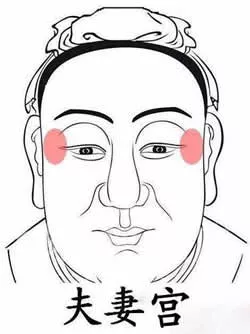
Love and marriage are universal parts of life. A person's happiness is closely tied to their marriage. Even in difficult times, a single encouraging word from a spouse can reignite the drive to move forward. As the saying goes, "Miss one season in the fields and you lose a year; choose the wrong spouse and it affects a lifetime." That truth may resonate most with those who are married. How can we gain foresight about marriage? How can we anticipate whether it will bring fortune or hardship? How can we avoid an unhappy match? We can find reasonably reliable clues through physiognomy.
I. Eyebrows
According to "The Divine Mirror of Physiognomy," "Eyebrows adorn the eyes and crown the face; they reveal the eyes' brilliance and distinguish wisdom from foolishness." Eyebrows reflect character, signaling whether a person is independent and strong-willed or easily influenced. These traits can often be read from the brows.
Personality—especially in women, in traditional readings—directly affects marital outcomes. There are many ways to analyze eyebrows, but here we will focus on length and thickness. Men with thick, long eyebrows that rise at the ends are often seen as capable and accomplished.
By contrast, men with thin, short, or downward-slanting eyebrows tend to have softer personalities, lower independence, and a greater tendency to rely on others—traits that can lead to strains in marriage. Whatever the era, many women prefer strong, successful men, often described as having "masculine presence."
For women, thick, wide, upward-arching eyebrows suggest a strong personality that may support career success but bring challenges in marriage, such as marrying later or more than once. Such women may resist traditional domestic roles; they admire men stronger than themselves yet may try to take the lead with those who are not, creating friction at home. It often takes more life experience for them to achieve a harmonious marriage.
Women with thin eyebrows and a gentle disposition are considered more susceptible to deception. As the ancients said, a carefree nature can drift off course. In marriage, they may lack autonomy and trust too readily, increasing the likelihood of choosing poorly. An ideal eyebrow shape for women is fine yet dense, well-groomed but not overly wide, set high but not excessively arched—elevated without being sharply raised. Women with this brow shape are said to enjoy happy, fulfilling lives, bringing prosperity to their husbands and children and carrying themselves with noble character.
II. Face Shape
Simply put, the face is anchored by the cheekbones. In Eastern aesthetics, a fuller face suggests warmth and kindness, while a bony face implies a harsher, more difficult temperament. This applies to both genders; generosity of spirit is often a key factor in modern marriages. Those with very prominent cheekbones may be less emotionally steady in marriage, which can lead to frequent conflicts.
This is akin to spear versus shield: if both parties are constantly at odds, the outcome is predictable. Therefore, when seeking a partner, consider your own temperament and needs. Today, young people increasingly prize individuality—the more unique, the cooler it seems. Yet emotional friction born from these differences often leads to marital difficulties.
III. Eyes
According to "The Divine Mirror of Physiognomy," "Heaven and earth are illuminated by the sun and moon, which mirror all things; a person's eyes are their sun and moon—the left representing the father and the right representing the mother." In modern terms, the eyes are the windows to the soul. They reflect one's spirit, emotions, preferences, vanity, and desire for expression. Those with clear, focused eyes tend to express feelings directly and rationally, make sound judgments in choosing a partner, and build stable marriages. Conversely, hazy, unfocused eyes often suggest hesitation and inner turmoil. Such individuals may be indecisive and emotionally impulsive, leading to poor choices in partners and a gap between thought and reality, ultimately resulting in marital difficulties.
Different features reflect different personalities, temperaments, and emotional patterns. Conflicts between two people often arise from misunderstanding; there is no inherent hatred between individuals. By observing someone's features, we can gain insight into their character, fostering understanding and tolerance and reducing arguments. Young people often fall in love impulsively, swept away by emotion. Can we pause on a quiet night to reflect and consider marital traits through physiognomy? Doing so may help us avoid as much unhappiness in marriage as possible.