How to Understand a Person's Inner World Through Facial Features
Image source: Pexels
Hello everyone! Welcome to this edition of our facial features series. Today, we'll explore how personality traits are often reflected in our facial features, focusing solely on the "inner world" without considering factors like wealth or relationships.
A person's inner self is closely linked to their character, though they're not exactly one and the same. Character can be a superficial trait, often displayed to others, while this article intends to delve deeper into the true mindset that's harder to feign.
An important note before we begin: The traits discussed here are detailed and should be evaluated as a whole, rather than judging based on a single feature. Facial features should not be considered in isolation. Please approach this information thoughtfully!
Observing the Eyebrows and Eyes
When examining eyebrows and eyes, a greater distance between them suggests an optimistic and open-hearted nature, whereas a narrower distance might indicate a more complex inner world.
However, balance is essential; those with excessively wide spacing may come across as indecisive and unreliable, while those with very narrow spacing might be meticulous and observant but prone to being overly serious and self-troubling.
Furthermore, the area between the eyebrows, known as the "Yintang," contains the "frowning muscle." If this muscle is notably pronounced, it may suggest a person who is often worried.
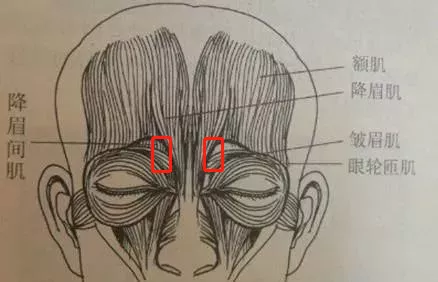
When observing realistically, eyebrows and eyes should be considered together. For instance, individuals with "low brow and heavy eyes" (a narrow gap between eyebrows and eyes) tend to be emotional, quick-tempered, and sometimes petty.
Therefore, when dealing with people who have "crowded" eyebrows and eyes—especially if you're not well-acquainted—it might be wise to be gentle in speech to avoid inadvertently triggering sensitive areas.
When considering eye color, those with clear black and white in their eyes are usually seen as having a simpler and calmer inner world, whereas eyes with less white or a yellowish or bluish hue might reflect emotional turmoil, such as suspicion, low self-esteem, or pessimism. Moreover, tear moles at the corners suggest a penchant for crying (especially in relational matters) and denote a rich emotional life.
However, whether a person with tear moles is optimistic and confident or tends to be negative and pessimistic can vary greatly—
Some people who cry easily are genuinely melancholic and filled with negative thoughts, while others use tears as a relief mechanism before moving on, and those who bottle up emotions may suffer more, so this feature should also be examined along with other characteristics.
Observing the Ears
When correlating ear features with one's inner world, start by considering the link between ears and physical health.
Ears symbolize a person's kidney energy, affecting their vitality, physical stamina, and ability to cope with stress. In simple terms, one's spirit and energy can be mirrored by their ear features. Specifically:
Small ears that lack vibrant color (dark, bluish, or purplish) and are set low often point to a person who might be physically frail or have a weak constitution, leading to restlessness and sensitivity. Such people usually struggle to maintain calm in changing circumstances.
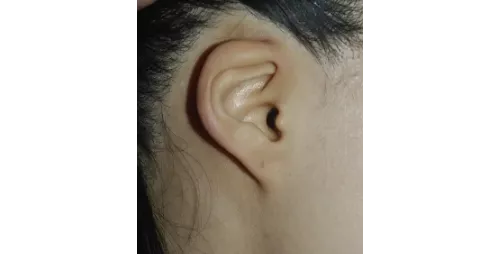
(This type of ear is very small)
On the contrary, large ears with a healthy hue (pinkish or whitish) positioned high on the head reflect abundant energy and sound physical health, often attributed to a more assertive and optimistic demeanor with a strong stress tolerance.
Moreover, pairing ear characteristics with eye expressions can yield a more precise assessment. The eyes can enhance or diminish real emotional cues:
Small ears with poor color, coupled with dull, lifeless eyes, suggest a hesitancy and inner conflict or a tendency toward self-doubt and self-sympathy;
In contrast, large, high ears along with bright, lively eyes represent optimism and energy, evoking the spirit of a "resilient fighter."
Observing the Three Sections of the Face
We've previously discussed how the three sections of the face can roughly determine a person's fortunes at different stages of life, specifically:
- The upper section, from the hairline to the eyebrows, represents youth fortune.
- The middle section, from the eyebrows to the tip of the nose, signifies middle age fortune.
- The lower section, from the tip of the nose to the chin, relates to old age fortune.
Generally, a balanced distribution across these sections is considered auspicious. This balance doesn't imply exact equality, but rather avoiding significant disparities. Such harmony promotes stable and smooth life fortunes; conversely, any visible imbalance might suggest fluctuating fortunes.
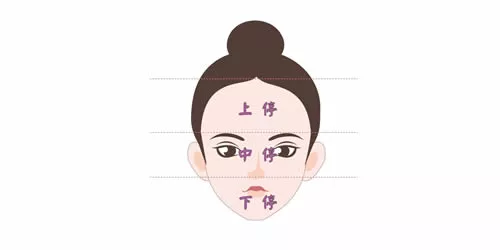
The connection between the distribution of these three sections and one's inner thoughts is also noteworthy:
An extremely imbalanced distribution may imply that life's ups and downs affect one's mindset, contributing to insecurity, uncertainty, and emotional fluctuation;
By contrast, an evenly distributed face often indicates a smoother life journey. Although it doesn’t necessarily imply extreme optimism or open-mindedness, it does promote a stable disposition, offering a greater sense of security.
I would like to emphasize two additional points regarding the three sections:
Individuals with significant disparities or severe imbalances may experience mental instability during challenging periods of fortune (for instance, those with a poorly developed middle section might struggle in middle age), leading to increased negative thoughts. Focusing on mental health is crucial, as maintaining a positive mindset is a stepping stone to improved fortunes;
Those with a low, narrow forehead and uneven hairline may have challenges rooted in family or early relationships. Since a person's early life and family background deeply shape their character, such individuals might harbor internal conflicts and should focus on self-healing and self-appreciation.
Observing the Spirit and Energy
There's an old saying: "The spirit is like oil, and the person is like a lamp." Therefore, though "spirit" might sound abstract, it's a vital component of facial analysis.
A person's spirit is most valued for its clarity and lightness, suggesting fewer "clutters" and "impurities," indicating a relatively straightforward mindset with positive, healthy thoughts, leading to a refreshing presence. On the other hand, muddiness and heaviness are less desirable, suggesting that the person may carry substantial emotional weight.
Moreover, observing one's complexion can provide additional insights:
A vibrant complexion coupled with frequent smiles signifies optimism and confidence, which can subtly amplify one's luck, while a dull complexion or an unusual facial hue—such as yellowish, bluish, or reddish—often sets the stage for worries, emphasizing the need for physical care.
Comprehensive Observation
Facial Features "Trends"
A face that seems to droop when at rest often hints at inner sadness and conflict, telling of a less optimistic disposition. Consistent mental stress can manifest as a "downward" facial expression, reflecting heavy thoughts and emotional weight.
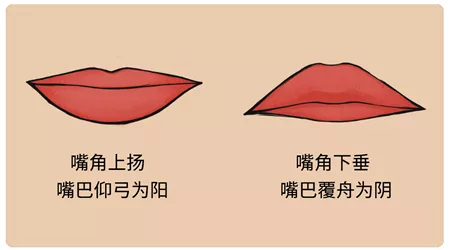
Two particular mouth shapes stand out—
A "downturned mouth," where the corners naturally curve downward, suggests a propensity for pessimistic and negative expressions/thoughts. Conversely, a "smiling mouth," with upward-curving corners, reflects an optimistic mindset, often associated with strong social skills and eloquence.
Facial Symmetry
Facial features with noticeable asymmetry, like uneven eyes or mixed eyelid types, often reveal internal conflict, with opposing internal dialogues leading to self-doubt, pessimism, and emotional turmoil;
However, in some cases, asymmetry—such as mixed eyelids—can foster greater personality adaptability, perhaps with a hint of cunning, but may also lead to mood swings and contradictions, swinging from self-doubt to self-acceptance, from rich emotions to detachment...
Hence, individuals with facial asymmetry might benefit greatly from self-reflection and emotional healing, as a tumultuous inner world can exacerbate these features.
Detailed Observation of the Yintang
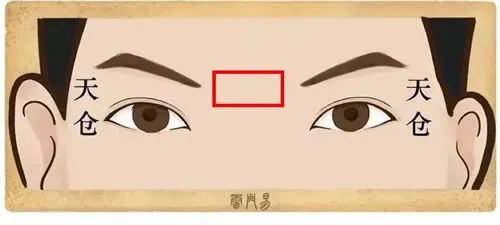
Yintang Width: A wide Yintang tends to signify a broad-minded person who is less calculating, but if too wide, they may be seen as careless and unreliable. Conversely, a narrow Yintang suggests sensitivity and a tendency toward overthinking and entanglement in thoughts;
Yintang Color: A dark, purple, or gray Yintang may indicate that the individual is experiencing less favorable fortunes and could also be anxious or pessimistic;
Yintang Lines: Pronounced lines or an excess of hair in the Yintang region might indicate heavy thoughts and burdens.
Detailed Observation of the Nose (Bridge)
Those with a "small nose relative to a large face" (where the nose appears small or narrow, affecting the overall facial balance) often feel burdened and confined. When the bridge of the nose is additionally sunken, crooked, low, or broken, these feelings might intensify, leading to a focus on trivial matters;
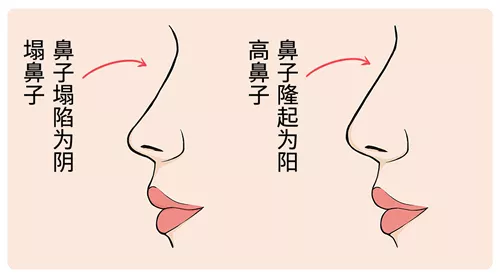
P.S.: A low nose bridge might suggest increased self-doubt and self-pity compared to a high bridge, indicating a lack of assertiveness and susceptibility to external influences.
As you may have noticed, many of the "favorable facial features" align with traits of optimism and confidence, while less favorable features often point to a more pessimistic inner world.
Therefore, as the saying goes, "the face reflects the heart," and facial features reveal one's most authentic self. Cultivating a more positive and confident mindset can help "transform one’s appearance," and in turn, fortunes may improve!