Facial Features and Destiny: Men with Large Ears Are Highly Intelligent and Full of Vitality
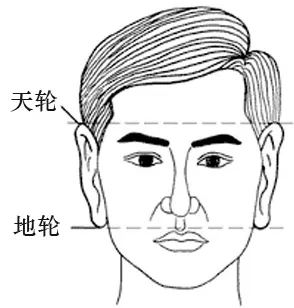
The I Ching is a cornerstone of Chinese culture, providing the foundational theory for the Four Books and Five Classics, as well as the teachings of various philosophers. This underscores the importance of the I Ching. Essentially, it explores the truths of the universe, interpreting the relationship between humanity and nature through a cultural lens, and understanding the essence of the universe and life.
The predictive sciences based on the I Ching's concepts of Yin and Yang, the Three Powers, and the Five Elements, along with Feng Shui, form the basis of what we know today as divination and Feng Shui practices. Among these predictive techniques, physiognomy is notable for its ability to accurately assess a person's character, health, marital status, career, current fortunes, and life changes. It combines insights from the I Ching and the Huangdi Neijing, making it a comprehensive predictive discipline.
Men with large ears are considered fortunate, while women with large ears are thought to enjoy long lives.
Large ears that point inward suggest great wealth and nobility, while small ears that point outward imply accumulating debts.
Large ears with prominent lobes often indicate nobility; those without lobes may be associated with poverty.
Without ear lobes, ancestral wealth is as insubstantial as dust.
Liu Heng notes that men tend to focus on careers while women often concentrate on family; men are seen as responsible for external affairs (with emphasis on social responsibilities), whereas women are looked to for nurturing and educating future generations. The connection between the kidneys and ears is important as it is believed that wisdom is governed by the kidneys, hence ears can reflect a person's intelligence.
A man with large ears is likely to be highly intelligent, a quality that is valuable for contributing to society. A woman with large ears indicates ample kidney energy, which is essential for bearing and raising healthy, intelligent children. Additionally, since the kidneys are linked to longevity, both men and women with thick, large ears are thought to have traits associated with a long life.
Thick, large ears that encompass the lobes are seen as a sign of wisdom and are considered a prerequisite for a prosperous life. Conversely, thin, small ears may indicate that even inherited wealth will be fleeting; thin, small ears with inverted lobes suggest a lack of intelligence, which may result in a life of poverty and failure, with few finding success.
Thick, large ears with well-defined contours symbolize wealth and success, indicating a meticulous and thoughtful work ethic. However, large but thin ears lacking definition can resemble paper, suggesting a life of poverty, where individuals may experience temporary wealth but will not enjoy it for long.
If the ears are very small and lack clear contours, any inherited family wealth may slip away like sand through fingers.
Thin ears are a source of great hardship.
Ears that hang down to the shoulders indicate immense wealth.
Ears that are one inch higher than the eyes suggest a life without poverty.
Ears that point forward imply a certain standing in government.
Liu Heng observes that ears as thin as paper point to a deficiency in kidney energy. Such individuals may be intelligent but are often critical, achieving little success and finding it difficult to accumulate wealth, leading to a challenging life.
Ears that hang down to the shoulders are described as large ears; consider the depictions of Buddha and Bodhisattvas, who are shown with large ears, representing complete wisdom. People with broad, large ears are seen as intelligent and trustworthy, making them inherently wealthy individuals.
Thick, large ears that point forward with slightly protruding lobes are indicative of an official appearance, suggesting success in particular fields.
Ears that adhere closely to the head indicate a life free from worries.
Ears that are pointed suggest financial ruin.
Ears that "catch the wind" indicate the likelihood of selling off ancestral land.
Ears the size of palms suggest a stubborn nature.
Large ears that are close to the head, as Liu Heng describes, imply a life free from concerns over wealth and success. Such individuals are grounded and intelligent, ensuring a stable career throughout their lives.
Individuals with thin and prominent "wind-catching" ears may excel at organizing and rallying others but often lack leadership skills, resulting in financial instability.
Ears that "catch the wind," meaning they point forward, often belong to restless individuals who may venture from their hometowns to seek fortune. If the ears are large and point forward, success is possible; however, if they are thin and small, it may lead to a life marked by hardship.
If the ears are palm-sized, large, and the ear bones are hard, this indicates a strong-willed person who is difficult to persuade. Such individuals possess independent thinking, good memory, and strong capabilities.