Reading Children’s Wisdom and Fortune from the “Tear Hall”
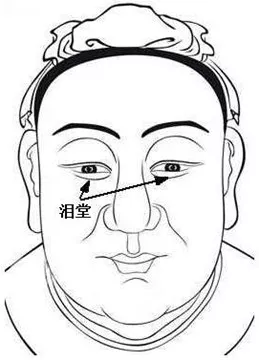
In physiognomy, the area beneath the eyes is called the "tear hall." It is said to be closely connected to the autonomic nervous system and the kidneys. By observing the tear hall’s shape and color, one can infer kidney function, which in turn is believed to reflect reproductive capacity and overall vitality. For this reason, the tear hall is also known as the "palace of children." When someone performs significant good deeds—such as saving lives or sincerely helping others without expecting anything in return—horizontal yellow lines may appear in the tear hall, known as "yin zhi lines." This is said to signify great accumulated virtue, which can bless descendants with wisdom and longevity. Thus, ancient texts also refer to this area as the "palace of virtue," a term rich with meaning. If one hopes to have kind, filial children, they should cultivate a benevolent heart, do good deeds, and care for their health so the tear hall remains full and radiant.
Ancient physiognomy texts offer the following observations about the tear hall:
- A full, rounded tear hall indicates prosperous descendants; a sunken tear hall suggests a lack of offspring.
- Fine yin zhi lines indicate blessings through children; a net-like pattern suggests children may drift away.
- Also consider the philtrum: a deep philtrum is favorable, while a flat one is not; further examine Mercury, as a lonely flame will eventually extinguish.
- A sunken tear hall indicates difficulty conceiving; a sunken yin hall suggests weakness in health and kidneys.
- A sunken tear hall means no sons or descendants; a sunken yin hall means no daughters or children.
- Net-like patterns under the eyes indicate three generations without children; a full tear hall suggests children will thrive.
- Net-like patterns under the left eye indicate troubles for sons; under the right eye, troubles for daughters.
- Moles in the tear hall indicate misfortune for children; indentations in the tear hall suggest incomplete offspring.
- A flat tear hall indicates limited wisdom; a full tear hall indicates high aspirations.
In modern terms, this can be interpreted as follows:
- A deeply sunken tear hall suggests the person may harm their children and lack affinity with them.
- A full, moist tear hall with a calm demeanor suggests the person has many virtuous children; if the tear hall is overly depleted and not full, it indicates unworthy or foolish children.
- A full, moist tear hall indicates good health, abundant energy, a loving marriage, and obedient, filial children, leading to a harmonious parent-child relationship.
- A mole in the tear hall suggests the person may harm their children; if there are spots or small growths, it indicates worries about their children (left for sons, right for daughters).
- Subtle horizontal lines in the tear hall, known as "yin zhi lines," indicate accumulated virtue leading to successful children; if these lines are tinged with yellow or red, it further confirms this.
- Clear eyes and well-defined features, along with a full tear hall and a prominent root of the nose, suggest the person will have many children, and those children will be exceptional.
In summary, the tear hall should be full and well-fleshed, not sunken. If there are subtle signs of "sleeping worms" (a particular eye feature), a full tear hall, and a deep, straight philtrum, it indicates the person will have prosperous descendants. Conversely, if the tear hall is deeply sunken without signs of "sleeping worms," it suggests poor reproductive capacity or a lack of connection with children, indicating questionable integrity. If the "sleeping worm" area looks baggy with many wrinkles, it suggests someone who appears virtuous on the outside but is deceitful within. If they do not repent, their later years are likely to be filled with misfortune and sorrow.