Beauty Reflects the Heart: Defining the Ideal Appearance for Women
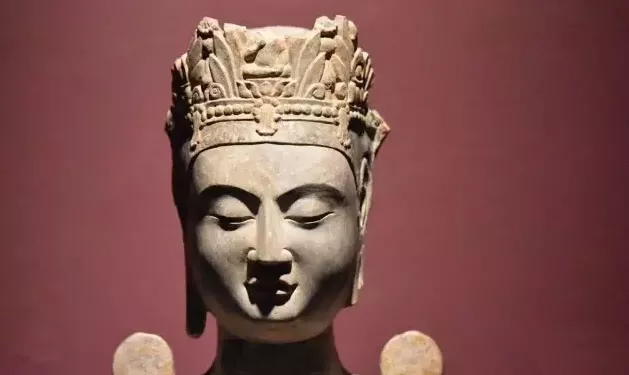
Everything has its form, and form is born from the heart. What is seen isn’t truly tangible, and what is felt isn’t merely physical matter.
Form arises from the heart, suggesting that a person's outward appearance reflects their inner state. Humility in interactions, grace in speech, the poetry and literature one has read, and a rich inner life will all manifest in one’s appearance. How you treat life will eventually be reflected in your looks.
The ultimate compliment for a woman's beauty is not simply "beauty," but being seen as a "Bodhisattva."
It is often said, "A good woman is akin to a Buddha." With a face like a full moon, eyes like a blue lotus, gentle brows, a solemn gaze, graceful steps, a breath like orchids, and deeds embodying supreme virtue, she exudes profound beauty...
Mentioning "Bodhisattva appearance" conjures images of a gentle, dignified, and graceful woman. "Bodhisattva" not only signifies a woman’s beautiful appearance and demeanor but also her compassionate and pure qualities. "Bodhisattva" is a term from Buddhism, a shortened form of "Bodhi-sattva," meaning "awakened being," referring to enlightened sentient beings.
In India, Bodhisattvas were traditionally depicted as male, often as tall and handsome figures. Buddhist scriptures state that all Buddhas and Bodhisattvas, upon achieving enlightenment, transcend gender, manifesting according to circumstances and representing the fundamental doctrine of "equality among all beings, without hierarchy."
However, as Buddhism spread to China, the Bodhisattva image evolved. During the Sui and Tang dynasties, Guanyin Bodhisattva was portrayed as female, and even the Manjushri Bodhisattva, symbolizing wisdom, gradually adopted feminine traits. This reflects an inherent Chinese admiration and aesthetic ideal for women—compassionate, dignified, gentle, open-minded, and selfless.
In discussing "Bodhisattva appearance," "appearance" indicates clear and distinct physical traits. For example, the Buddha is said to have long fingers, broad heels, an upright stance, rounded shoulders, a voice like Brahma, alongside thirty-two physical marks and eighty auspicious signs. However, the Buddha’s dignified appearance is not innate but cultivated through practice. A hundred virtues embellish each feature, and Bodhisattvas must undergo a hundred great kalpas to achieve "auspicious appearance," or "hundred virtues adornment."
The "Diamond Sutra" states: "If one sees me by form or seeks me in sound, that person is on the wrong path and cannot see the Tathagata."
What does this mean?
Searching for the Buddha's true essence in beautiful forms or pleasant sounds is a misinterpretation and cannot perceive the true reality of the Tathagata.
For instance, among the Buddha's disciples, Maudgalyayana, known for his supernatural powers, once wished to test the Buddha's teachings’ sound. He traveled to a far eastern realm, yet the Buddha's voice was as near as ever. Another skeptic, having heard the Buddha was six feet tall, doubted it. Upon measuring with a ruler, it still measured six feet—an endless measure.
Thus, the Buddha's golden form cannot be fully captured by the thirty-two characteristics and eighty auspicious signs!
In reality, a goddess is defined by more than just beauty. For us in the secular world, no matter how striking you are, time will erode your looks, and youth will ultimately fade. Since appearance is transient, is it essential to perfect one’s looks over "a hundred great kalpas"?
Beauty, pleasing looks, and graceful demeanor are less crucial than a beautiful heart. Only the light from within can sustain a timeless and pleasing appearance.
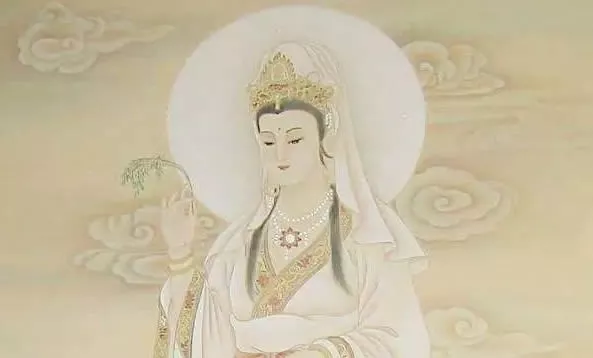
To achieve a beautiful appearance, one must cultivate a radiant heart.
The "Impermanence Sutra" states: "Worldly matters lack form; form arises from the heart. What is seen is not truly material; what is felt is not just matter."
Form comes from the heart; a person’s outward appearance reflects their inner state.
A sculptor who delighted in creating grotesque figures once looked in the mirror and suddenly realized he had grown ugly. The ugliness didn’t refer to skin tone or features, but to a fierce and strange expression. Though he consulted famous doctors, none could help. One day at a temple, he shared his troubles with the elder there, who said, "I can cure your affliction, but it won't be free; you must first carve several statues of Guanyin." As the sculptor crafted these statues, he absorbed Guanyin’s gentle, kind, and compassionate demeanor. After completing three statues, he returned to the elder: "Please help me with my ailment." The elder replied, "No need; you are already healed." When the sculptor looked in the mirror, his features had transformed to a clear and bright countenance.
This illustrates that "form arises from the heart." What you hold in your heart will shape your appearance.
If you observe closely, you’ll notice that a person’s appearance and aura change subtly day by day. Even the most upright features won’t stay the same. Instead, they’ll shift with the mind's turbulence. Sorrow will carve corresponding lines; joy brings a completely different smile. All these worldly changes stem from the heart, as the saying goes, "When there is heart, there is no form; form arises from the heart; when there is form, there is no heart; form follows the heart’s dissolution."
If you want a beautiful appearance, focus first on cultivating a brilliant heart.
Cao Xueqin wrote about the melancholic and frail Daiyu: "Her brows were like two crescent moons, not quite furrowed, and her eyes seemed joyful, yet were filled with emotion." He depicted the kind and gentle Yingchun as "slightly plump, gentle and serene," while the capable and intelligent Tanchun had "bright eyes and well-groomed brows, her gaze lively." The melancholic person has a furrowed brow, the broad-minded person a gentle gaze, and the confident person naturally has an upward curve at the mouth’s corners... These traits, over time, will alter one’s appearance.
Similarly, humility in interpersonal relations, elegance in conversation, the literature one has explored, and a rich inner life will illuminate in one's visage. How you treat life, in the end, will reflect in your looks.
To nurture your appearance, start by fostering your heart.
While we often say "judging people by their looks," it’s more accurate to say "judging people by their appearance," which isn’t merely about beauty but being pleasant to the eye. Being attractive implies having a refreshing demeanor, graceful movements, and maintaining poise and composure even in the most challenging circumstances.
Guo Wanying, the fourth daughter of the Shanghai Yong'an Company, was young, beautiful, and wealthy, surrounded by admirers. However, at the age of 50, her husband was labeled a rightist and died in prison, and she was forced out of her grand home to scrub toilets until her fingers became deformed. During the Cultural Revolution, even when reduced to cleaning toilets, she insisted on wearing a qipao. In her qipao, all traces of suffering vanished from her face.
In a narrow hallway, without an oven, she used a coal stove to steam St. Petersburg-style cakes. Without fine china, she used enamel mugs but still ensured she never missed her homemade afternoon tea. Reading, she used tweezers to turn the pages, striving to uphold her composure and grace.
This "golden branch and jade leaf of Shanghai" teaches us that "elegance in a person is not about appearance or wealth, but the nobility of the heart."

Guo Wanying
Calling someone good-looking is not a superficial comment; it reflects a person’s qualities, stripped of their exterior, a presence recognizable even in a crowd—this captures the essence of the soul.
Artist Chen Danqing noted, "At the highest level, a person’s appearance is who they truly are."
Therefore, to nurture your appearance, begin by nurturing your heart.
As Yang Jiang said, "I read to discover a better version of myself."
A person’s inner cultivation ultimately shapes their appearance.
The "Diamond Sutra" states, "With a pure and clear heart, the true form emerges."
Appearance can gradually change; a beautiful demeanor and kind features will radiate an attraction from within, making those who see it feel enveloped in spring warmth.
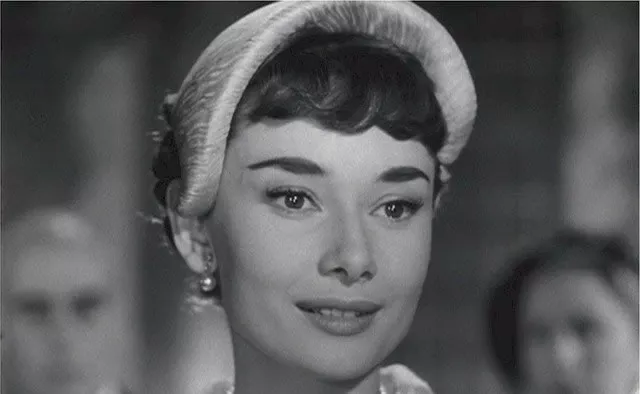
The renowned actress Audrey Hepburn was stunning in her youth and remained captivating into her later years. What set her apart as the goddess among goddesses? The secret lies in her final words:
If you desire beautiful lips, speak only kind words;
If you wish for lovely eyes, seek out the good in others;
If you want a slender figure, share food with the hungry;
If you want beautiful hair, allow children's fingers to run through it;
If you want an elegant posture, remember you are not the only one walking.
To truly live, one must be energetic,
reflect, self-improve, and refrain from burdening others with complaints;
When assistance is needed, rely on your own hands;
With age, you will discover your hands can solve many challenges,
one hand to assist yourself, the other to help others.
To achieve a strong appearance, you must first cultivate a beautiful heart. Form arises from the heart, and the noblest appearance is a kind heart; this represents a woman's true Bodhisattva appearance.