Men Born with Noble Looks, Destined for Wealth

Image source: Pixabay
Ancient texts contain many accounts of noble individuals. For example, the "Book of Han: Annals of Emperor Gao" records: “... Empress Lü was in the fields with her two sons when an old man came by asking for a drink. Empress Lü received him graciously. The old man remarked, ‘This lady is destined to be a noble person in the world.’ He told her two sons to go meet Emperor Xiaohui and added, ‘The reason the lady will be noble is because of this boy.’ By the time Emperor Gaozu happened to pass by, the old man had already left. Empress Lü told him that a guest had predicted great fortune for her and her son. Emperor Gaozu asked, ‘Is he not far away?’ and then went after the old man to inquire further. The old man replied, ‘Earlier, the lady’s sons looked every inch like lords; their nobility is beyond words.’” This passage describes how a physiognomist read the fortunes of Liu Bang and Empress Lü. The phrase "not recognizing Mount Tai" is a metaphor for limited insight—failing to recognize eminent people right before you. So, what features in physiognomy are said to indicate a noble person? Here are some traits traditionally cited.
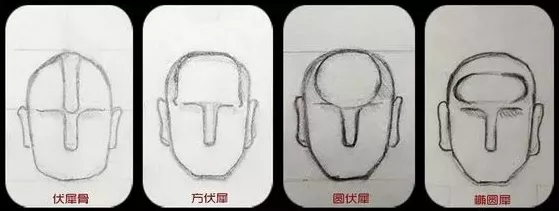
1. Forehead with Hidden Rhinoceros Bone
A person with a broad, full forehead and a hidden rhinoceros bone is considered noble. The hidden rhinoceros bone refers to a section of the skull at the center of the forehead, above the "Yintang" area and connected to the "Baihui" point, and it is said to signify status and longevity. A square hidden rhinoceros bone is most auspicious, followed by a round one, and then an oval one.
2. Ears Whiter than the Face
When a person’s ears are paler than their facial complexion, it is seen as a noble sign, suggesting a good reputation, a smooth career, and both wealth and authority.
3. Long Eyebrows with Upturned Tips
Long eyebrows with upturned tips indicate someone likely to achieve major success in their career. Because eyebrows correspond to one’s fortunes in middle age, this look is considered an auspicious sign.
4. Well-Defined and Elevated Yintang
If a person’s Yintang is bony and well-defined, it is called the "Golden City Bone." If the bridge of the nose extends up into the Yintang area, it is called the "Jade Pillar Bone." Either feature is considered highly auspicious.
5. Bright Eyes
Bright, clear eyes—especially when the blacks and whites are distinct—are regarded as a sign of nobility.
6. High Cheekbones
In men, high cheekbones are thought to signal authority and a noble bearing. The higher the cheekbones, the greater the power they are said to represent.
7. Resonant Voice
A man with a loud, resonant voice—like thunder or the sound of bronze—is said to enjoy security in food and clothing, even if he is not conventionally handsome. Conversely, a weak, hoarse voice is often associated with poverty.
8. Back Like a Hidden Turtle
A man with a broad, well-fleshed back and a pronounced, ridge-like spine—resembling a hidden turtle—often enjoys a smooth career in governance. By contrast, a sunken or narrow back is typically linked with limited wealth and potential hardship.
Furthermore, physiognomy suggests that a person’s temperament is shaped by the natural balance of Yin and Yang and the Five Elements. These forces influence the world and give rise to different personalities. People with fierce eyes are often seen as hard-hearted, so it is wise to observe someone’s gaze when choosing friends. The nose is also associated with wealth; men with thick noses tend to be prosperous. A man’s mental state can reflect his longevity. To assess a man’s wealth and fortune, one should listen to his voice and observe his complexion. More advanced physiognomy emphasizes a person’s essence, energy, and spirit; if the exterior is pleasing but the interior is lacking, it is not considered a favorable appearance.