The Twelve Palaces Explained: The Palace of Blessings and Virtue
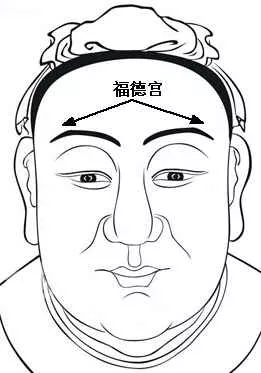
The Fude Palace lies above the eyebrows, specifically just above the tails of the brows. This area is also known as Tian Cang (Heavenly Store), Di Ku (Earth Store), and Fu Tang (Fortune Hall). It is associated with auspiciousness, wealth, and blessings. Fu Tang is further divided into the Inner Fu Tang and Outer Fu Tang. Some readings also include the Tian Cang of the forehead and the Di Ku of the chin when assessing one’s fortune and wealth. The saying “Heaven and Earth are close” describes the harmonious relationship between the forehead (Tian Ting) and the chin (Di Kuo), which ideally should be full and well-proportioned.
When observing the Fude Palace, consider both the upper and lower aspects: the forehead and the chin should be balanced and not tilted. A broad forehead and a substantial chin indicate complete Fude, pointing to a life of good fortune and a strong start and finish. If the upper and lower parts are not in balance—such as a wide upper part with a narrow lower part, the reverse, or any tilt—it may affect one’s luck in the early or later years. According to fate analysis, having “virtue with five blessings” is especially noteworthy.
1. Sharp, Lean Fude Palace
- Suggests working hard yet receiving little in return.
- Tends toward solitude, making it hard to find true companions.
2. Sunken or Deficient Fude Palace
- May indicate a lack of blessings; a hardworking person might consider starting a business to create new opportunities.
- Be especially cautious during the lunar months of April and July.
3. Full and Bright Fude Palace
- Signals abundant fortune and blessings.
- One can enjoy life with peace of mind; successful in career with few setbacks throughout life.