The 12 Houses of Astrology
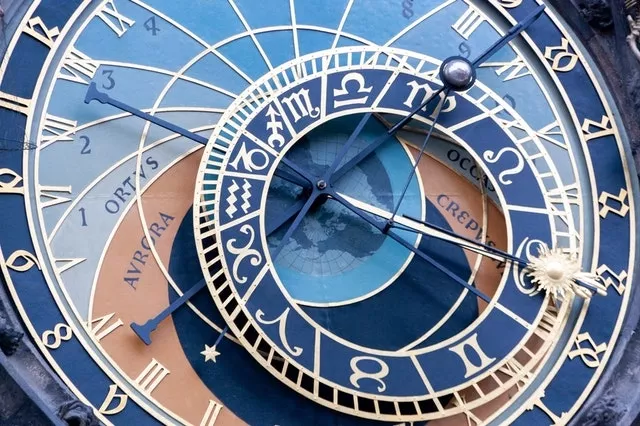
Zodiac Signs — A Natal Chart consists of twelve houses, also called the astrological houses. These are sectors of the sky determined by the time and place of birth. Each house governs a different area of life, and planets placed in a given house shape how their meanings are expressed there.
Because there are ten traditional planets and twelve houses, some houses may be empty. That does not make them unimportant: sensitive points, the lunar nodes, and other factors can also activate and describe a house’s themes. As one astrology expert puts it: “Planets are the actors, the signs are the roles or costumes, and the houses are the stage where the action takes place.”
Key Houses and Angles
- The First House (Ascendant), also called the Rising Sign, sits on the eastern horizon—where the Sun rises.
- The Seventh House (Descendant) lies on the western horizon—where the Sun sets.
- The Tenth House (Midheaven/MC) is the chart’s top or zenith.
- The Fourth House (IC), opposite the Tenth, is the chart’s bottom or nadir.
The Twelve Houses
The First House: House of Self (i.e., Aries)
This is an angular house whose cusp is the Ascendant. It shows the sign and degree rising on the eastern horizon at the moment of birth. Because the zodiac rises by roughly one degree every four minutes, accurate birth time is crucial for calculating the Rising Sign.
The First House reflects personality, temperament, identity, and your style of self-expression. It shows how others see you—and how you want to be seen—as well as physical appearance, vitality, and early life experiences. It speaks to your outlook on life, demeanor, behavior, and how you initiate your career and endeavors, shaping the first impression you make.
The Second House: House of Wealth (i.e., Taurus)
This is a house of material resources. It covers finances, movable assets (excluding real estate), earning power, investments, and money management. It also speaks to talents, practical needs, self-worth, and core values—and, by extension, the sense of freedom that resources can provide.
The Third House: House of Siblings (i.e., Gemini)
This house rules the mind and communication. It highlights your everyday environment, siblings and neighbors, and how you exchange information. It governs short trips and reflects mental agility, language skills, knowledge, and early education.
The Fourth House: House of Home (i.e., Cancer)
This is an emotional, foundational house representing family, parents, roots, heritage, psychological foundations, and the subconscious. It also relates to property and your dwelling. It describes endings and later life, burial and posthumous reputation, and the imprint of your parents in childhood, shaping your inner life and subjective viewpoint.
The Fifth House: House of Children (i.e., Leo)
This is a life-affirming house of children, love and romance, entertainment, leisure, games, hobbies, and passion projects. It signifies creativity and artistic talent, along with how you express joy and affection. It also touches on prominence, politics, the fine arts, social life, pregnancy, and children’s education.
The Sixth House: House of Service (i.e., Virgo)
This practical house rules work, health, routines, and habits. It reflects employees and helpers, the services you provide, as well as clothing and diet. It can also speak to extended relatives and certain unconscious patterns that shape daily life.
The Seventh House: House of Partnerships (i.e., Libra)
This house governs one-to-one relationships: marriage and spouses, trade, contracts, legal matters, litigation, agreements, deals, partners, shareholders, and interactions with the public (and public response). It highlights open adversaries and qualities you seek in others. It also reflects your approach to marriage and its condition, as well as patrons or representatives beyond your immediate family.
The Eighth House: House of Transformation (i.e., Scorpio)
This regenerative house concerns shared resources and outside support—financial, moral, spiritual, and material. It covers inheritance, trusts, wills, taxes, insurance, secrets, sexuality, and both psychological and material renewal; decline and death. It rules profound study and mysteries, a partner’s assets, alimony, and surgery, and thus has implications for health.
The Ninth House: House of Travel (i.e., Sagittarius)
This expansive house rules higher learning and the broader mind: religion, law, science, ideals, advanced study, philosophy, psychology, dreams, intuition, worldview, and wisdom. It also represents long-distance travel, international trade, and import–export. It’s linked to spiritual institutions, grandchildren, ethics, public opinion, and life experience.
The Tenth House: House of Career (i.e., Capricorn)
This public, goal-oriented house represents career, reputation, social status, ambition, and civic or professional activities. It indicates achievement and influence. It can also signify the parent not shown by the Fourth House.
The Eleventh House: House of Friends (i.e., Aquarius)
This house governs groups and social networks, showing your social skills and the many forms relationships can take. It also speaks to goals, ideals, views on love, aspirations, and the rewards that come through work. It can represent stepparents, adopted children, and circumstances beyond your control, revealing your social strategies and ways of handling matters.
The Twelfth House: House of the Subconscious (i.e., Pisces)
This is a house of the inner life—potential, blind spots, and vulnerabilities. It relates to sorrow, confinement, solitude, secrets, setbacks, and behind-the-scenes efforts; to limits, exile, hidden enemies, crises, and self-undoing. It reflects background, private beliefs, inner ideology, the subconscious, and spiritual growth. It also signifies compassion, charity, and public welfare—and the tendency to hide what is painful or difficult.