Why Many People Today Don't Think Astrology Is Superstition
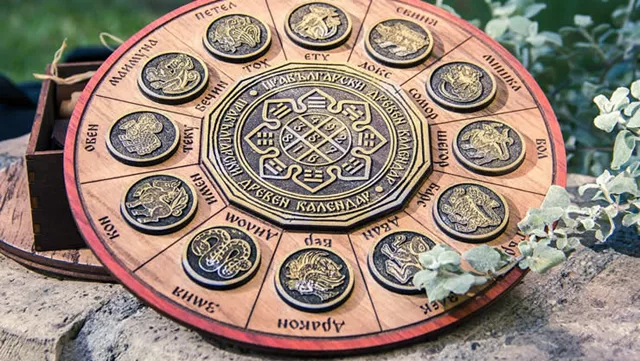
The following two attitudes toward astrology are unhelpful:
- Some people dismiss horoscopes and divination as nonsense or childish games;
- Others treat horoscopes as gospel, making decisions based on them without regard for context.
I personally see horoscopes as a kind of statistical framework—a way to categorize personality traits. By analyzing the year, month, day, time, and place of birth, you can generate a unique astrological chart that reveals a person’s character tendencies. [Note: I recently came across articles that cite the historical split between astrology and statistics to dismiss astrology as “just statistics.” Ironically, that seems to make astrology even more mysterious!]
Some people question the accuracy of horoscopes because results can feel hit or miss, and they conclude astrology is a scam. That view reflects a shallow understanding. Real astrology goes far beyond the blurbs in magazines. With so many people in the world, is it really possible to sort everyone into only twelve personality types? Clearly not. Relying on weekly magazine horoscopes to judge astrology is simply fooling yourself.
In my view, astrology is more about analyzing personality than predicting the future. I’d even argue that 90% of daily or weekly horoscopes are misleading. By the same logic, could everyone on Earth experience only twelve kinds of situations each day? The answer is obvious.
From what I know about astrology, a person has at least twenty-two representative indicators, including the twelve zodiac signs, the Sun, the Moon, Mercury, Venus, Mars, Jupiter, Uranus, Neptune, and Pluto. Each sign and planet has its own symbolic meaning, so the more of these indicators you consider, the more precise the personality analysis will be. The twelve signs commonly featured in magazines and newspapers are merely Sun signs (also called solar signs). Using only one twenty-second of the representative indicators to assess a person’s character will naturally reduce accuracy. This is also one reason people feel astrological results can be hit or miss.
On this planet, no living being survives alone. (Basic biology: organisms depend on food chains.) The better the coordination among living things, the more sustainable their reproduction and survival. Applied to daily life, we live in an interactive society: the stronger our relationships, the more satisfying our lives. So how do we build good relationships? Knowing ourselves and others is key. Once we understand our own and others’ traits and adjust appropriately, our relationships naturally improve. Yet self-knowledge is hard, and truly understanding others takes time and effort. In this respect, astrology can help. With someone’s birth date, we can glean insights into their tendencies, shortening the time it takes to adapt to a new relationship.
For example, imagine you’re in an unfamiliar skyscraper when the power suddenly goes out. You have only a flashlight and no one around. If you rely on luck and wander randomly, it will take a long time to find your way out. But if you have a blueprint of the building, it becomes much easier to navigate.
Leaving the building is akin to the journey of life, and astrology serves as that blueprint.
Of course, this is a simplified analogy; the point is to illustrate that astrology can play a supportive role in our life journey, especially in understanding ourselves better.
However, astrology is not infallible. Overreliance on astrology (especially without real expertise) can lead to poor outcomes. This applies to any form of divination; one should not trust or depend on it blindly. There is no such thing as 100% accurate divination. In truth, nothing in this world is 100% certain. Can you find something in nature that is a mathematically perfect circle? The answer is no. Therefore, remember that divination results should be used only as a reference. What may be true for one person may not apply to another. There are countless variables in this world, which is why astrological results can vary under different circumstances. Thus, we should learn to “use + analyze + verify” the results of astrology.
Until we understand all facets of a matter, any conclusion is unreliable.