Is Mercury Retrograde Beneficial? Understanding Its Patterns to Unlock Life's Gifts
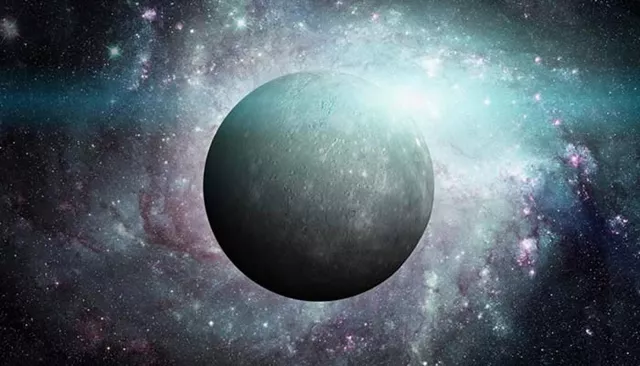
You're likely familiar with Mercury retrograde. This often-dreaded astrological event is notorious for its negative reputation, so we won't delve deeply into that aspect. But did you know? Mercury retrograde is actually a time meant for revisiting important information that may have been overlooked in our lives. And there's more to it than that.
The 20-plus days of Mercury retrograde connect multiple timelines: it's a "replay" from about 11 months ago, a summary of experiences from the last 3 to 4 months, and a new awakening of consciousness for the upcoming 3 to 4 months...
Mercury retrograde signifies a turning point in a larger Mercury cycle. Its significance is as complex and variable as Mercury itself, yet so important to us. So, what does Mercury retrograde truly convey? What should we do during this period?
First, let's get to know Mercury, the most changeable planet in our solar system, and delve into the world of this guide that navigates the "in-between," exploring the mysteries of its celestial journey and the deeper meanings behind its retrograde.
Get ready to embark on an intriguing mental journey~

Times worth remembering; times we choose to forget
Times to speak freely; times to ride on dreams
Diverse, cunning, magical—these are the words that come to mind when we think of Mercury.
The ancients saw its predecessor, Hermes, as a changeable, clever thief and guardian of dreams. A master of the edges, Mercury delights in crossing boundaries; it's always in motion, especially when night falls—when it’s time for sleep, dreams, romance, and mischief. No matter how Mercury disguises itself, when we awaken from dreams, forget the path ahead, or extinguish the lights, it silently waits in the shadows. At dusk or dawn, Mercury lingers and ultimately vanishes into light or darkness.
In the morning, Mercury guides souls to rise from the realm of night, watching them disappear into the dawn. As the shepherd of dreams, Mercury crosses the western sky, once again guiding us into the wonderful world of dreams.
Mercury is the god of communication, numbers, and writing, as well as the deity of classrooms. With a gentle wave of its hypnotic wand, even the brightest students may doze off.
Between wakefulness and sleep lies a capricious in-between space where we sway, at risk of dozing off at any moment. This space is often an invisible and/or meaningless boundary. Between wisdom and imagination, day and night, logic and symbolism, we find creative ways of thinking.
The cycle of Mercury validates the sacredness of geometry, imprinting the mathematical constant Pi in its orbit around the sun, with approximately 3.14 conjunctions each year. The formula for Pi tells us that the ratio of a circle's circumference to its diameter is always about 3.14, highlighting the connection between the infinite (circle) and linear (diameter).
Mercury is the god of hieroglyphs, with its symbolic representation being π, or 3.14... Mathematically, Mercury is irrational in the truest sense, symbolizing infinite possibilities and reminding us that thoughts, ideas, and directions also hold limitless potential.
Mercury resides at the horizon between dusk and dawn, which is why the ancients said Mercury loves the first house, as this house is constantly ready to transition from night to day.
Mercury is a dual, hidden, and agile deity that connects the stories in our lives. It is rich in layers, observed through the lenses of experience, intuition, interpretation, and imagination. Tom Moore succinctly depicts Mercury's wisdom as the power to "move the soul forward" and "enhance understanding."
When approaching a threshold, in a transitional state, or at a crossroads, Mercury may emerge from the shadows to guide us into or out of a state. Mercury is not only interested in the thoughts themselves but also their foundations, origins, and motivations.
It often wanders between the consciousness of the sun and the wisdom of the moon, as evidenced in the relationships between Hermes and goddesses like Hecate, Hestia, and Mnemosyne, where he frequently forms alliances with them.
When Mercury appears in our lives, we are encouraged to explore the essence of the soul. It serves as the guide of spiritual mentors, an unexpected sight on our journey, and the thoughts that reconnect us with the dreams of the previous night; it is both the leader and the follower, always observing the scene before and behind us.

Mercury maintains its consistent nature in the cosmos. Capturing an image of Mercury is challenging. This planet appears near the horizon just before sunrise or right after sunset; it prefers this in-between space. The days when Mercury is farthest from the sun are also ideal for observation.
Like the mythological Hermes, this planet is elusive and hard to capture. Yet as a remarkable traveler, its path in the universe is quite regular and orderly.
Since Mercury isn’t far from the sun, when it is clearly visible, the sky isn't fully dark. Mercury lingers between day and night, visible just before sunset or sunrise.
To us, Mercury and the sun form a dynamic pair, much like the brotherly relationship between the sun god Apollo and Hermes, celebrated in the "Homeric Hymns" over 2500 years ago. Marsilio Ficino described Mercury as a planet "greatly influenced by Apollo."
Due to planetary alignments, we can only witness the close proximity of Mercury and the sun, with their separation never exceeding 28°, usually ranging from 17° to 28°.
The average sun-Mercury cycle spans 116 days, with individual cycles ranging from 105 to 130 days. They can be likened to several semesters within a year.
During each Mercury cycle, it makes two conjunctions with the sun: one when Mercury is closest to Earth and in retrograde (the "inferior conjunction"), and another when Mercury and Earth are farthest apart on opposite sides of the sun (the "superior conjunction").
These conjunctions mark crucial shifts in the Mercury cycle. During the inferior conjunction, Mercury rises as a morning star before sunrise, initiating a new cycle with the sun. By the superior conjunction, Mercury has moved to the opposite side of the sun, allowing it to follow and appear after sunset, becoming easier to observe.
At each conjunction, Mercury is concealed by the sun’s brilliance, oscillating between the sun and moon.
Honoring planetary diurnal and nocturnal phases, ancient astrologers recognized Mercury's changeable nature; it is considered a morning planet when it rises before sunrise and a night planet when it sets after sunset.
This cycle beautifully illustrates Mercury's mysterious disappearances and reappearances, including its retrograde three times a year.

Mercury has an affinity for the number 3, with 3 cycles annually, retrograding 3 times, each for about 3 weeks (20-24 days)—approximately one-sixth of the year. Hence, around 18% of the world’s population experiences Mercury retrograde while traveling.
If we chart the retrograde points of Mercury on the zodiac, a triangle emerges. For instance, in 2020, Mercury’s retrograde began at 12°53' Pisces, 14°45' Cancer, and 11°40' Scorpio, forming a grand trine in the water signs.
The pattern of Mercury retrograde is intriguing, but its effects are often exaggerated; nevertheless, this aligns perfectly with Mercury's unpredictable character!
Mercury retrograde is actually ideal for reflection and contemplation; it's a time for reviewing, clearing backlogs, archiving reports, removing old programs, and tackling messages previously avoided. It’s time to address the mountain of paperwork and complete those long-delayed tasks!
During this retrograde, you may find new ideas or even new ways of thinking. Issues that arise can encourage reflection on the distracting elements that inadvertently draw us in.
Apparently random behaviors may heighten our awareness; if we can listen, reflect, and recognize that these obstacles arise from within, we can enhance our focus and awareness of our surroundings.
Another characteristic of Mercury retrograde is that the position it occupies when it begins retrograding will be about the same as the position it held 11 months prior when going direct. For example, on October 14, 2020, Mercury began retrograding at 11°40' Scorpio, whereas on November 20, 2019, it went direct at 11°35' Scorpio, showing a correlation between the two.
Thus, when Mercury retrogrades through the zodiac, it revisits details overlooked a year ago, piecing together clues.

As mentioned earlier, due to Mercury's special relationship with the sun, its cycle lasts over 100 days (about 3-4 months). The 3 weeks of Mercury retrograde can be split into two phases: the conclusion of one Mercury cycle and the commencement of the next.
Mercury begins its retrograde 10-11 days before the inferior conjunction, absorbing and processing the information, insights, thoughts, influences, and feelings gathered during the preceding cycle (the past 3-4 months).
After the inferior conjunction, Mercury transforms the essence of what has been processed into seeds for the new cycle (the upcoming 3-4 months), and in the subsequent 10-11 days, the extracted essence will be reorganized and reconstructed to nurture and cultivate the new cycle.
The two phases of Mercury retrograde have the following specific influences:
Phase One: Retrograde to Inferior Conjunction
Duration (average): 9-14 days (10-11 days)
What we can do:
Absorb and digest the information, insights, thoughts, influences, and feelings collected over the past 3-4 months. It’s a time to gather thoughts; within the deep, hidden self, we can record and reflect on our experiences for personal growth and future reference.
Phase Two: Inferior Conjunction to End of Retrograde
Duration (average): 9-14 days (10-11 days)
What we can do:
Slow down during this time, reflect on the past, and become more focused, gaining awareness of how time flows through our lives from a cognitive perspective. New ideas, projects, thought patterns, and communication styles will continue to emerge during this process.
In this light, Mercury retrograde is an essential part of the Mercury cycle, serving as the bridge between the past and the future. Though the "events" during Mercury retrograde may seem abrupt, they urge us to think and reflect.
The ancient Greeks referred to significant discoveries or life events as turning points or epiphanies—from ignorance to understanding. This is most visible during moments of fate reversal. While no one enjoys misfortune, seen through Mercury's lens, these moments may be meant to provide us with new insights.