Are You Aware of the Connection Between Zodiac Signs and the 24 Solar Terms?
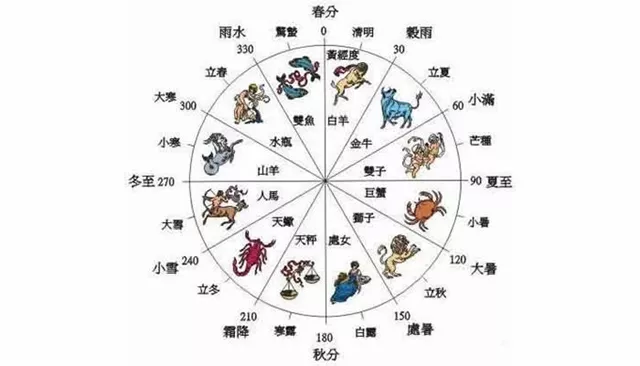
Zodiac Signs and Divination are based on mystical and illusory principles that aim to uncover the mystery of an individual's innate traits. The zodiac signs we refer to today originated from ancient astronomical observations made in the Mesopotamian plains. But do they apply universally? In truth, the cycles of celestial bodies manifest differently across cultures, and China is no exception.
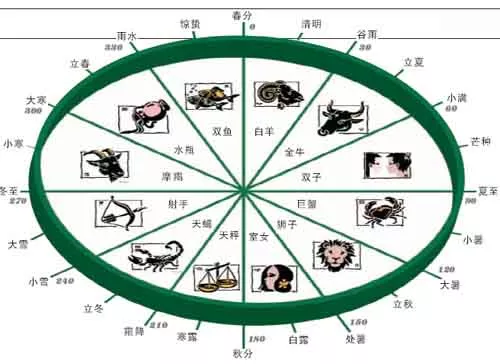
China's twenty-four solar terms form its own solar calendar, rooted entirely in local astronomical observations. Interestingly, its method of calculation subtly aligns with Western calendars, creating a complete symmetry in cycles when applied to the zodiac.
Aquarius
Major Cold (1.20) — Beginning of Spring — Rain Water (2.18)
Major Cold, the coldest time of the year, marks the start of Aquarius. It's unsurprising that those born under Aquarius are known for their rationality and calmness. The Aquarius cycle peaks during the Beginning of Spring, symbolizing renewal and vitality, similar to Aquarius's unpredictable and changeable air sign traits. Rain Water ushers in the rainy season, hinting at a tendency toward emotional depth, yet keeping Aquarius from becoming entirely emotional like a water sign. Despite this, there's an internal longing for romance that persists, difficult to extinguish.
Pisces
Rain Water (2.19) — Awakening of Insects — Spring Equinox (3.20)
With Rain Water, rains begin, followed by the Awakening of Insects and thunder, leading to the warmer temperatures of the Spring Equinox, signaling the end of Pisces. Pisces's nature is inherently tied to water. This doesn't imply weakness; rather, both Rain Water and Awakening of Insects denote new beginnings—one starts the rainy season, and the other revitalizes flora and fauna. Such beginnings come with challenges, highlighting Pisces's sensitivity and cautiousness, which allow them to shine through life's explorations.
Aries
Spring Equinox (3.21) — Qingming — Grain Rain (4.19)
The Spring Equinox brings balance, with equal day and night, while moisture decreases, suggesting rising Yang energy. Qingming is ideal for planting, aligning with Aries's eager and spirited fire sign nature. The vitality of spring fuels Aries's passion and loyalty, though it may also prompt impulsivity—not destructively so, as the transition to Grain Rain tempers Aries's fiery temperament.
Taurus
Grain Rain (4.20) — Beginning of Summer — Lesser Fullness (5.20)
Grain Rain supports grain growth, while the Beginning of Summer heralds rising temperatures without wind, creating an unpredictable mix of warm and cool air, a reflection of Taurus's complex personality. The humidity can feel "stifling," a trait often seen in Taurus. Despite this, the growth of grains symbolizes Taurus's robust spirit. Lesser Fullness, marking grain ripeness, suggests Taurus's ultimate goal: a rich harvest.
Gemini
Lesser Fullness (5.21) — Grain in Ear — Summer Solstice (6.21)
Lesser Fullness represents abundance, while Grain in Ear presses for final planting efforts, embodying a last-minute rush. Gemini, often seen as having split personalities, could be better described as "hasty," driven by enthusiasm and scattered thoughts. Their tendency to finalize tasks at the last possible moment creates a world of last-minute actions, a trait that intensifies with the Summer Solstice's conclusion of Gemini.
Cancer
Summer Solstice (6.22) — Minor Heat — Major Heat (7.22)
The Summer Solstice introduces summer, Minor Heat marks the beginning, and Major Heat represents its peak. During this time, heat and rain intensify. Rain tempers the heat, while high temperatures lessen rain's impact. Cancer's energy remains balanced with this environment—often overlooked but capable of meeting external demands, fully harnessing summer's energy.
Leo
Major Heat (7.23) — Beginning of Autumn — End of Heat (8.22)
Major Heat is year’s hottest point, with the Beginning of Autumn marking summer's end and End of Heat confirming its departure. Temperatures drop, but dryness rises, signaling an end to the pleasant climate. Leo's strong will matches this foreboding atmosphere. Their leadership qualities come to the forefront, yet autumn's quietness adds gravity to their demeanor. The summer-like climate sustains Leo's strength.
Virgo
End of Heat (8.23) — White Dew — Autumn Equinox (9.22)
End of Heat denotes summer's end, White Dew forecasts cooler days, and Autumn Equinox promises balanced day and night. This phase sees Virgo shift, accumulating inner energy and self-awareness. Neither too hot nor too cold, Virgo tends to overthink. The Autumn Equinox marks Virgo’s pivotal annual moment, encouraging decisive and meticulous judgment and decision-making.
Libra
Autumn Equinox (9.23) — Cold Dew — Frost's Descent (10.23)
Following the Autumn Equinox, nights prolong, Cold Dew nears freezing, and Frost’s Descent initiates frost, evidencing cooling weather. Though an air sign, Libra leans towards rationality and stability but struggles with action due to "decision-making paralysis," reflecting a habitual slowness. However, this caution allows them to thoughtfully assess their environment, gathering information to make well-informed decisions.
Scorpio
Frost's Descent (10.24) — Beginning of Winter — Minor Snow (11.22)
After Frost's Descent, the onset of winter is marked by Minor Snow. Scorpio transitions from fall to winter, displaying rational stability but also a defensive nature, likely stemmed from its water sign attributes. This defensiveness isn't avoidance; rather, it focuses inward, emphasizing internal processing where input often outpaces output. Ancient sayings about "Autumn harvest, winter storage" intended for agriculture metaphorically capture Scorpio's disposition.
Sagittarius
Minor Snow (11.23) — Major Snow — Winter Solstice (12.21)
Minor and Major Snow signify abundant precipitation, where snowfall represents stable change within flow. Sagittarius characteristically embodies these contradictions—movement within stillness. As the sole fire sign deep in winter, these contradictions intensify. Nearing the Winter Solstice, Sagittarius is inclined to rationality, while winter tempers its fiery nature, shifting focus toward personal spiritual exploration.
Capricorn
Winter Solstice (12.22) — Minor Cold — Major Cold (1.19)
The Winter Solstice, Minor Cold, and Major Cold chart the progression to winter's peak chill. Capricorn, at the year’s end and during winter's harshest cold, is the most rational sign. Beyond mere cold, Capricorn's growth through these transitions fortifies rationality. These end-of-year phases signify completeness and barriers, with Capricorn emerging resolute and decisive as it transitions from the coldest days.
The link between zodiac signs and personality is rooted in energy, drawn from cosmic and earthly influences linked to celestial cycles. The twenty-four solar terms chart these energy shifts, forging a deeper connection with human life.
The alignment of the twenty-four solar terms with zodiac signs stems from shared astronomical foundations. While they might not precisely predict global weather, they offer a global perspective on climate trends through diverse lenses.