What Palmistry Reveals About Women Who Lead Active Dating Lives
Contemporary views on sexuality differ greatly from those of ancient times. Historically, a woman's chastity was prized above all else, and she was often expected to remain within the household. Today, women are no longer bound by such strictures; in a world that aspires to gender equality, what men can do, women can do as well. Yet when men are sexually adventurous, they may be described as flirtatious or charismatic, while women who behave similarly are more likely to be labeled as promiscuous. This double standard underscores the ongoing challenges to achieving true gender equality.
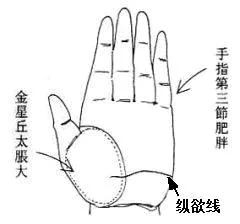
From the perspective of palmistry, a "promiscuous" woman is said to have thick third finger segments (phalanges), which are believed to indicate a strong sexual desire and a focus on material things. On their own, however, these features do not define promiscuity. If the "Venus mound" is especially full and pronounced and is accompanied by a "line of indulgence," then she may be considered promiscuous. If the Venus mound is moderately full and the third finger segment is not thick, it suggests a woman with deep feelings and a loving nature, which is seen as positive. But if both the "line of indulgence" and thick third segments are present, it is taken to indicate a tendency to misuse emotions and lean toward lust.
Additionally, facial features are also said to reveal signs of promiscuity. For instance, a woman with a glossy complexion, thin skin, and a bluish tint with little flesh may be thought to possess a strong sexual drive and poor fortune. If her eyes often appear hazy or intoxicated, resembling someone half-asleep, this is likewise taken as a sign of promiscuity.
What counts as an appropriate distance between the eyebrows? If it measures less than two finger-widths, it is considered narrow; if it measures two finger-widths, it is deemed broad. If the space can accommodate three fingers or more, it is considered excessively wide.