The Head (Wisdom) Line in Palmistry: What It Reveals About Intellect and Decision-Making
42.1K views
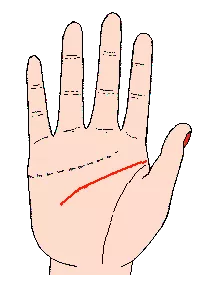
In palmistry, the hand has three primary lines: the Heart Line, the Wisdom (Head) Line, and the Life Line. The Wisdom Line lies between the other two and is also called the Thought or Head Line. It reflects a person’s reasoning and mental habits. Open your hand and compare it with the descriptions below.
- A clear, long Wisdom Line suggests dedication and the potential to gain fame and wealth through intellect.
- An overly long Wisdom Line can indicate self-centered thinking; overconfidence may lead to setbacks.
- A chaotic Wisdom Line points to an active mind; despite intelligence, overthinking can bring frequent worries.
- If the first half of the Wisdom Line runs straight and the second half slopes downward to end on the upper part of the Mount of Moon, it indicates a thoughtful person with practical skills.
- A Wisdom Line that runs alongside the Life Line and then crosses it to extend toward the wrist suggests a cautious, prudent mind.
- Those with two Wisdom Lines often show dual traits—gentle and sensitive, yet bold and steady. They are intelligent but may struggle with family matters, focusing more on their career, which can bring notable achievements.
- If the Wisdom Line begins below the Life Line’s starting point, it suggests resourcefulness and strategic thinking, but also occasional impulsiveness—be cautious and don’t sweat the small stuff.
- If the Wisdom Line lies very close to the Life Line and starts from its upper section, it indicates confidence and resilience; with courage and initiative, success is likely.
- A Wisdom Line with branches reaching the Mount of Jupiter indicates a desire for control, status, and power, often resulting in a dynamic, proactive personality.
- If the end of the Wisdom Line forks, a small fork suggests indecision, while a wide fork indicates keen intellect and can function like a double Wisdom Line.
- When the Wisdom Line ends in three branches, the person is likely to gain recognition through elegance and refinement. They tend to overthink and may struggle with decisions, but their strength lies in generating multiple solutions to a single problem.
- Upward branches on the Wisdom Line indicate a sharp, astute mind, well-suited to business and profit-making ventures.
- Branches that extend between the index and middle fingers suggest cleverness but also unrealistic, overreaching ambitions that can lead to misfortune.
- Several horizontal bars across the Wisdom Line point to anxiety and a tendency toward mental strain.
- Multiple parallel lines at the end of the Wisdom Line indicate a meticulous, worry-prone nature, with a melancholic bent.
- If the end of the Wisdom Line has a single parallel line, it suggests a more pessimistic outlook, with a tendency to focus on the downside.
- Many branches on the Wisdom Line indicate diverse talents—someone who is multi‑skilled.
- A Wisdom Line that extends to the Mount of the Sun indicates exceptional talent; if they pursue the arts, great success is likely.
- A short, distinct horizontal mark on the Wisdom Line suggests a strong passion for a particular hobby.
- A chain-like or wavy Wisdom Line suggests intelligence paired with a weaker memory and occasional stress-related headaches.
- Many branches at the end of the Wisdom Line imply a hectic daily life and the need to juggle many personal matters, which can be mentally exhausting.
- A Wisdom Line broken up by dot-like marks indicates a passive, timid approach and hesitation to take bold action.
- A parallel line above the end of the Wisdom Line points to optimism and a tendency to focus on the positive.
- A Wisdom Line that runs straight across the palm with no distinct Heart Line is known as a “broken palm.” Such people are said to have good financial luck but may act without sufficient forethought. As the saying goes, “friends with broken palms tend to hit hard,” meaning they can react impulsively in sudden situations, so they should be cautious and mindful in daily life.